I Tile types and patterns · Plate 007
Aresta tile
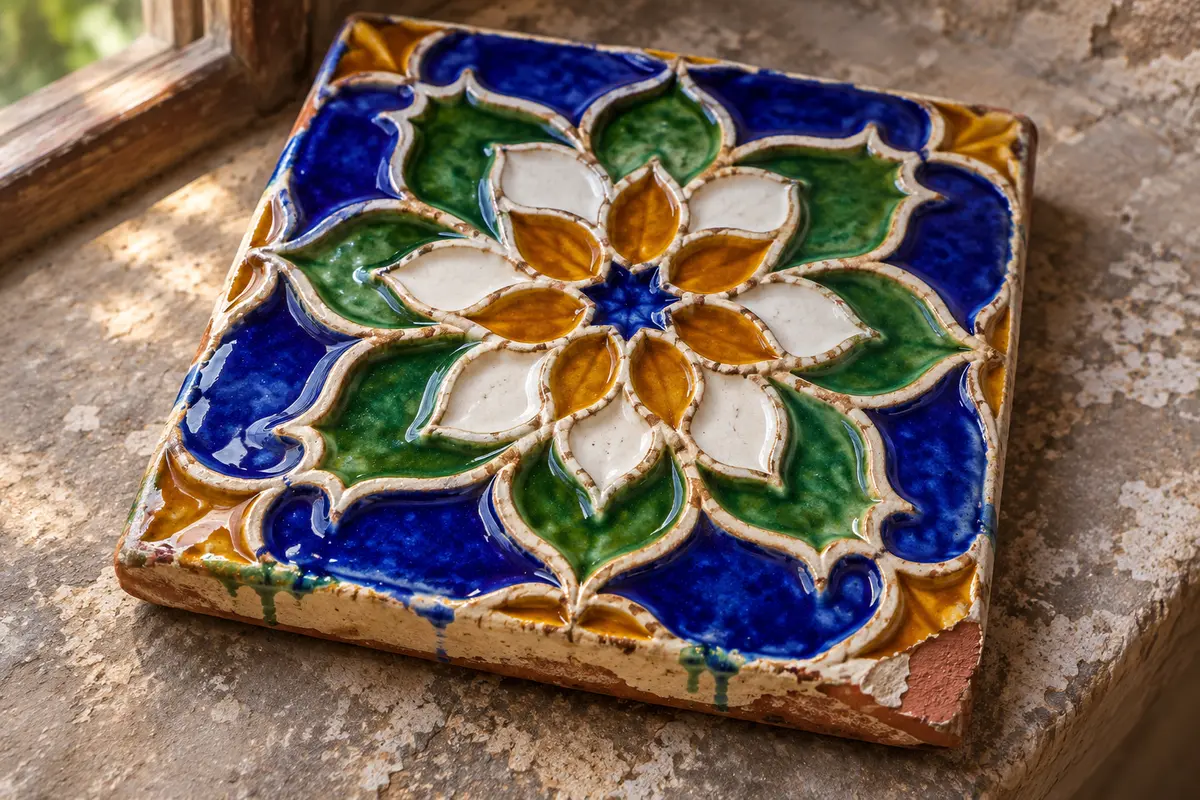
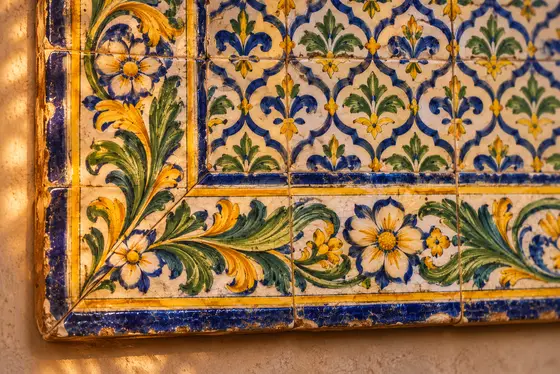
In aresta tiles the design is pressed into soft clay with a mould, leaving small ridges that keep the coloured glazes apart. Tiles of this kind were made in Seville and reached Portugal in the early 16th century.
Aresta, also called cuenca, is a technique from the period of corda seca. Instead of drawing a line, the maker presses the negative of the pattern, a wooden or metal mould, into soft clay. The pressing raises small walls, the arestas, that keep the colours apart. Portuguese sources say this simplified process lowers the price and allows a greater variety of patterns, though the finish is not always perfect. The main centres of production were Seville and Toledo.
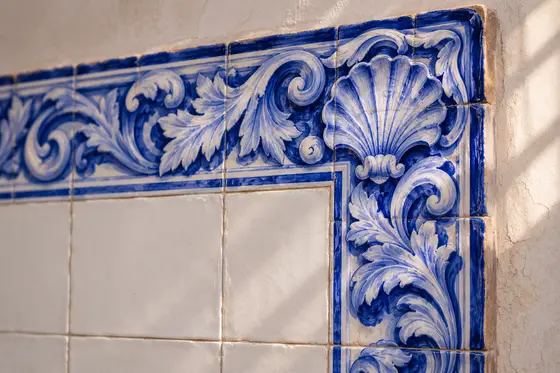
In Portugal the technique also produced a local variant in high relief, the azulejo relevado, with patterns of vine leaves. English Wikipedia explains the names: cuenca means 'hollow' and arista means 'ridge', and Seville became an important centre for them towards the late 15th and early 16th centuries. Portuguese sources also record rare lustre tiles, finished with a silver and bronze alloy over the glaze and fired a third time at low temperature, though that is unusual in this type of tile.
Source: pt.wikipedia.org, en.wikipedia.org
Read about it: From alicatado to azulejo: how Moorish tilework reached Portugal →
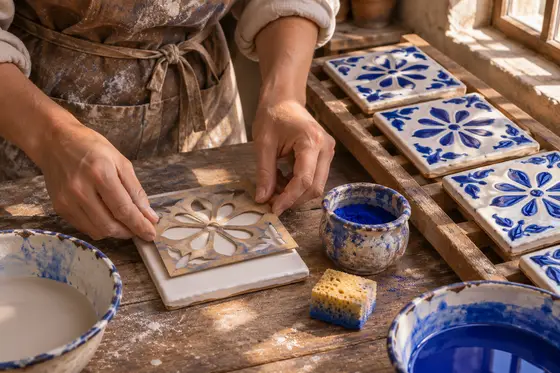
AI-generated illustration in the manner of the tradition, not a photograph of a specific object.