I Tile types and patterns · Plate 008
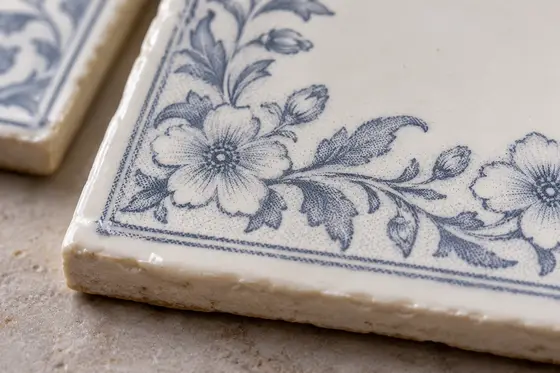
Aresta ridge close-up
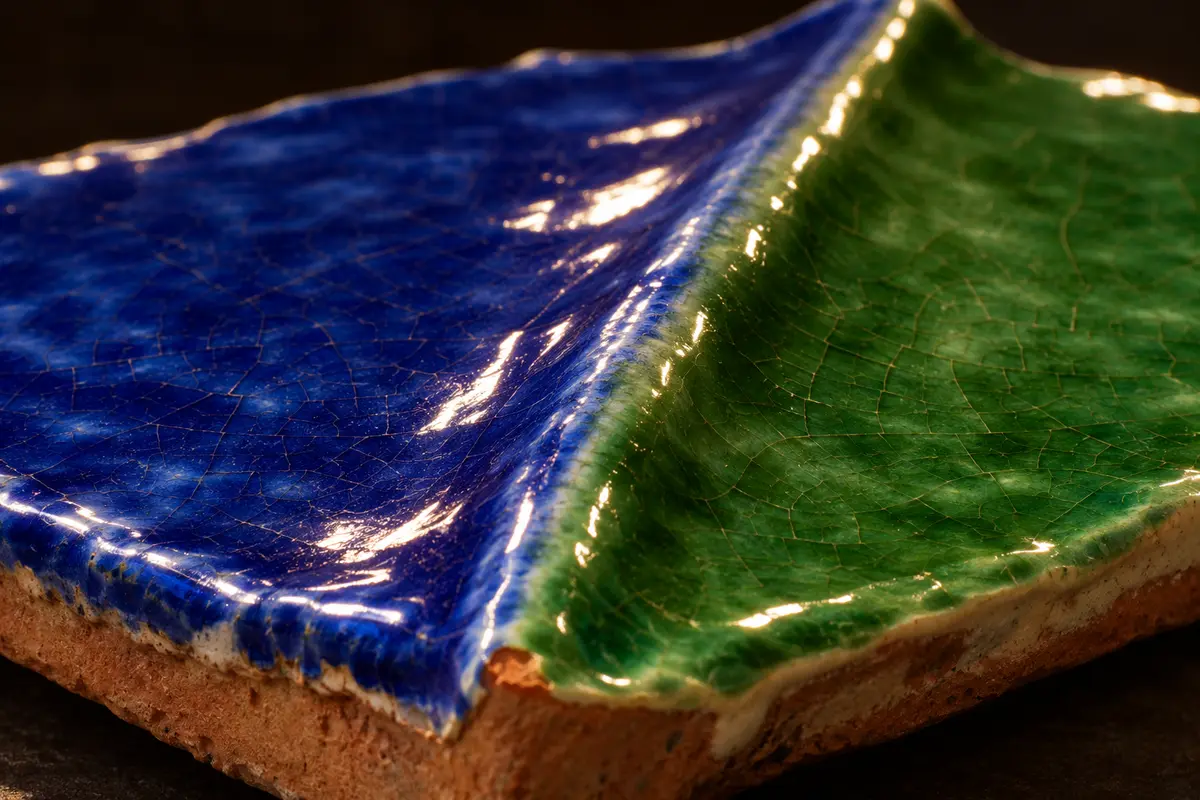
Seen at a raking angle, the relief of an aresta tile shows the ridges that hold each glaze in place and stop it bleeding into the neighbouring colour.
A tile in the Victoria and Albert Museum shows what the ridges are for. It was made in Seville in the 16th century by pressing a mould into a clay slab, leaving a raised outline with hollows between. The hollows are the cuenca, Spanish for 'bowls', and were filled with coloured glazes, here blue, green and copper. The museum's description of this square tile, about 13.9 cm across, lists the colours as white, blue, black, green and amber. The technique grew out of cuerda seca.
Wikipedia says the thin ridges stopped the colours bleeding into each other as the tile fired. During that second firing the plates lay horizontally in the kiln on small tripods called trempes, which is why surviving tiles of this kind carry three small marks. Because the ridge is part of the moulded clay, an aresta tile can look raised under a raking light, a feature of the technique that a flat cuerda seca line does not have.
Source: collections.vam.ac.uk, en.wikipedia.org, pt.wikipedia.org
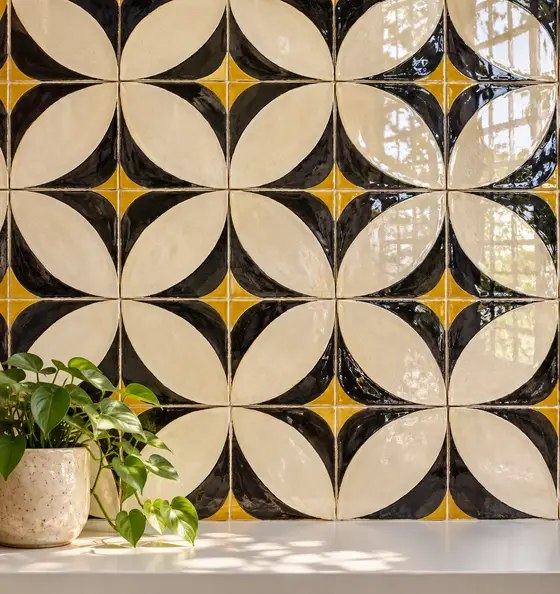
AI-generated illustration in the manner of the tradition, not a photograph of a specific object.