I Tile types and patterns · Plate 015
Padrão tile pattern
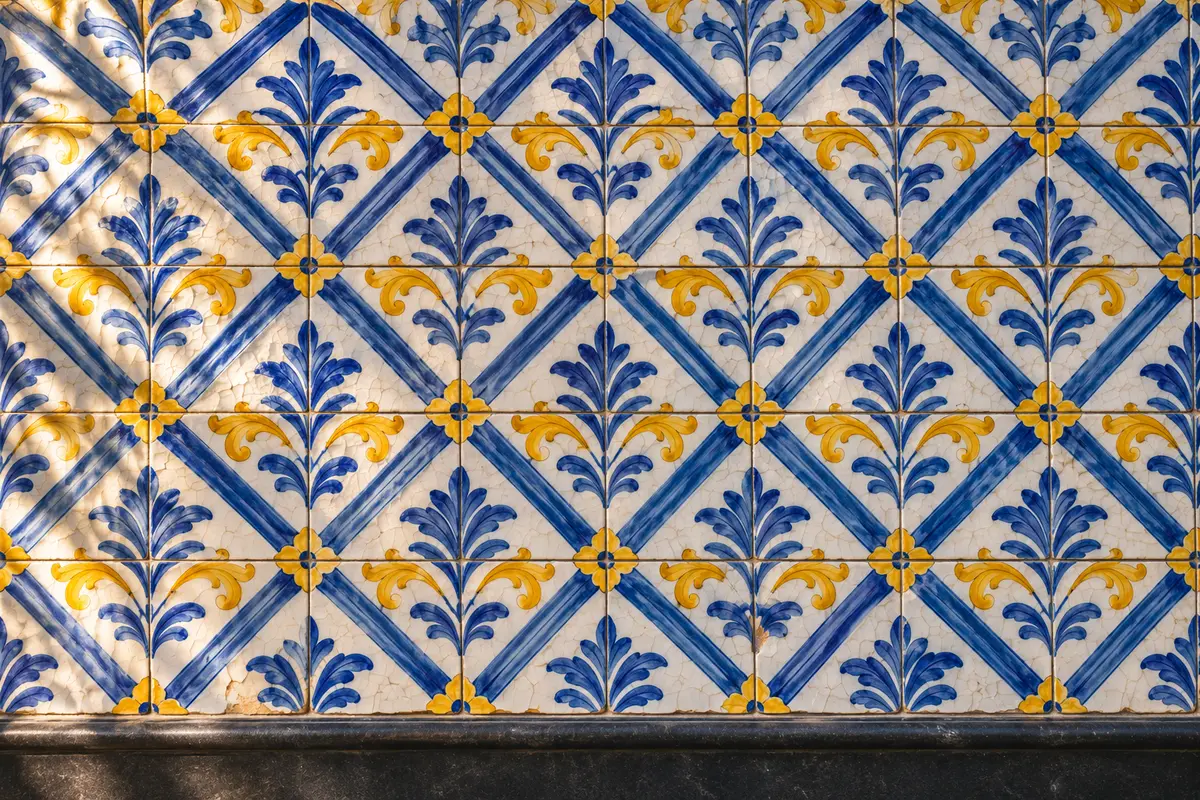
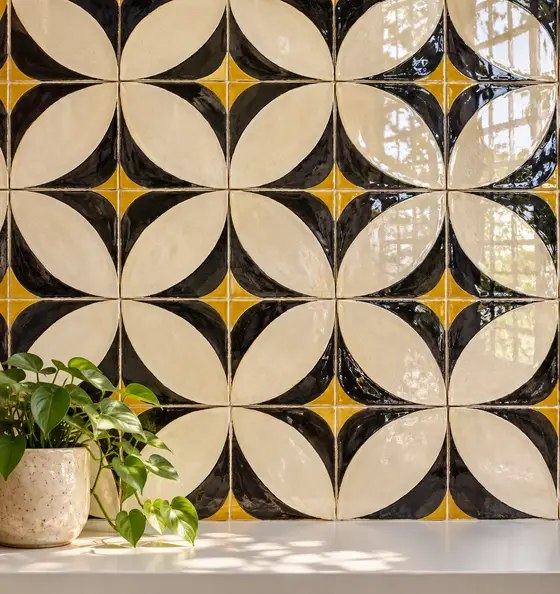
A padrão is a larger design made by repeating a group of tiles, which saved time when decorating large surfaces.
The pattern tile came as a cheaper answer to an older fashion. Chequered tiles, the enxaquetado, covered large surfaces in churches and monasteries from the 16th to the 17th century, in two alternating colours such as white and blue. Visit Lisboa notes they were affordable but complex and slow to lay, which made the process costly and led to their gradual abandonment. Then came the azulejo de padrão, repeating geometric schemes produced in great quantity and easy to apply, above all for altar fronts.
English Wikipedia describes the next step: plain white diagonal tiles surrounded by blue ones were replaced by polychrome tiles in a rich chequered scheme, as at the church of Santa Maria de Marvila in Santarém. Replacing the diagonals with a repeated pattern of horizontal polychrome tiles produced new designs with roses, camellias and garlands. Portuguese sources add that such pattern work was often combined with small figurative panels. In the 17th century, then, the pattern tile became the cheap, quick way to cover large church walls.
Source: pt.wikipedia.org, en.wikipedia.org, visitlisboa.com
Read about it: After the earthquake: a royal factory and the pattern tile →
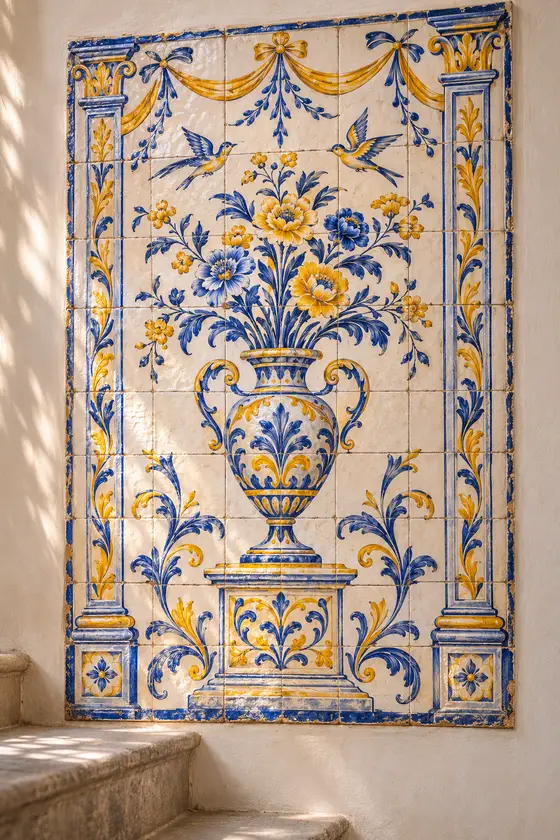
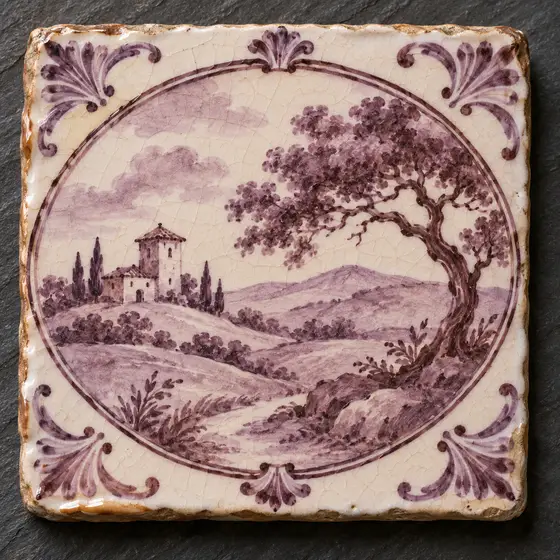
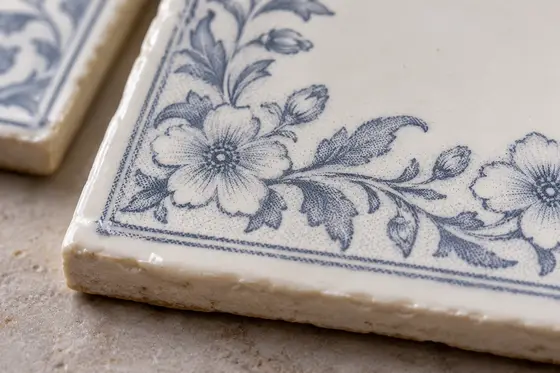
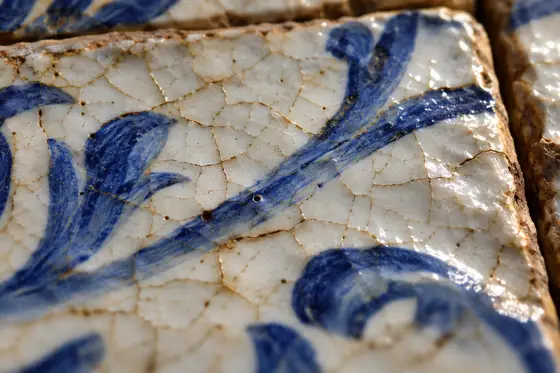
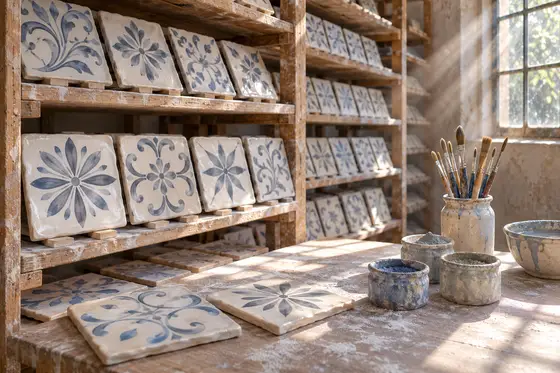
AI-generated illustration in the manner of the tradition, not a photograph of a specific object.