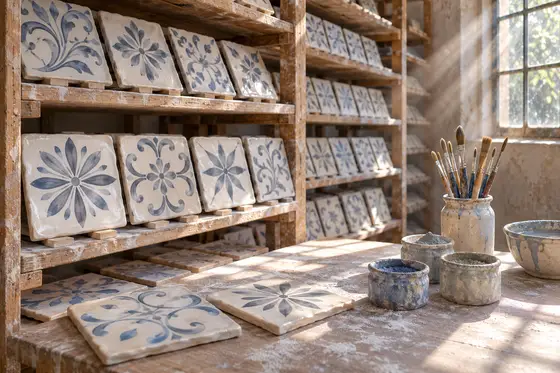
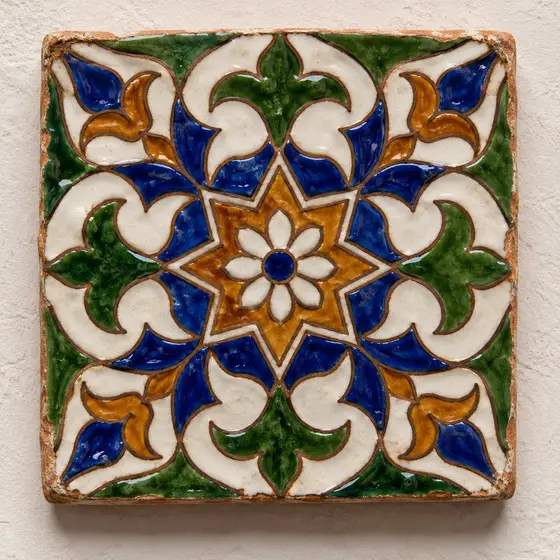
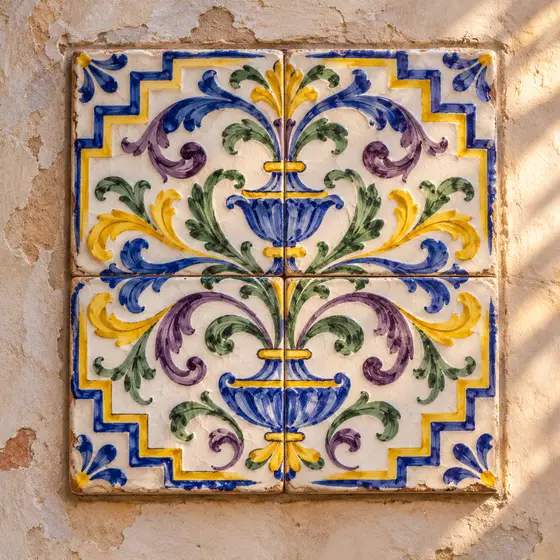
I Tile types and patterns · Plate 050
Craquelé close-up
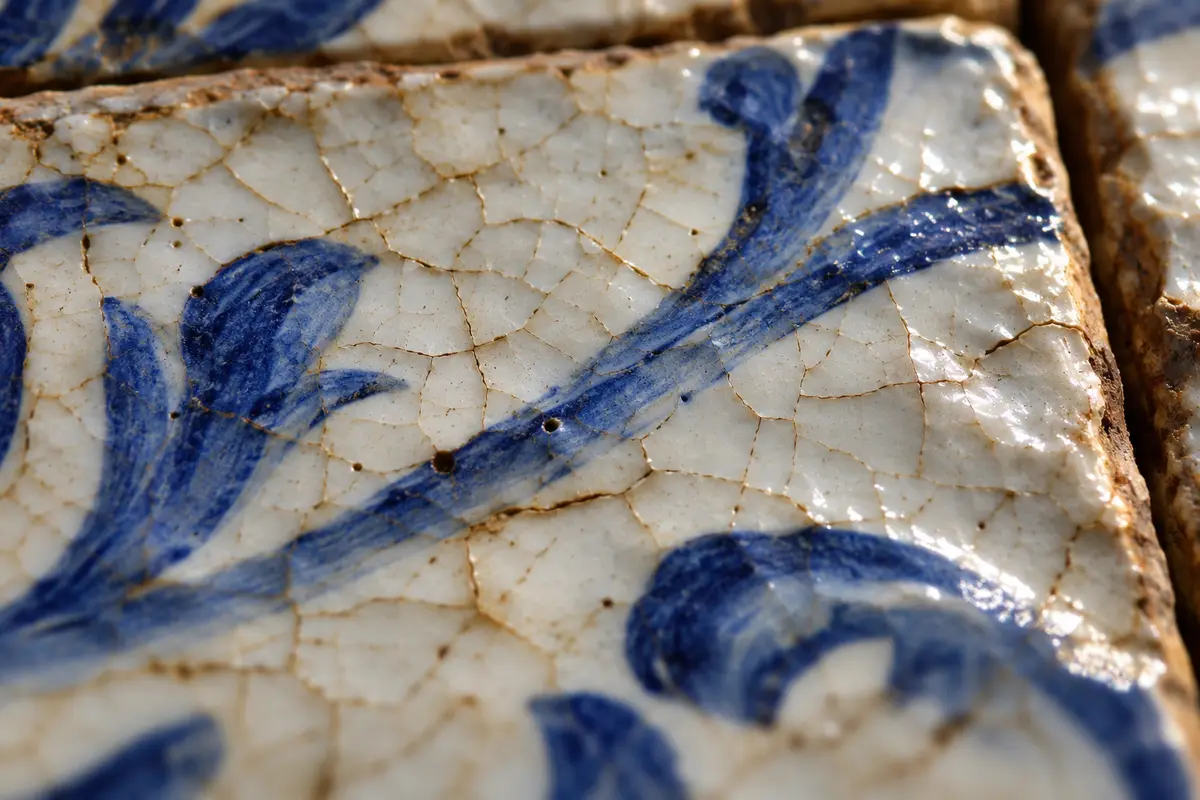
Craquelé (gretagem) is a network of fine cracks in a glaze, caused mainly by a mismatch between the thermal expansion of glaze and body.
Crazing is a network of cracks in a glaze, and it is almost always a problem of fit. Glaze and body are rigidly bonded, so when both cool after firing they must shrink by compatible amounts. If the glaze contracts more than the clay under it, it is stretched until it splits. Wikipedia's article on glaze defects describes a spider-web pattern of cracks and lists the usual causes: a high-expansion glaze, a low-expansion body, firing too quickly, underfiring and glaze applied too thickly. The opposite fault, in which the body expands more than the glaze, is called shivering.
Not every crack is a failure. Crackle is crazing produced on purpose and often accentuated, and traditions differ about it: Ru ware tolerates it without seeking it, Guan ware prizes a strong crackle, and in Japanese pottery the cracks may darken with use as tea stains them. Where a glaze has to hold food or water, crazing is a defect, and crazed functional ware may be returned by customers. Potters also tell it apart from crawling, in which the glaze draws back and leaves irregular bare patches of body, and from pinholing, the small holes left when bubbles in the molten glaze burst and only partly heal.
Source: en.wikipedia.org, digitalfire.com
AI-generated illustration in the manner of the tradition, not a photograph of a specific object.