I Tile types and patterns · Plate 014
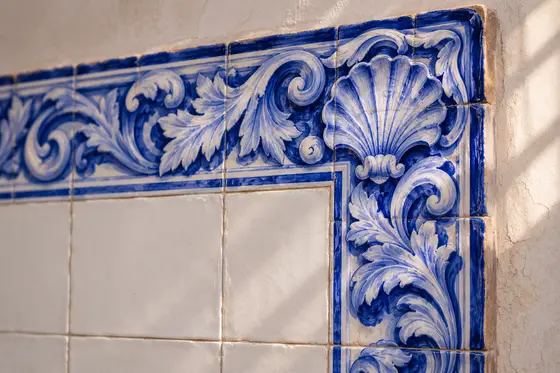
Tapete corner detail
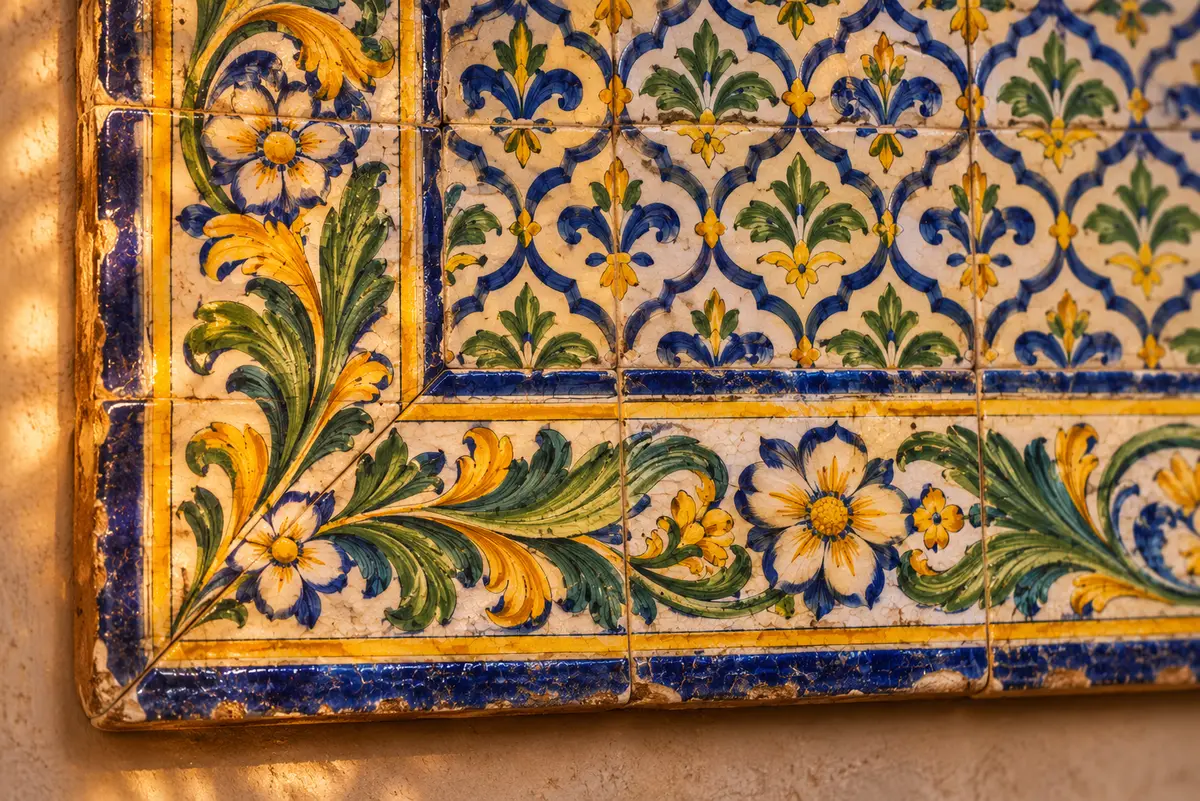
In the corner of a tapete panel the field of repeated motifs meets the border. The fabric-like effect comes from repeating a few tile designs.
The corner is where the vocabulary of the border shows. Portuguese sources distinguish a barra, a horizontal or vertical finish of two or more adjacent rows of tiles, from a cercadura, which is only one row, and from a faixa, made of half tiles (rectangular pieces). A frieze closes the field. The pattern inside came from azulejos de padrão, groups of tiles from 2x2 up to 12x12 that form a composition and, repeated many times, a pattern.
English Wikipedia adds two related uses. Between about 1650 and 1680 a type called aves e ramagens, 'birds and branches', became fashionable, influenced by printed textiles imported from India, with Hindu symbols, flowers, animals and birds. And azulejos were used for antependia, altar fronts imitating precious altar cloths, a use typical of Portugal; some imitate oriental fabrics such as calico and chintz, and yellow motifs on the border tiles imitate the golden fringes. Examples are in the Hospital de Santa Marta in Lisbon and at Almoster and Buçaco.
Source: pt.wikipedia.org, en.wikipedia.org
AI-generated illustration in the manner of the tradition, not a photograph of a specific object.