I Tile types and patterns · Plate 056
Tiles in the kiln
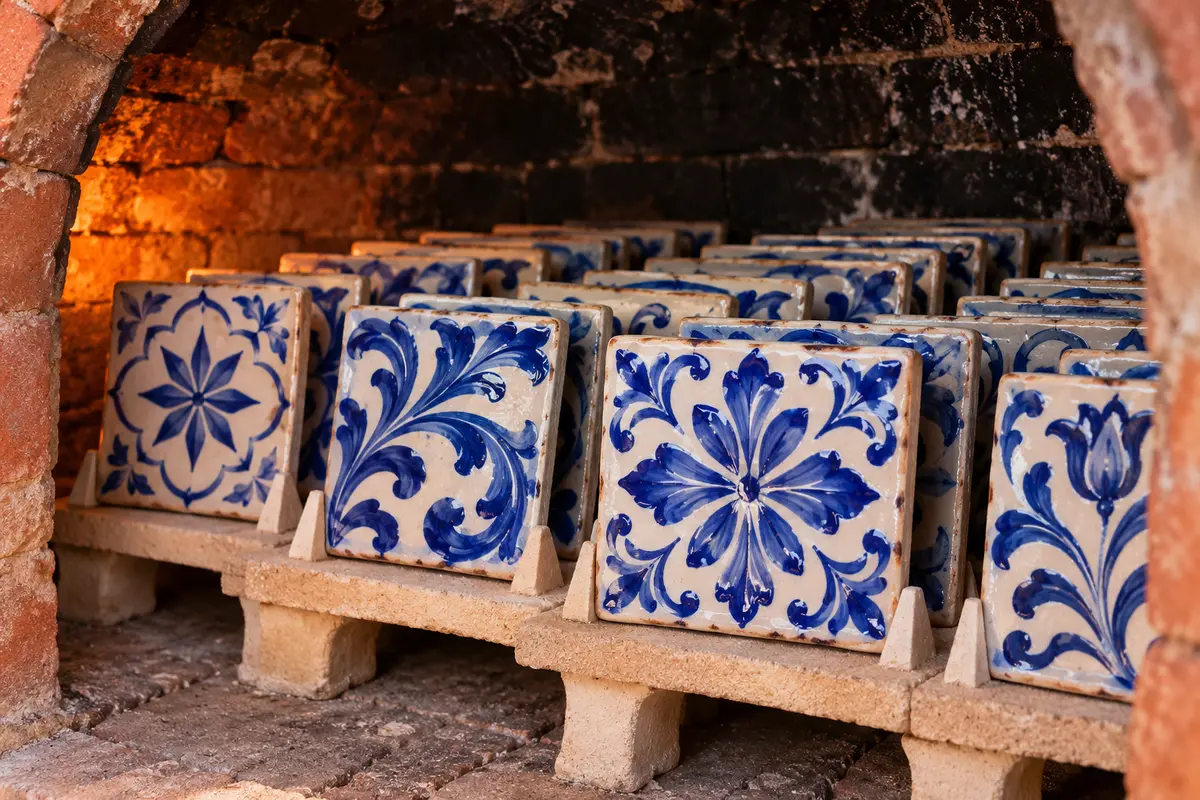
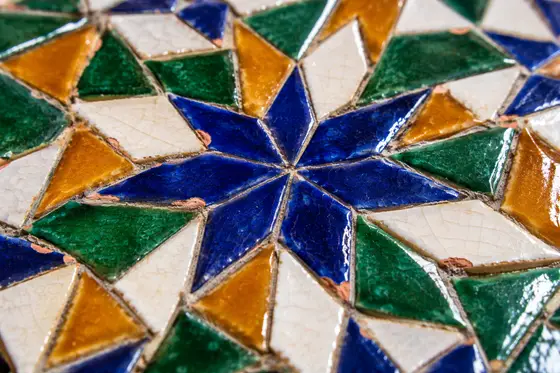
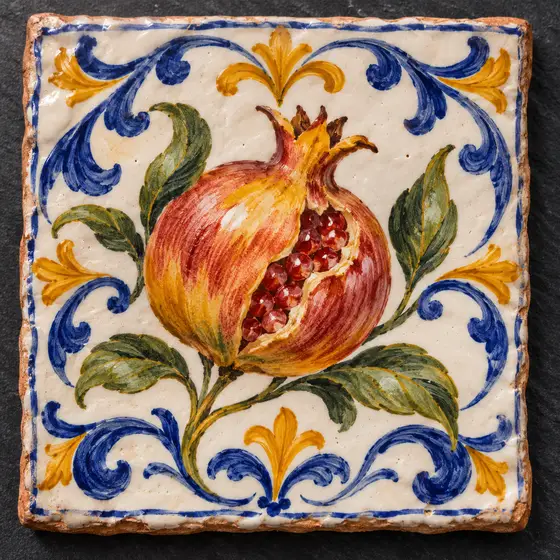
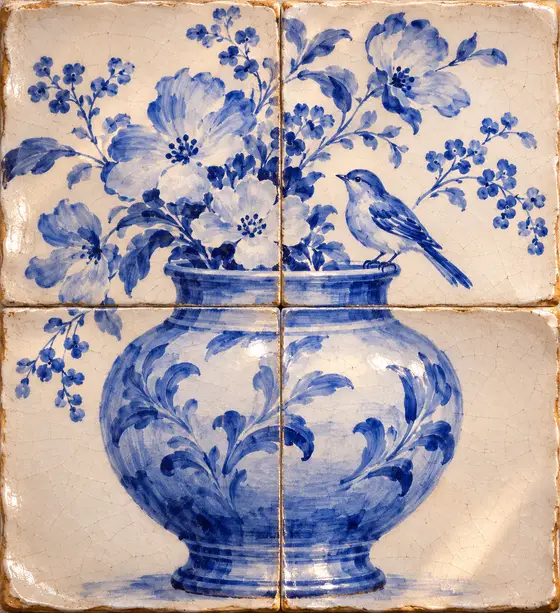
Painted tiles go into the kiln for a final firing that fuses the glaze and brings out the colours of pigments such as cobalt and manganese.
Portuguese Wikipedia describes two main firings: the first fires the unglazed biscuit, the second the glaze. In majolica the glaze vitrifies in the second firing and the colours show only afterwards. Mudéjar tiles were laid flat in the kiln on tripod supports called trempes. For scale, a Lisbon tilemaker interviewed by Aramco World fires the clay negative of his mould in a kiln set to nearly 980 degrees Celsius (1,800 Fahrenheit).
There are other firings. The same article distinguishes decoração ao grande fogo, paint applied to the glaze and fired above 1200 degrees, from decoração com terceiro fogo, colour applied to the biscuit or glaze and fired at a moderate temperature. Lustre, rare and made with silver and bronze, was fired a third time at low temperature. Dust-pressing, introduced by Richard Prosser in 1840, produced tiles that were less moist, dried faster and warped less in the kiln.
Source: pt.wikipedia.org, aramcoworld.com, tilesoc.org.uk
Read about it: A surface that drinks the paint: how a hand-painted tile is made →
AI-generated illustration in the manner of the tradition, not a photograph of a specific object.