I Tile types and patterns · Plate 024
Painted vase close-up
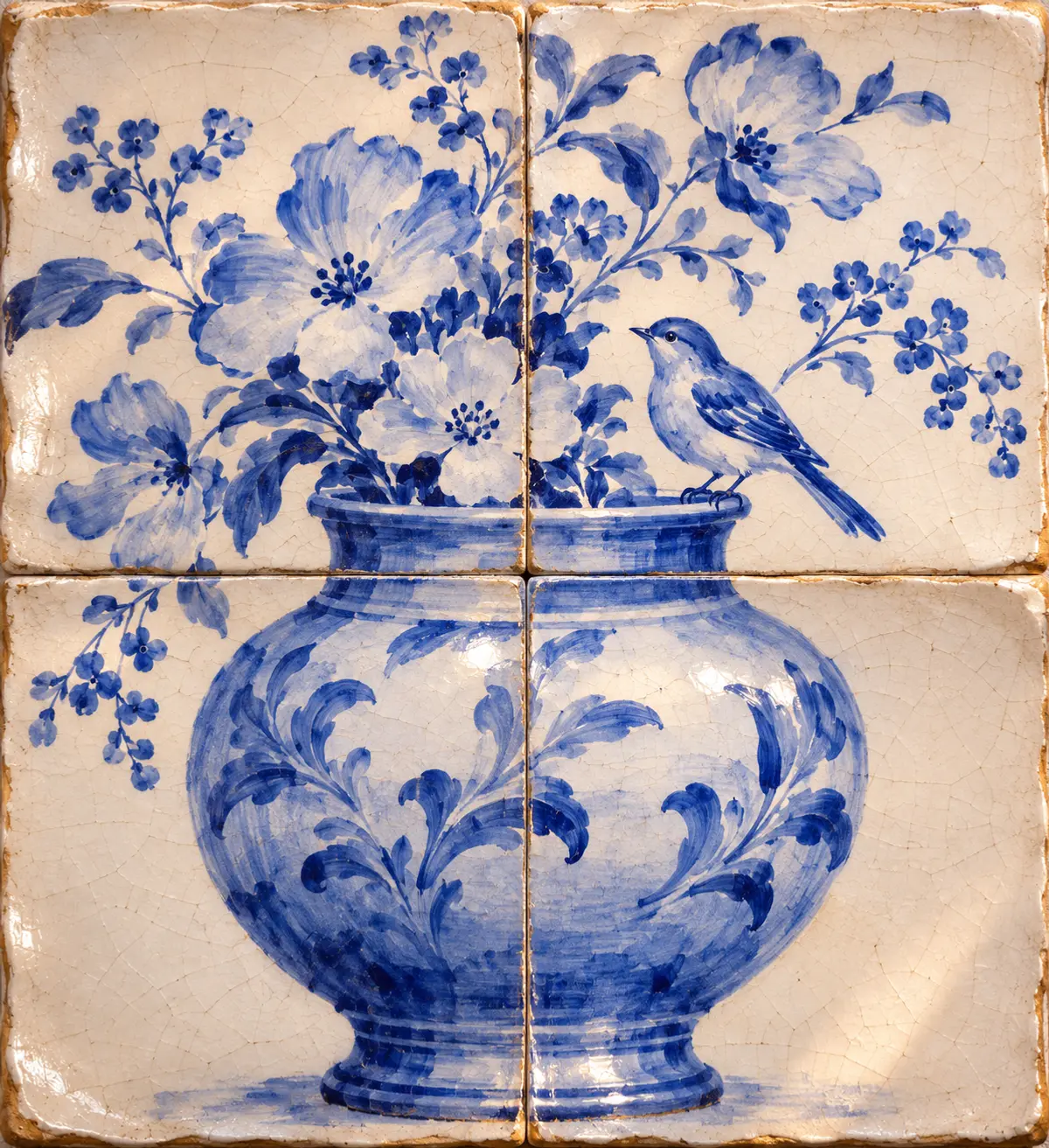
The vase gains volume through shading: light on one side, darker tones at the neck and foot, and few strokes for the flowers.
The volume of a painted vase belongs to the baroque habit of light and dark. Portuguese writers say the ornament of the Grande Produção made use of chiaroscuro contrasts to create an illusion of volume, drawing on ornament books and prints. The albarrada itself came from the same print culture: it is of Flemish origin, assimilated through collections of northern European engravings, and English Wikipedia proposes Flemish paintings of flower vases, such as those of Jan Brueghel the Elder, as its inspiration.
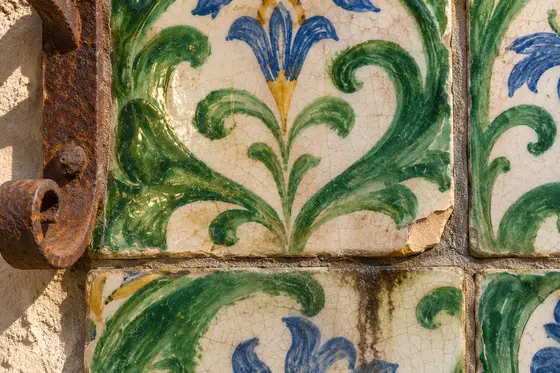
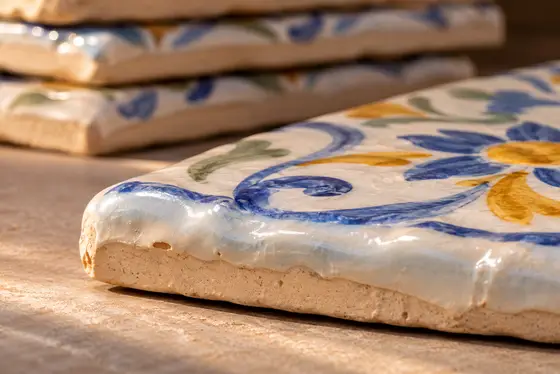
Portuguese sources list the five colours of the majolica palette: cobalt blue, copper green, manganese brown, antimony yellow and iron red, the last rarely used in early examples. In Portugal, they add, the genre of single figures in cobalt blue spread most in the 18th century; these azulejos de figura avulsa were set above all in kitchens and on staircases, with decorative elements in the corners to help join the tiles visually. The more complex Dutch examples spread the taste for such motifs.
This is a general description, not confirmed to a single source.
Source: pt.wikipedia.org, en.wikipedia.org
AI-generated illustration in the manner of the tradition, not a photograph of a specific object.