I Tile types and patterns · Plate 009
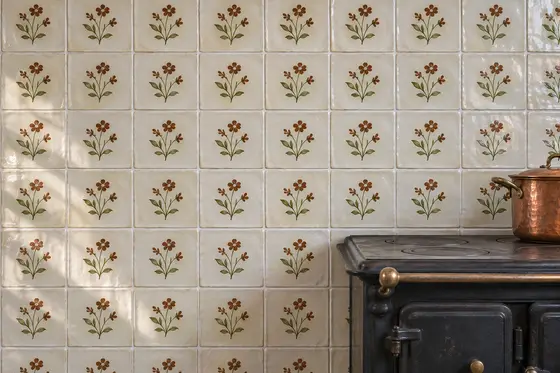
Aresta tile wall
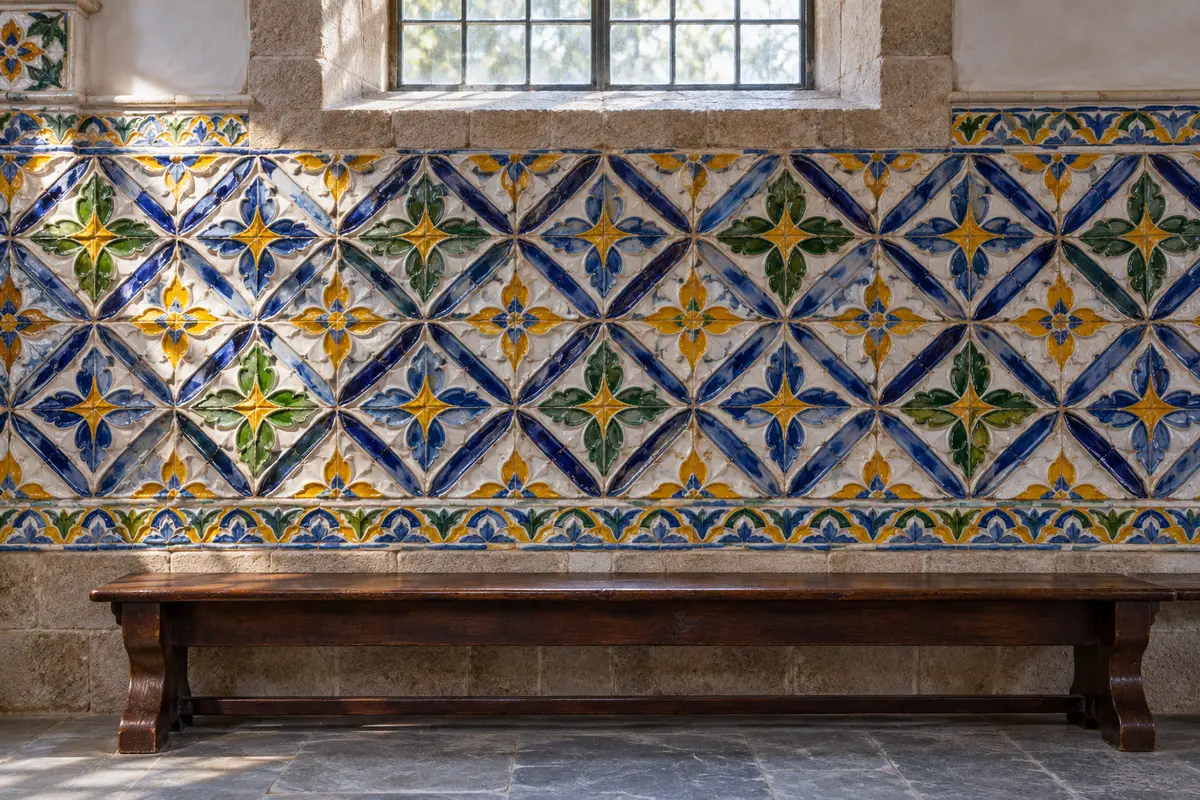
A wall of aresta tiles reads as a repeating net of colour. Because the ridges were pressed with a mould, aresta was a cheaper variant of corda seca.
English Wikipedia says aresta tiles were used well into the 17th century and exported widely, to other European countries and to the Spanish colonies in the Americas. A well-known Seville example is the Casa de Pilatos, whose early 16th-century decoration includes some 150 different azulejo designs, one of the largest antique collections of its kind. The streamlined process also let makers work in inscriptions linked to the Reconquista, an advantage the older mosaic technique could not match so easily.
In Portugal the best-known aresta walls are in the Sintra National Palace. The Sala dos Árabes has a bronze fountain on a marble base framed in aresta tile, and the Sala dos Leões and Pátio Diana stand out for relief vine-leaf tiles. In the Pátio do Leão, a fountain sits within a tile wall carrying the armillary sphere, the emblem of King Manuel I. Portuguese sources note that aresta was a cheaper process than the earlier methods, and English Wikipedia adds that the Hispano-Moorish tiles at Sintra were applied on walls and also used to pave floors.
Source: en.wikipedia.org, pt.wikipedia.org
Read about it: From alicatado to azulejo: how Moorish tilework reached Portugal →
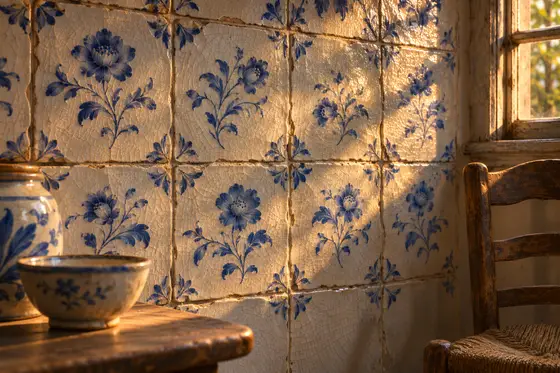
AI-generated illustration in the manner of the tradition, not a photograph of a specific object.