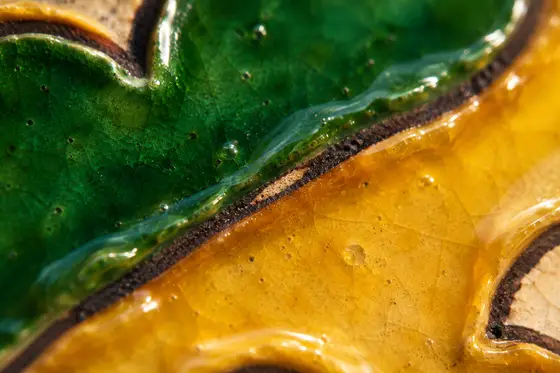
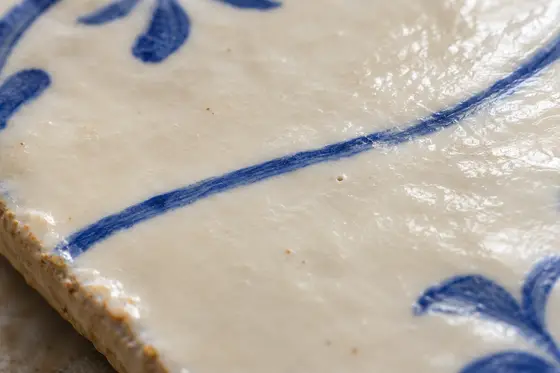
I Tile types and patterns · Plate 030
Tiled façade
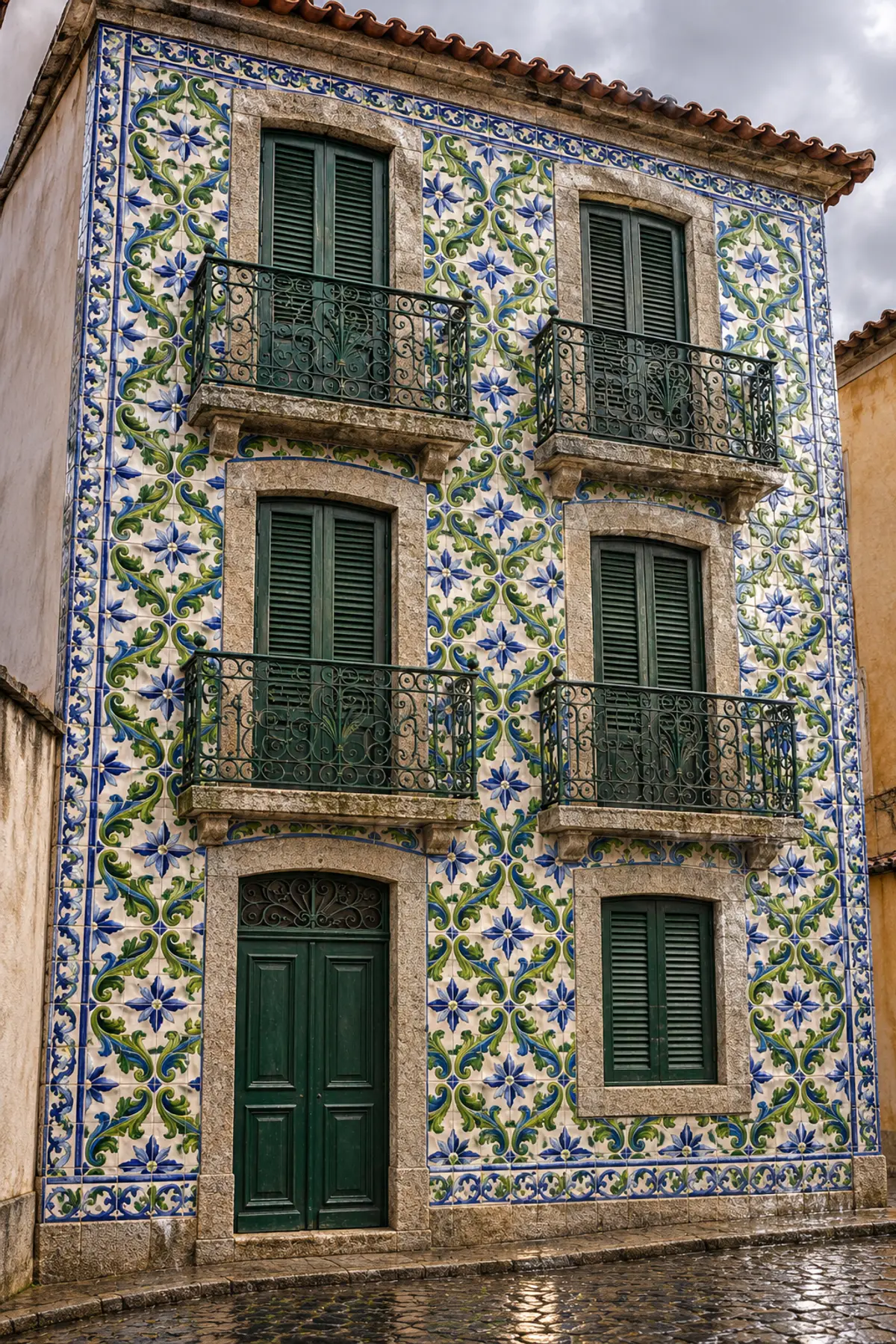
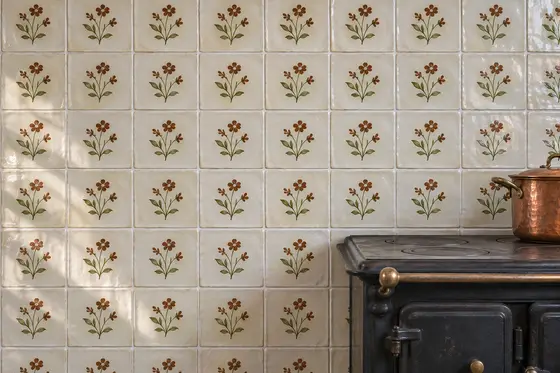
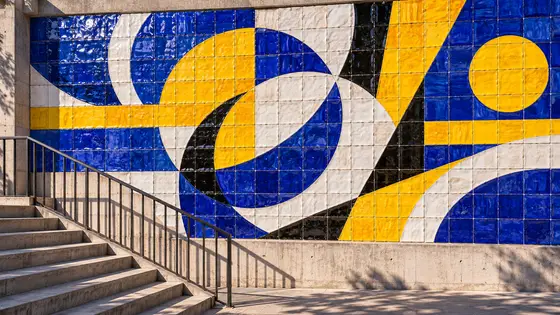
From the 19th century, whole facades were covered in industrially made azulejos, above all in Lisbon and Porto.
Portuguese sources say the principal factories of the second half of the 19th century were the Roseira, the Calçada do Monte and the Viúva Lamego factories in Lisbon, and in Porto and Vila Nova de Gaia those of Santo António do Vale da Piedade, Massarelos, Carvalhinho and Devesas. Façade tiles came with semi-industrial methods, above all the stencil (estampilhagem). English Wikipedia places the start of industrialised production in Porto around 1840, by returned Brazilian emigrants, while Lisbon factories used transfer printing on blue-and-white or polychrome tiles.
Where the habit came from is disputed. The older view, that rich returned emigrants from Brazil brought the fashion to Porto, is described in Portuguese Wikipedia as a cliché put aside in recent years: Ana Margarida Portela Domingues's 2009 thesis argues the taste was Portuguese, urban and cosmopolitan, and that the largest market for façade tile was Lisbon. She also found that the criticism of tiled façades, such as the nickname 'casas de penico', was not general. Tiles softened city façades as wallpaper softened interiors.
Source: pt.wikipedia.org, en.wikipedia.org
Read about it: Tiles in the street: from the factory sample book to the metro →
AI-generated illustration in the manner of the tradition, not a photograph of a specific object.