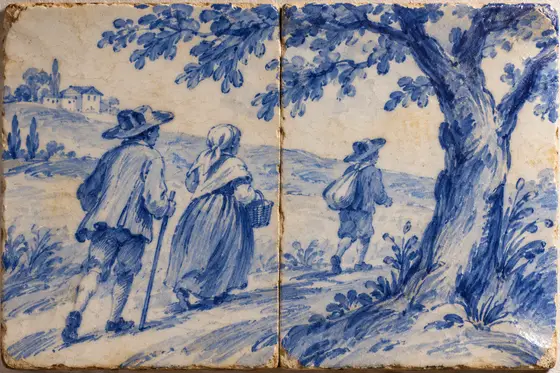
I Tile types and patterns · Plate 037
Printed tile wall
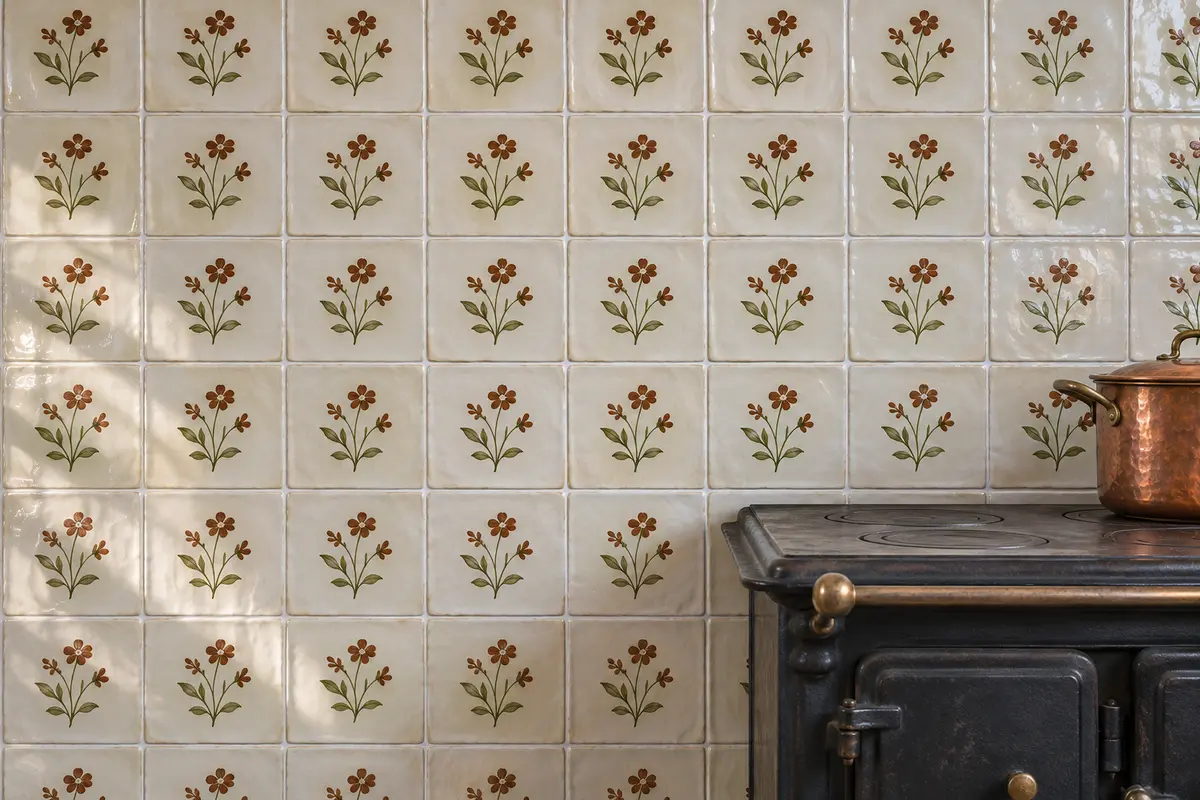
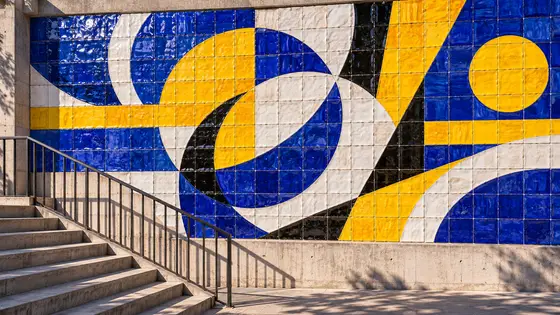
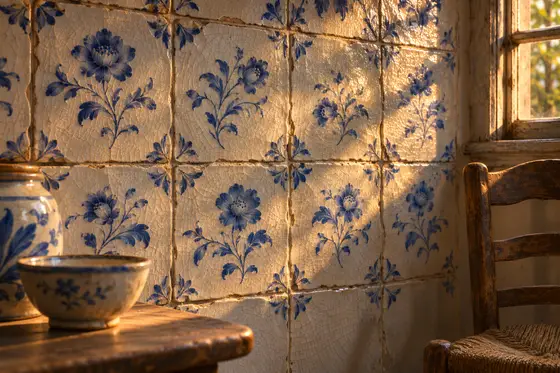
A wall of printed or stencilled tiles looks different from a hand-painted one: the design repeats with greater regularity.
The cheaper patterned azulejo, Lisbon's tourist board says, covered thousands of façades through the 19th century. The Museu Nacional do Azulejo ties this to growing cities and to an ambition for status earned through work: tiles helped tell apart buildings that otherwise looked alike. Its record for a Roseira panel describes stamped faience, dated 1833/1880, and says the Roseira factory made a large part of it. The Casa das Bolas in Lisbon, built in 1871-72 and named for the trompe-l'oeil spheres on its ground-floor tiles, has more than 50 patterns, set inside in apparently random order.
Portuguese Wikipedia links full façade tiling to Romanticism and says pattern tiling softened urban façades much as wallpaper softened interiors in the same period. It also notes that the reaction was not uniform: Ana Margarida Portela Domingues argued in her 2009 doctoral thesis that negative views of façade tiling were not universal, being strongest in certain periods and social circles, especially when the new rich and the middle class adopted the style. Tiles for façades were not all flat, either; factories in the north of Portugal used relief, which gives stronger light and shadow than the Lisbon production, according to the Museu Nacional do Azulejo.
This is a general description, not confirmed to a single source.
Source: visitlisboa.com, artsandculture.google.com, artsandculture.google.com, repositorio.lnec.pt, pt.wikipedia.org
AI-generated illustration in the manner of the tradition, not a photograph of a specific object.