I Tile types and patterns · Plate 060
Green and yellow tiles
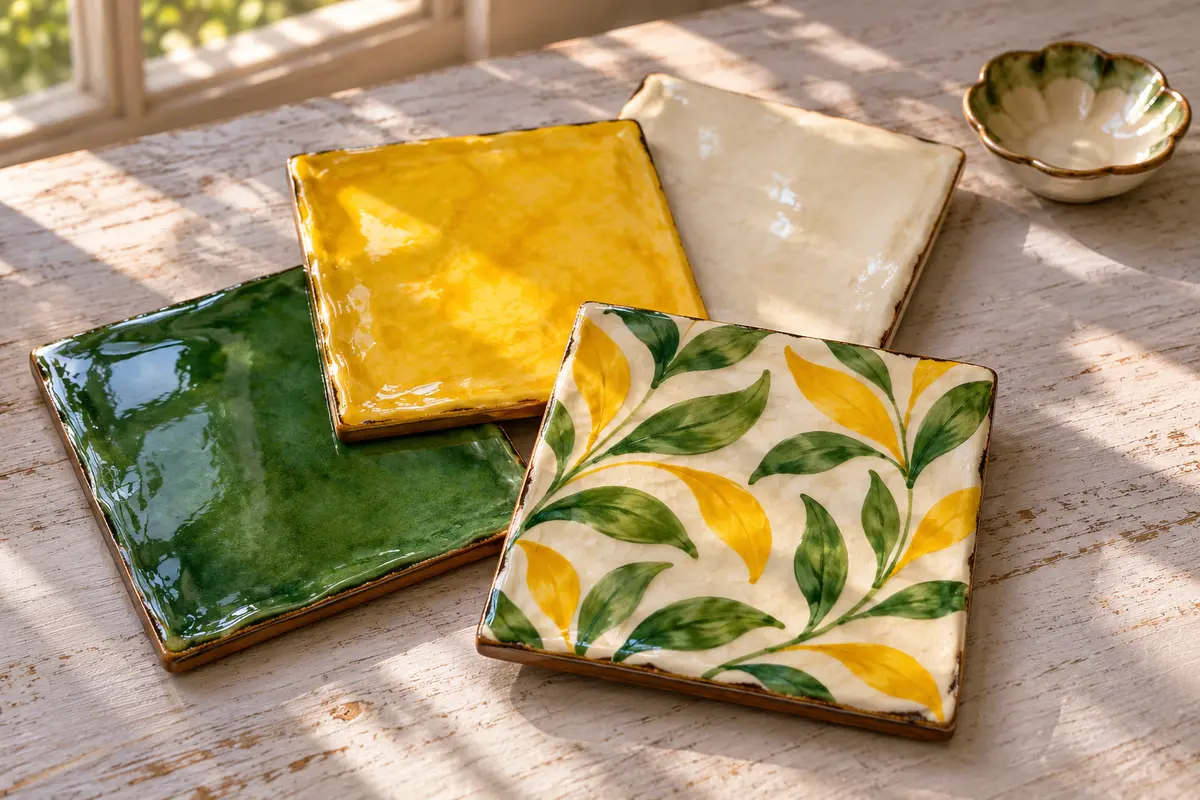
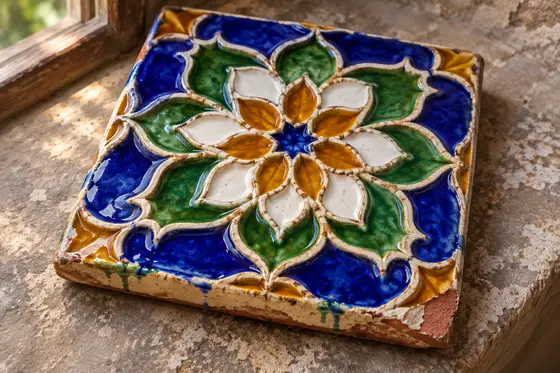
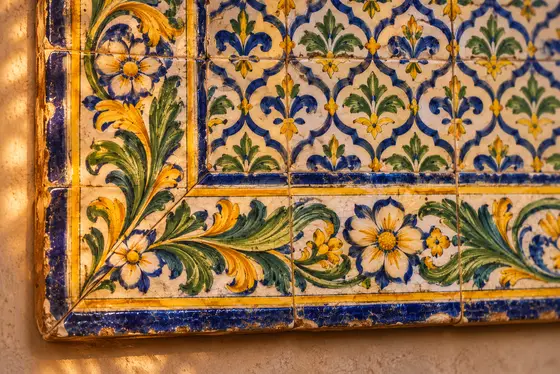
Copper green and yellow appear on tiles of many periods, from 16th-century corda seca to 19th-century facades, often with white and blue.
Portuguese Wikipedia lists the mineral colours: for alicatado and mudéjar tiles, cobalt for blue, copper for green, manganese for brown or black, iron for yellow and tin for white. In corda seca a cord soaked in linseed oil and manganese oxide separates the colours, so the glazes do not mix. A LNEC study of 17th-century tiles found that lead-based yellow stays mainly at the glaze surface, while cobalt blue and copper green sink and often disperse in the glaze; superposed colours do not mix.
Yellow could carry meaning. On 17th-century altar frontals made of tiles, English Wikipedia says, yellow motifs on the painted border tiles imitated the golden fringes of altar cloths. Honey and green tones still appear in today's Moorish-style work: the Lisbon tilemaker interviewed by Aramco World uses green, blue, black and honey colours, made from copper and manganese oxides, cobalt and other metals. At Madre de Deus, the Moorish tiles of the church are red, green and blue.
This is a general description, not confirmed to a single source.
Source: pt.wikipedia.org, en.wikipedia.org, repositorio.lnec.pt, aramcoworld.com
AI-generated illustration in the manner of the tradition, not a photograph of a specific object.