I Tile types and patterns · Plate 001
Alicatado star panel
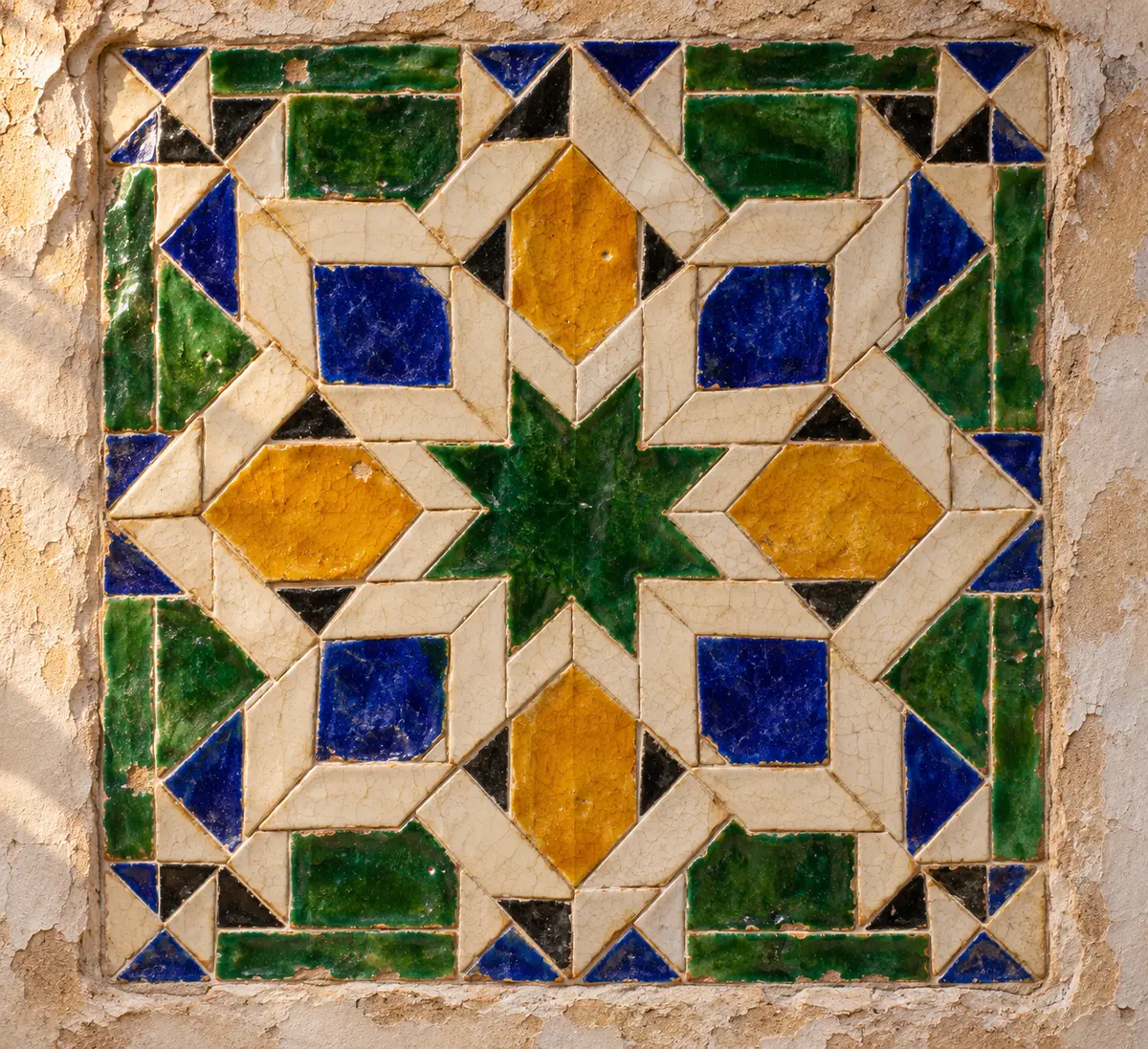
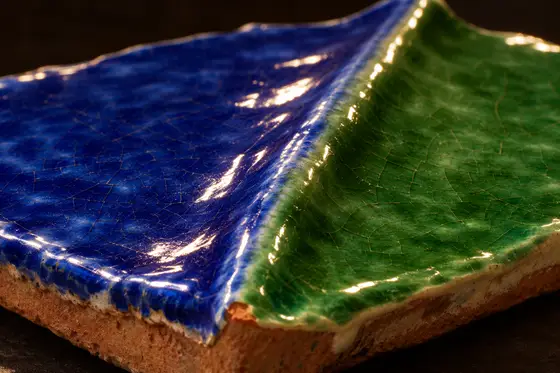
Alicatado is a mosaic of glazed ceramic cut into small geometric pieces and fitted together. The technique is Hispano-Moorish in origin and was in vogue in Portugal in the 16th and 17th centuries.
Alicatado is the oldest of the tile techniques that reached Portugal. English-language sources place the first Iberian examples in the 13th century, when Andalusi workshops assembled panels of tile mosaic from pieces glazed in a single colour and cut into geometric shapes. The Alhambra in Granada holds many examples, and the tradition went on in Christian Spain, for instance in the 14th-century parts of the Alcázar of Seville. In Morocco it never stopped; it is still made there today under the name zellij.
In Portugal the technique belongs to the Hispano-Moorish phase, which Portuguese sources link to King Manuel I's visit to Spain and his wish to build a palace in the Moorish taste; the date is given as 1498 by Portuguese sources and as 1503 by English Wikipedia, so it is best treated as uncertain. The Sintra National Palace is the great showcase. Portuguese tile writing adds that alicatado was costly in labour, which is why it was in the end replaced by quicker methods such as aresta and, later, painted majolica.
Source: en.wikipedia.org, pt.wikipedia.org, visitlisboa.com
Read about it: From alicatado to azulejo: how Moorish tilework reached Portugal →
AI-generated illustration in the manner of the tradition, not a photograph of a specific object.