I Tile types and patterns · Plate 033
Green relief tile
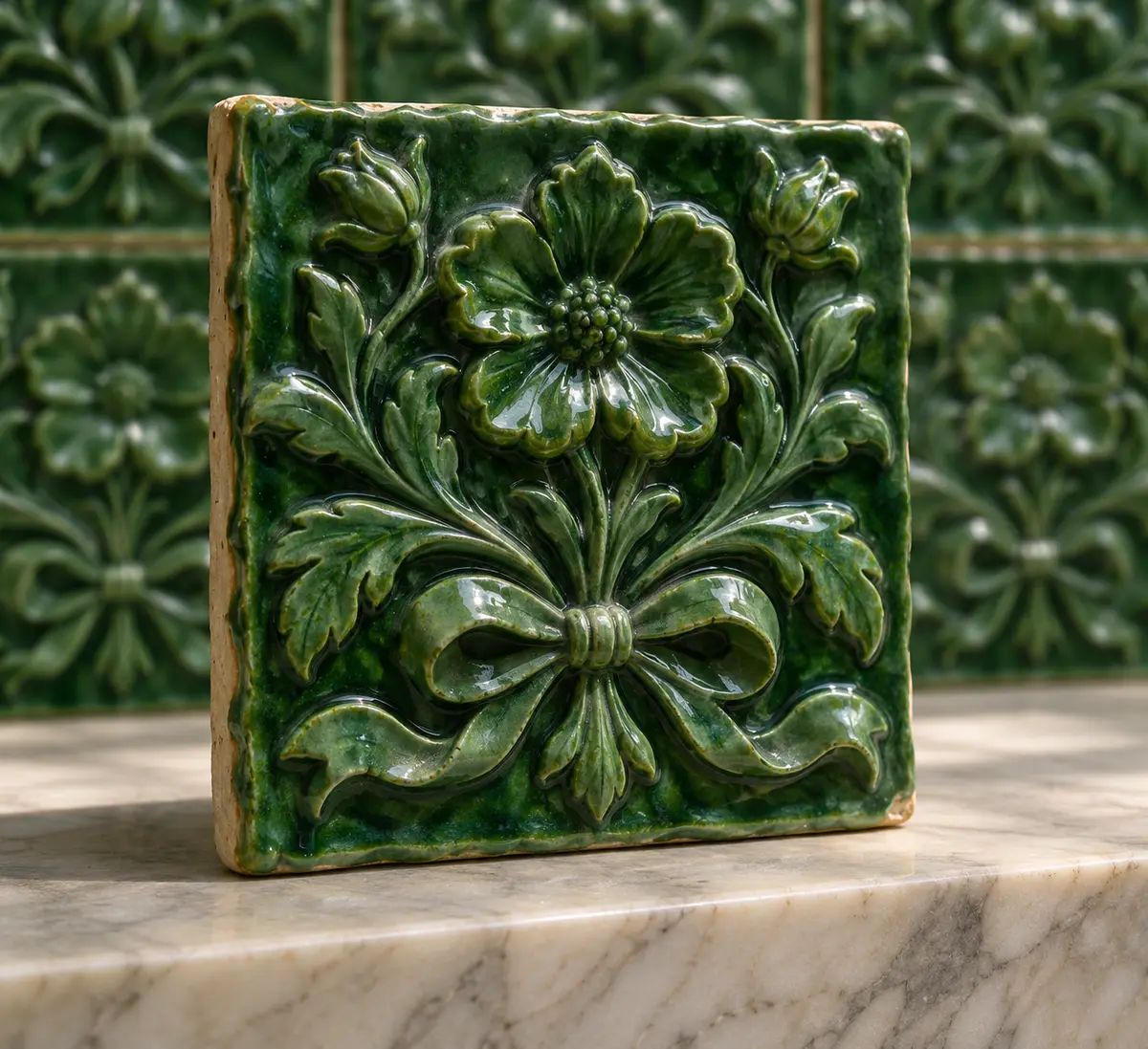
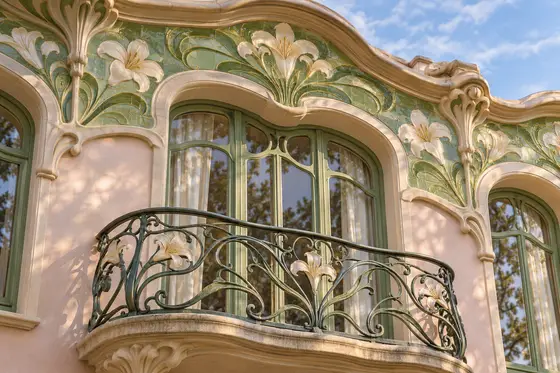
Single-glaze relief tiles, green for example, appear on facades and friezes. The glaze pools in the hollows and darkens them, so the design shows through shadow.
English Wikipedia says Porto factories made high-relief tiles in one or two colours in the 19th century. The Museu Nacional do Azulejo adds that factories in the north of Portugal used raised forms to create stronger optical effects of light and shadow than those found in Lisbon, and illustrates this with a pattern panel of 1850/1900 from the Fábrica de Massarelos. Portuguese Wikipedia notes that the glazed face of a tile can be monochrome or polychrome, flat or in relief, and lists copper as the mineral that gives green.
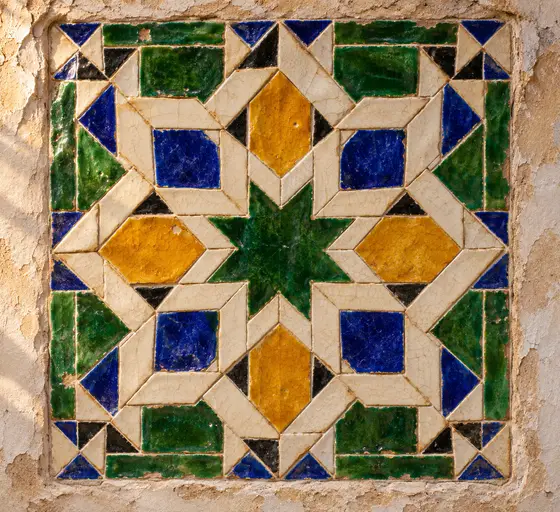
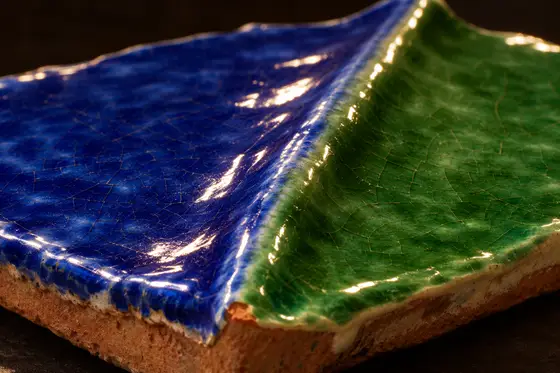
Relief was much older than the industrial tile. In the aresta method soft clay was pushed into square moulds so that raised ridges separated the colours, and Aramco World says it replaced the older alicatado, in which painted fired tiles were cut into pieces and pressed into mortar. In the cuenca technique a mould pressed into a clay slab leaves a raised outline and hollows that are filled with glaze; the V&A says wax lines kept the colours apart and sometimes melted. In both, the ridges stop one colour running into the next.
This is a general description, not confirmed to a single source.
Source: en.wikipedia.org, artsandculture.google.com, pt.wikipedia.org, aramcoworld.com, collections.vam.ac.uk
AI-generated illustration in the manner of the tradition, not a photograph of a specific object.