V Ceramics in place · Plate 049
Roadside niche with a tile panel
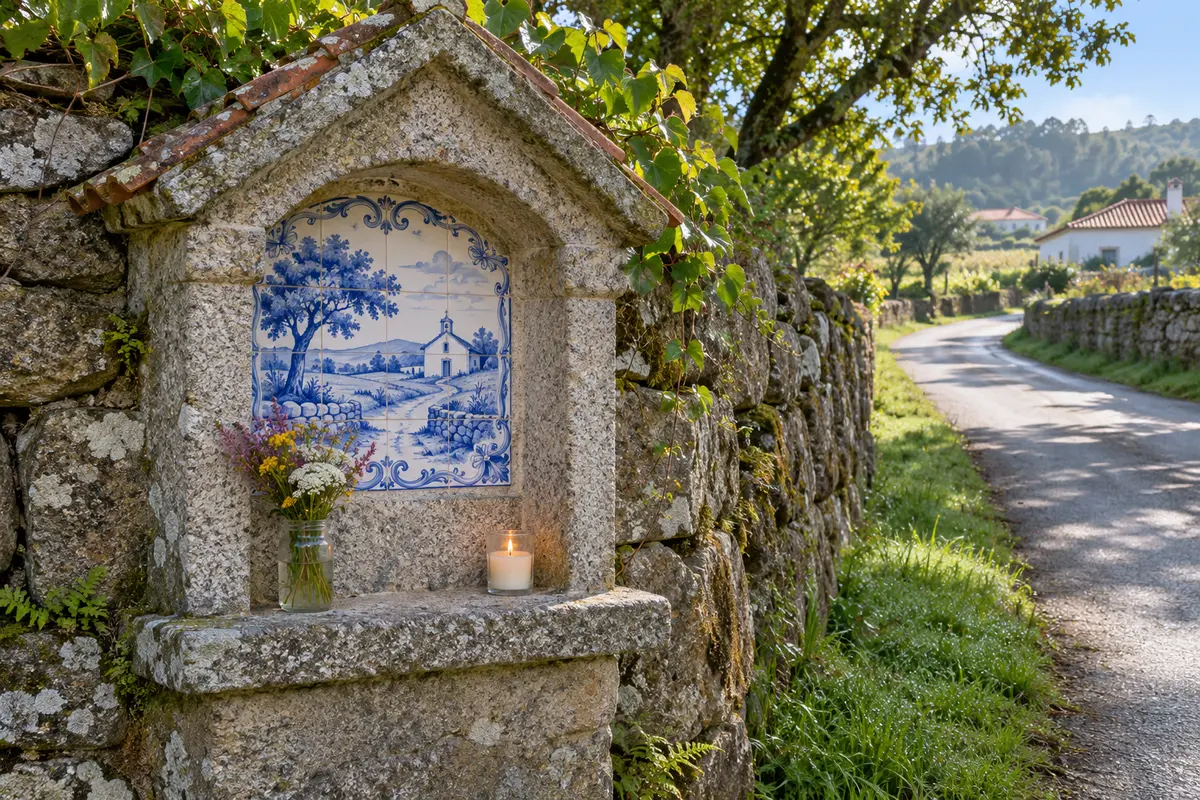
Alminhas are small roadside niches, commonest in the north and centre, with a tile panel showing souls in purgatory.
Alminhas, also called nichos das almas, are small shrines devoted to the souls in Purgatory; in Galicia the equivalent is the peto de ânimas. They stand mostly along rural paths and places of passage: crossroads, bridge entrances, high points, beside main roads, even on doorsteps. Some are freestanding altars, others sit in a niche or are set into an old wall or house façade. Their placement is linked to the cult of the dead and to the protection of travellers. In Póvoa de Varzim they are built of stonework, with a small niche behind an iron grid and a tile panel that invokes the souls, and older town-centre examples resemble altarpieces.
The origin of alminhas is unknown, although ancient peoples also raised monuments at roadsides and crossroads to gods who protected travellers. Artistic images of Purgatory appear only from the 15th century, and the Council of Trent reinforced the idea of a place where lighter sins are expiated. The typical image shows souls burning in flames and rescued by saints, or angels and demons contending for them; Saint Joseph, Saint Anthony, the Archangel Michael, the crucified Christ and the Virgin appear, sometimes with inscriptions on the brevity of life. Painted relief, painting on stone or canvas and, most often in the 20th century, azulejo were used. Passers-by stopped to say a Pai Nosso and an Ave Maria and left candles, flowers or an olive-oil lamp (lamparina). In Póvoa de Varzim the shrines are kept by the Confraria das Almas, and some no longer take alms because of theft and damage.
Source: pt.wikipedia.org, en.wikipedia.org
AI-generated illustration in the manner of the tradition, not a photograph of a specific object.