V Ceramics in place · Plate 020
Chimney pots at sunset
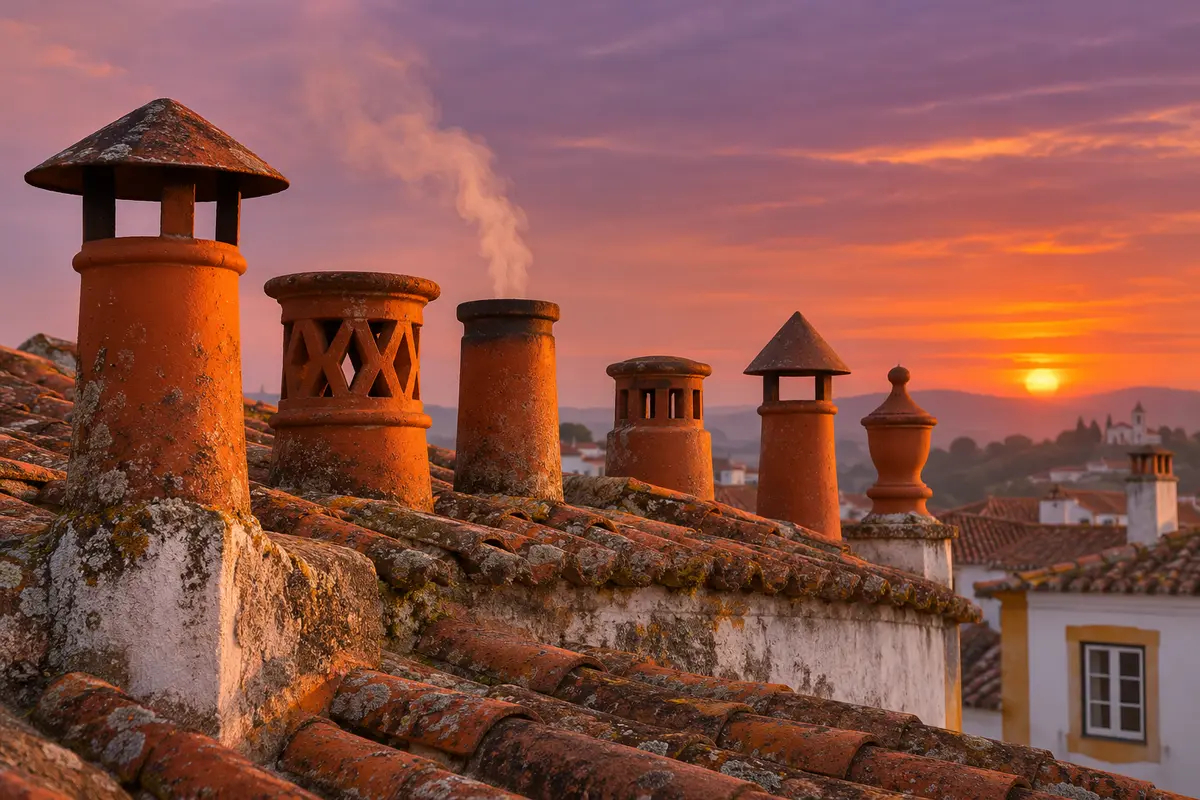
Clay chimney pots and caps sit above Portuguese rooftops, improving the draw and keeping out rain, each with its own small shape.
A chimney pot is a short extension fitted on top of a chimney to lengthen it and improve the draught. English Wikipedia explains the physics: hot flue gases are less dense than outside air, so they rise and pull air in through the fire, the stack effect. A taller chimney draws more, but one that is too tall lets gases cool before they leave. Several pots on one chimney suggest several fireplaces sharing it. Domestic chimneys appeared in large northern European houses from the 12th century and became common in ordinary houses in the 16th and 17th centuries.
Caps solve a second problem, the wind. A cowl or rotating cap faces away from the wind to stop smoke being pushed back down, and many have a rain guard, while flashing seals the joint where chimney meets roof. In Portugal, the Algarve article describes how Monchique chimneys were large and hexagonal because fireplaces spanned the kitchen and handled heating, cooking and smoking of sausages and meats, and the wider base and hexagonal top helped smoke circulate. It also says two 33-metre chimneys on the Sintra National Palace, ordered by João I, serve its kitchen. The Algarve article does not tell us which materials the pots are made of.
This is a general description, not confirmed to a single source.
Source: en.wikipedia.org, tomorrowalgarve.com
AI-generated illustration in the manner of the tradition, not a photograph of a specific object.