V Ceramics in place · Plate 021
Ornamental whitewashed chimney
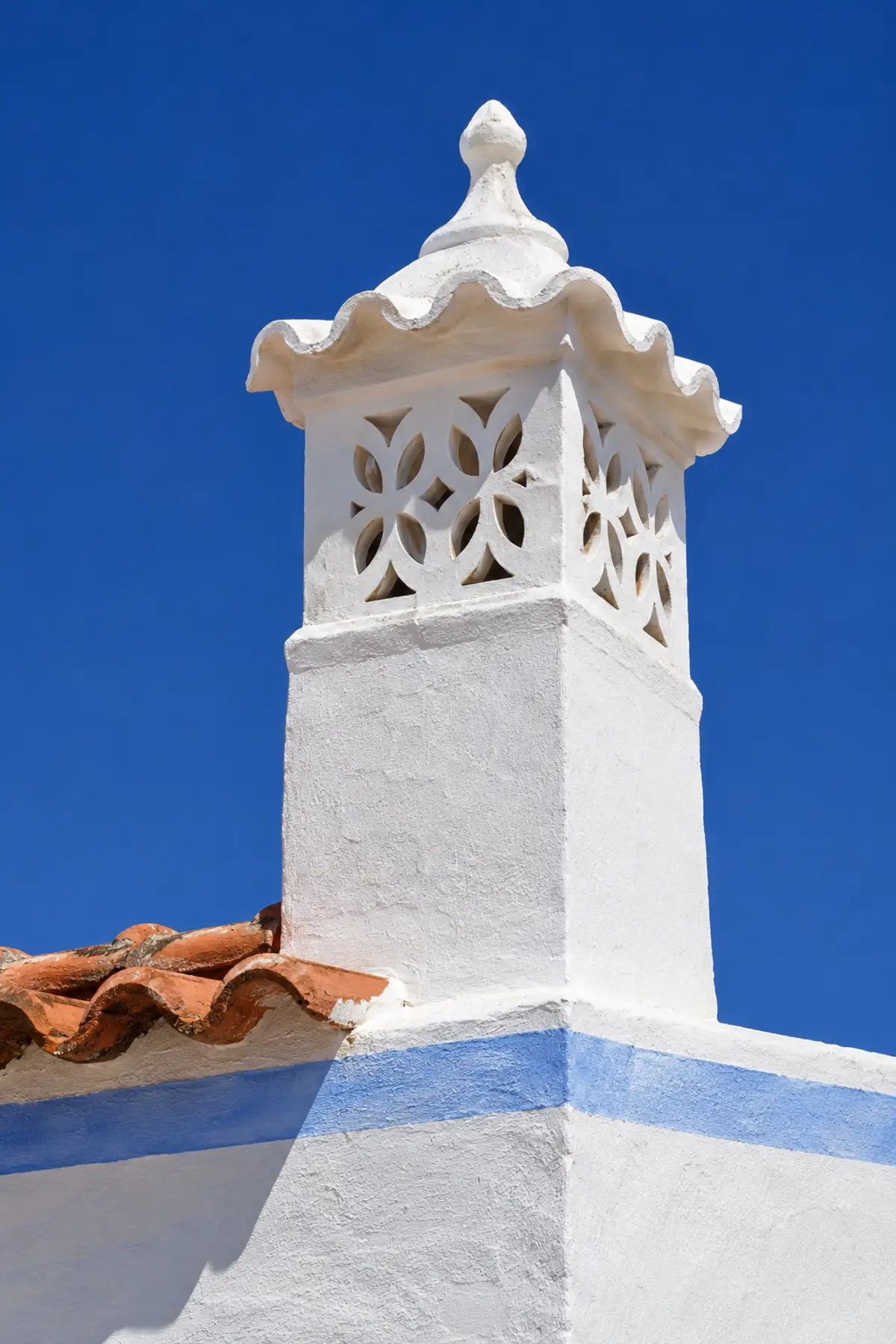
In the Algarve, openwork chimneys, usually limewashed, are known for their variety of shapes; the more elaborate, the more they are said to show the household's means.
The Algarve chimney, chaminé algarvia, is often said to be Moorish, but the article we opened says it is not of Islamic origin. The name Algarve comes from Arabic al-Gharb, meaning the west, but chimneys never appeared in Arabian architecture. They became fashionable in the Baroque period of the 17th and 18th centuries, when gold and diamond imports under João V and José I paid for a building boom. The oldest known Algarve chimney is reported to be at Porches, on a cottage owned by the parish church dating to 1713, which the parish council protected in 2016.
Status was part of the design. Wealthy families used elaborate chimneys to show success, and masons reportedly asked clients how many days of chimney they wanted, since more days of work meant a more elaborate chimney. Mass production later made chimneys more affordable, and they became the main feature of ordinary whitewashed houses, adding decoration to otherwise plain walls. At Porches the so-called Doll chimney, with a doll-like figure carved into its base, dates to 1793 and sits above the parish museum. Today the chimney is a regional symbol of the community as a whole rather than of class and wealth. This is a single web source.
This is a general description, not confirmed to a single source.
Source: tomorrowalgarve.com
AI-generated illustration in the manner of the tradition, not a photograph of a specific object.