III Regional wares · Plate 021
Throwing at the wheel
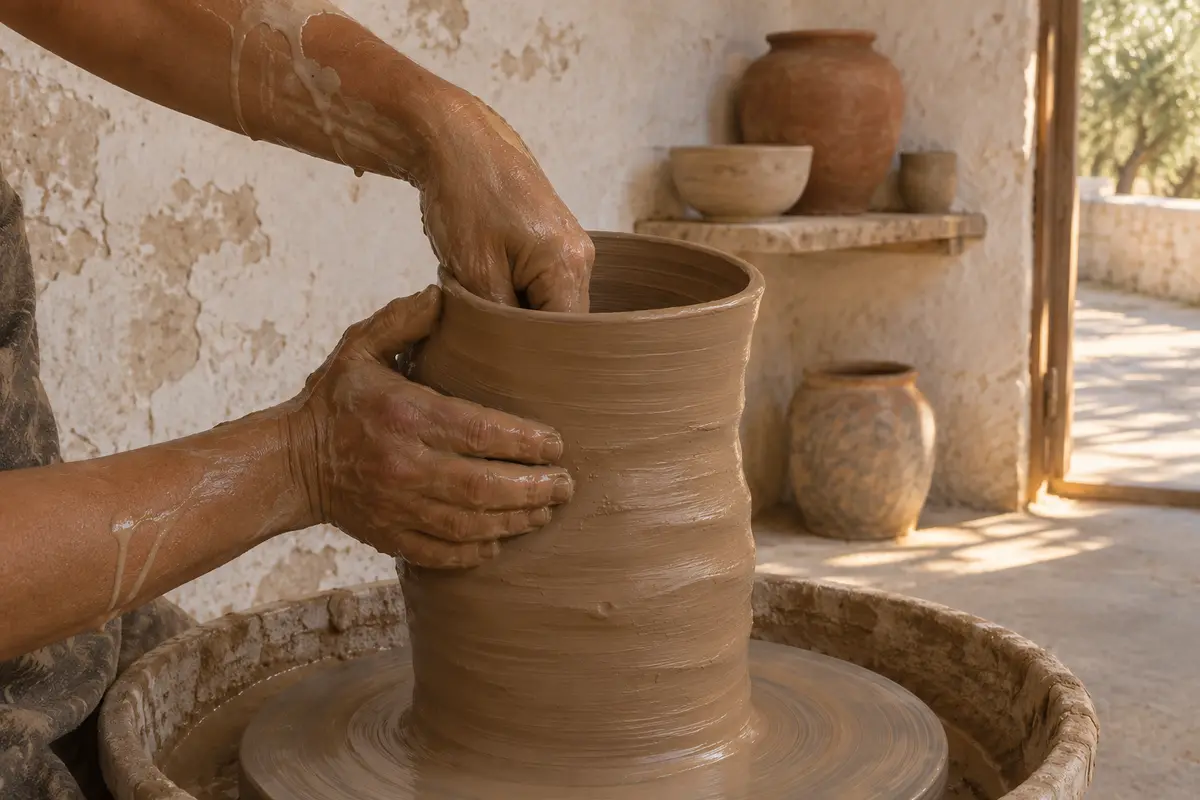
Throwing on the wheel has three phases: centring the clay, opening it, then shaping the piece. The potter works with water, a metal blade and a cloth.
In Corval the potter's wheel is, in the historian's words, the hallmark of handwork. It reached Portugal in the proto-historic period, which raised production and changed the shapes of pieces. Until some seventy years before the study, the wheel was heavier and entirely of wood. It sits beside the arquina, the bench where the louceiro, the person at the wheel, wets the hands. Other tools are the alpanata (a piece of felt), a cut length of cane to help modelling, gauges (bitolas), a wire to separate the finished piece from the lump, or péla, and the raspadeira, which keeps the wheel head and the bench clean.
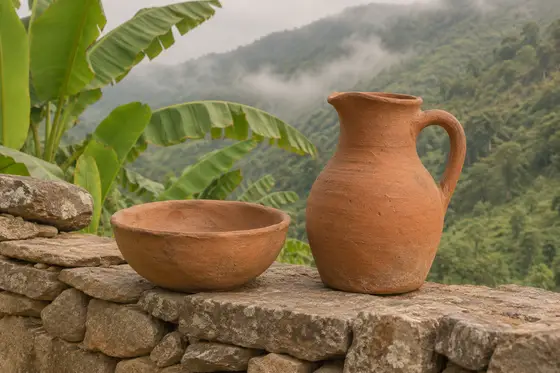
The village sits on a valley of common red clays, and potters distinguished a coarse, lean clay for building blocks from a fine, fat clay, the barro da roda, suited above all to water jugs. It was dug in July and August, carried on donkeys in palm baskets, mixed with water in a tino, strained through a thick layer of broom and later a sieve into a tank to dry, and stored under cover for the master to draw all year. Today potters usually buy clay already treated, and the rodista is increasingly rare because of moulds.
Source: dspace.uevora.pt
Read about it: Clay towns of the Alentejo, and what each page can prove →
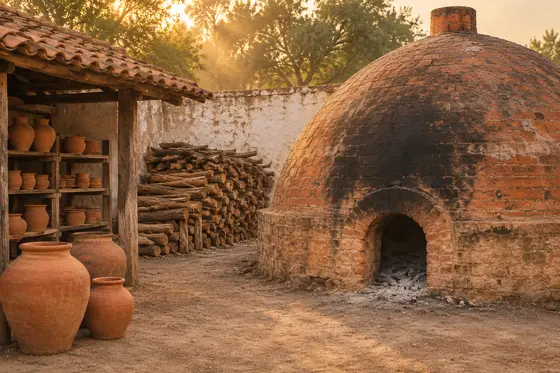
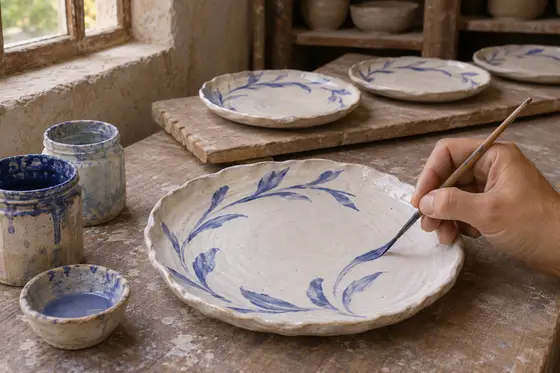
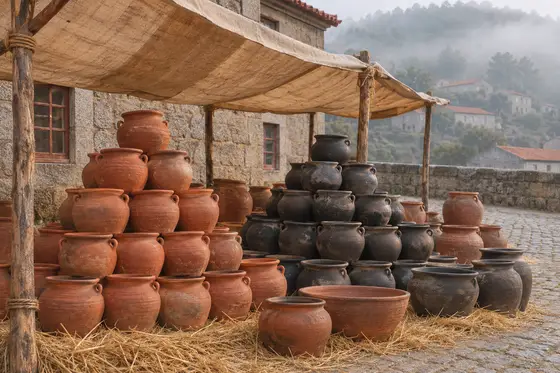
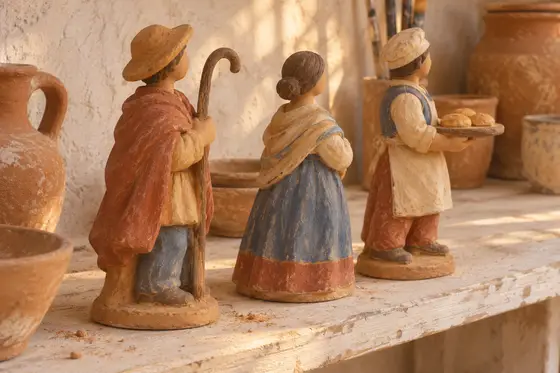
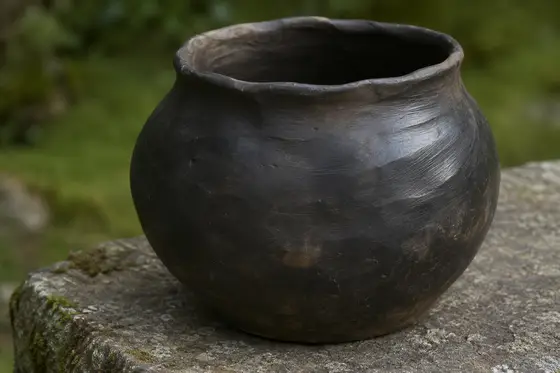
AI-generated illustration in the manner of the tradition, not a photograph of a specific object.