III Regional wares · Plate 013
Black pottery of Bisalhães
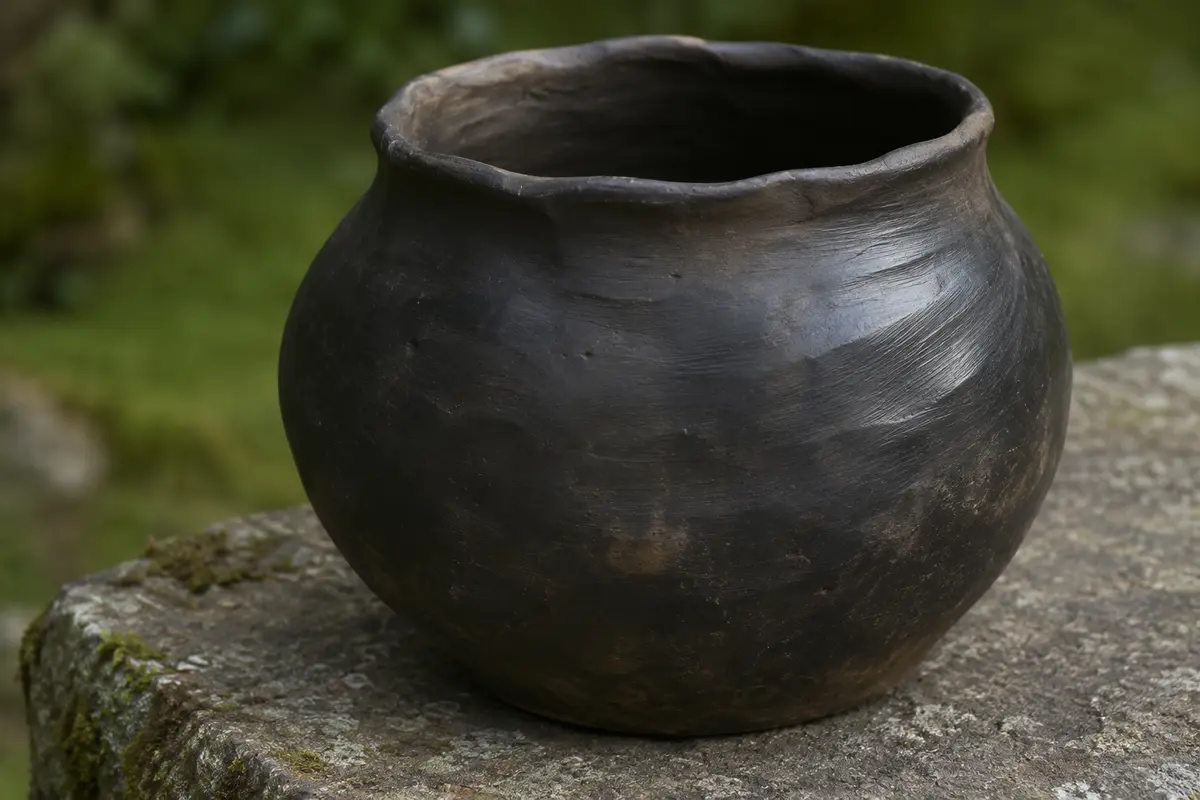
Bisalhães, in Mondrões near Vila Real, makes black pottery. UNESCO placed the manufacturing process on its Urgent Safeguarding list in 2016.
UNESCO's description of Bisalhães pottery starts with the clay. It is crushed with a wooden hammer in a stone tank, sifted, mixed with water and kneaded. Today the clay comes from local tile factories rather than from pits. Pieces are shaped and defined with various laths, the surface is smoothed with pebbles, and decoration is applied with a stick. The black ware is made for both decoration and cooking, and the craft appears on the village coat of arms. The page presents Bisalhães as the land of pot and pan producers and notes that old methods are still used to make pieces resembling historical ones.
The firing is what turns the pieces black. Diário de Notícias reported in 2016 that the ware is fired in old kilns opened in the ground, burning broom, pine needles and carqueja, then smothered with dark earth, the same earth that gives the black colour. The newspaper said the processes go back to at least the sixteenth century. In March 2015 the process was recognised as national cultural heritage, and in 2016 UNESCO placed it on its list of intangible heritage needing urgent safeguarding, a decision taken in Addis Ababa at the 11th session of the committee.
Source: ich.unesco.org, dn.pt
Read about it: Black pottery, and the question of the colour →
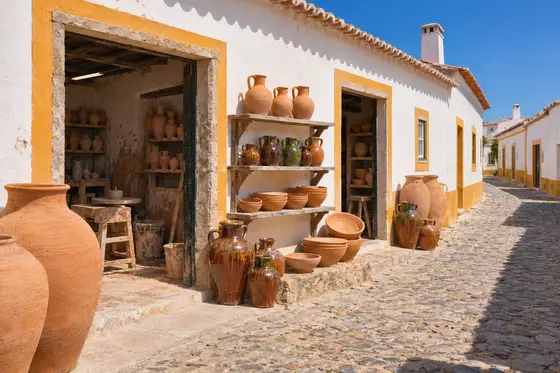
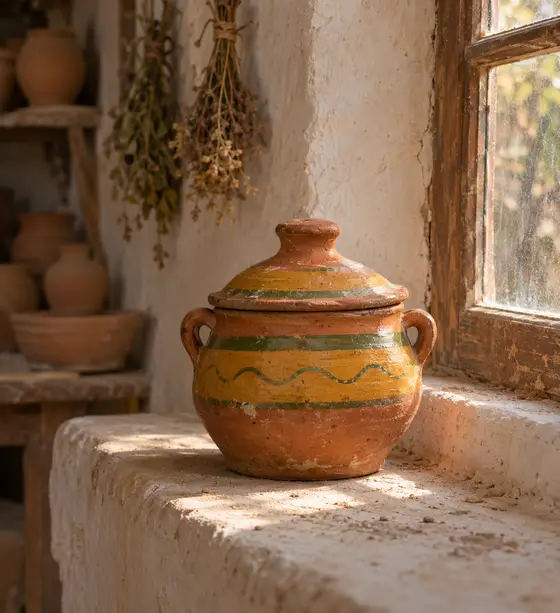
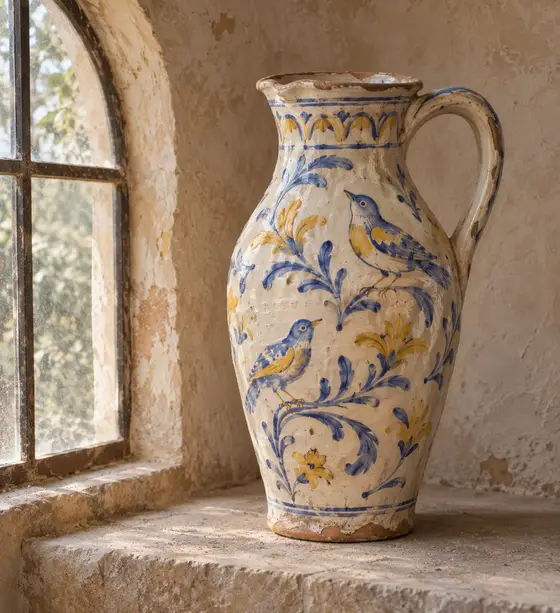
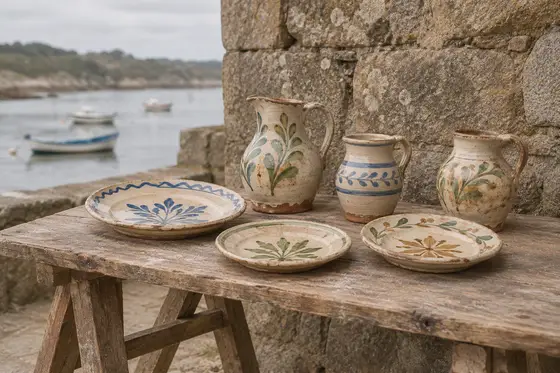
AI-generated illustration in the manner of the tradition, not a photograph of a specific object.