III Regional wares · Plate 034
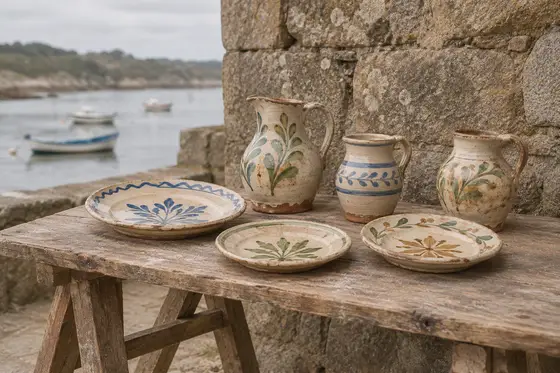
Tin-glazed jug
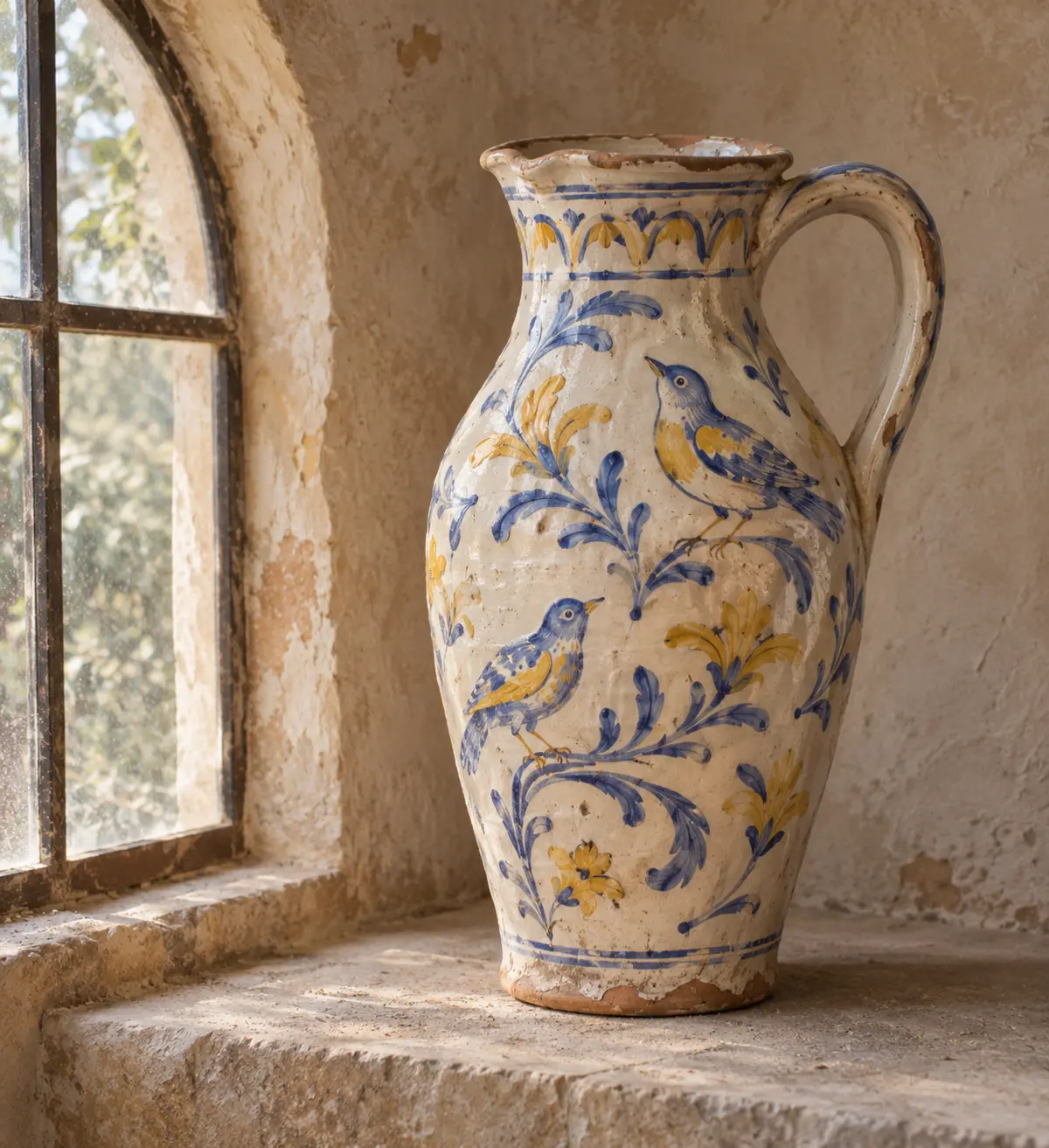
Tin-glazed faience jugs and vases were painted by hand. This jug is shown in a general style and is not tied to a specific workshop.
In the thesis on Coimbra tile production, the albarrada appears as one of the serial, ornamental types of early 18th-century Coimbra tiles, alongside pattern tiles (padrão) and single figures (figura avulsa). Its clearest early example is in the University of Coimbra. For the Sala do Exame Privado, built between 1696 and 1702 under the university's master builder José Cardoso, Agostinho de Paiva was paid as tile painter on 14 April and 1 September 1701. The thesis dates the albarrada tile panel there to 1701 to 1702 and credits Paiva, a potter and tile painter, with the tiles.
The work was divided between maker and layer. Paiva, the potter, made and painted the tiles, and the ladrilhador José de Góis set them on the wall. They worked together again in 1702 at the Gerais Novos in the Paço das Escolas, where a tile panel shows flowered vases flanked by parrots. The thesis says that, facing commissions for large figurative cycles, Paiva went beyond serial production and partnered with the ornamental painter Manuel da Silva, a Lisbon native active from 1703. His clients were mostly from the university's learned circles.
This is a general description, not confirmed to a single source.
Source: belard.pt
AI-generated illustration in the manner of the tradition, not a photograph of a specific object.