III Regional wares · Plate 026
Clay drying in the sun
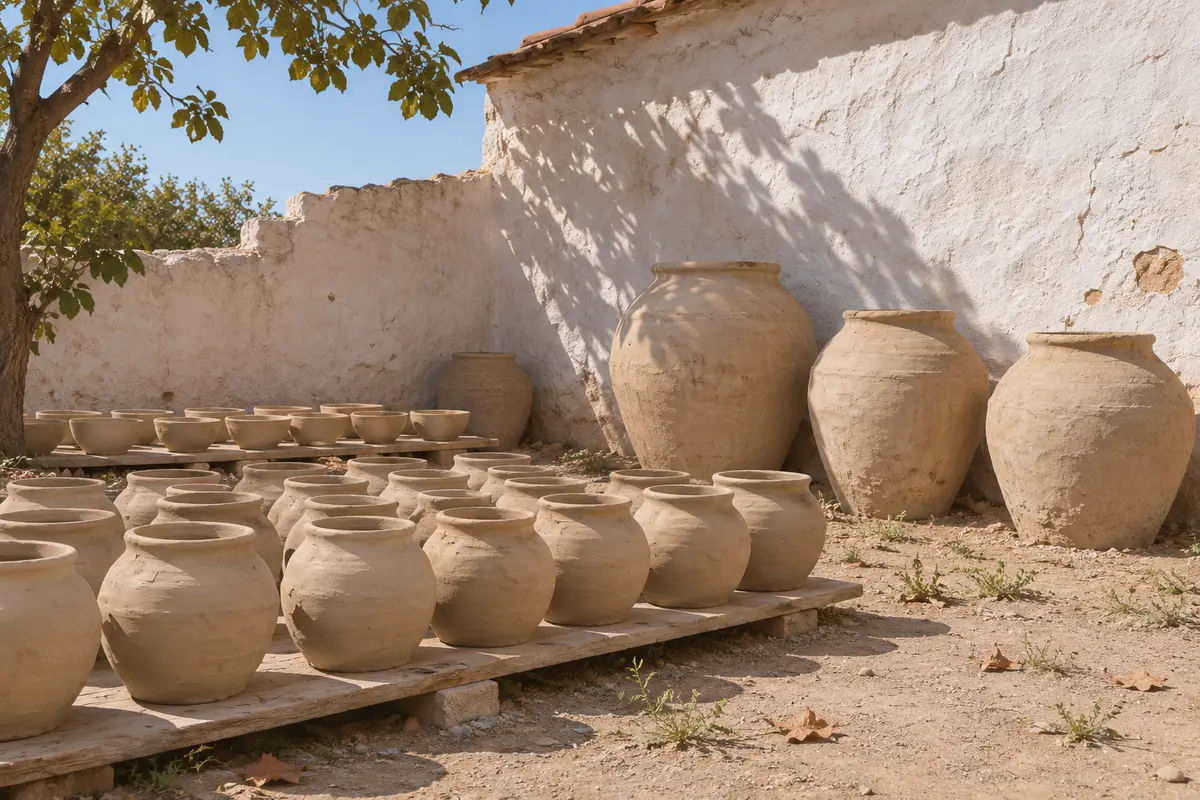
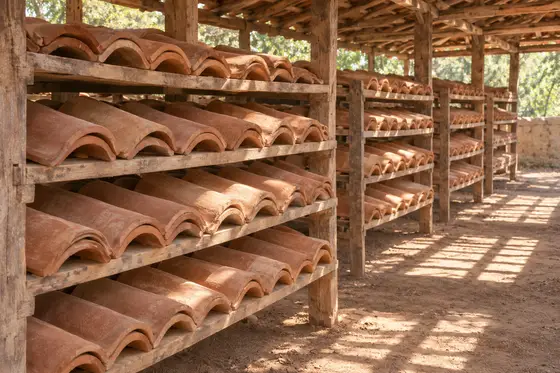
Drying pots in the sun was traditional; the Barcelos pottery file says potters now use the sun, dryers or the kiln. Slow, even drying is decisive for a good firing.
The technical file on Barcelos pottery lists drying as one of the most decisive stages for a successful firing, and stresses a careful, thorough drying of every piece. It comes after forming: on the wheel the potter centres the clay, opens it and shapes the piece, then cuts it free with a wire. Drying methods now vary from potter to potter. Some still use the sun, as potters formerly did, others use dryers, and others use the pottery kiln itself.
Sun is not the only tradition, and it is not always wanted. The Saber Fazer craft programme says drying of black pottery must be slow and complete, indoors and away from sun and wind, to prevent cracks, and may take up to fifteen days depending on size and humidity. Drying is also tied to finishing. In Barcelos, polishing on the wheel is done once pieces are slightly dry, until the surface is even and shiny. For black pottery, burnishing with a stone happens halfway through drying, when the clay is firm but still soft at the surface.
Source: cearte.pt, programasaberfazer.gov.pt
Read about it: Clay towns of the Alentejo, and what each page can prove →
AI-generated illustration in the manner of the tradition, not a photograph of a specific object.