III Regional wares · Plate 047
Terracotta roof tiles
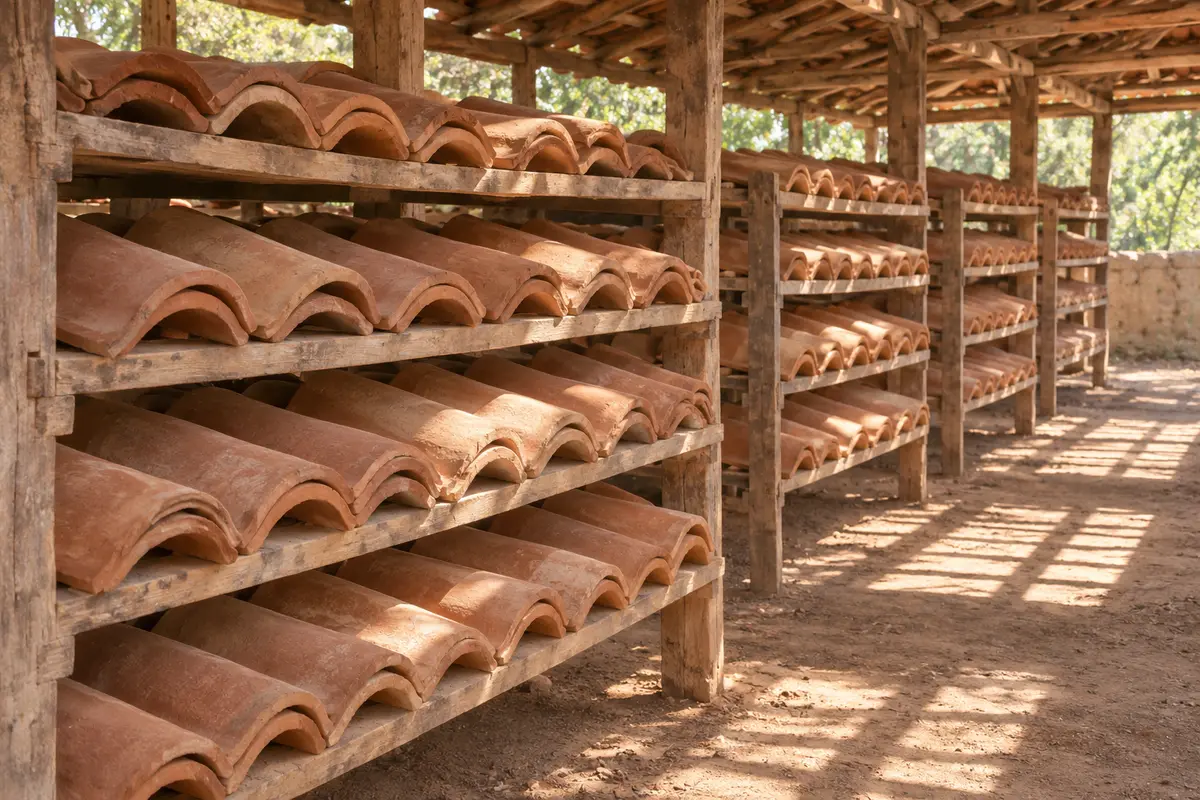
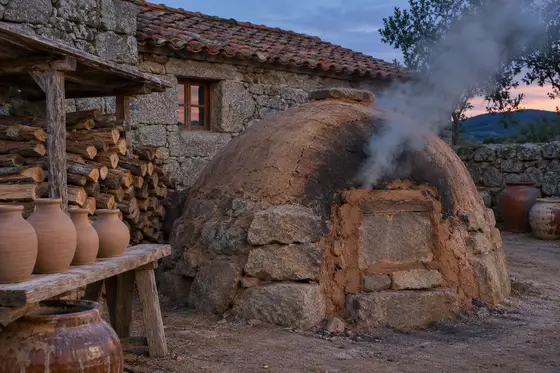
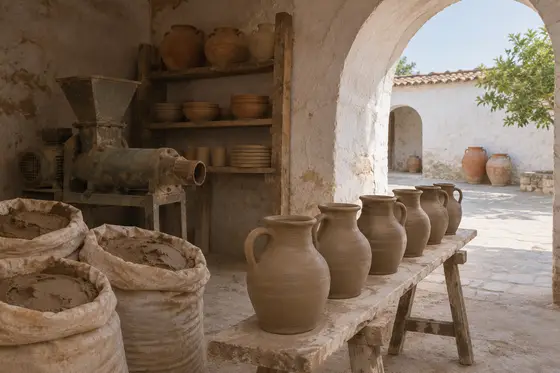
Clay roof tiles are a common ceramic product. This drying shed is shown in a general style and is not tied to a specific place.
Clay roof tiles likely arose independently in late Neolithic Greece and China. Around 700 to 650 BC, fired tiles began to replace thatch on temples near Corinth, because they resisted fire, which justified their higher cost. The Romans spread tile making through their colonies, with kilns as far west as Spain. Common shapes include flat tegulae with semi-cylindrical imbrices over the joints, the Spanish two-piece system of arched pan and cover (teja de curva), and the single-piece S-shaped pantile, traditionally extruded.
Firing matters: temperature, clay and the length of the firing cycle strongly affect strength, and low firing gives higher porosity and lower strength. Clay tiles can absorb water unless well fired, and many producers moved to engobes and glazes for colour. In Portugal, the Porto Santo craft page records roof shingles made and sold stamped S.V., for Sebastião de Vasconcelos, and Bordallo's Caldas factory made glazed roof tiles from 1884. No source opened here explains how Algarve tile yards worked, so this entry does not describe them.
This is a general description, not confirmed to a single source.
Source: en.wikipedia.org, portosantobiosfera.madeira.gov.pt, museubordalopinheiro.pt
AI-generated illustration in the manner of the tradition, not a photograph of a specific object.