III Regional wares · Plate 039
Painted porcelain
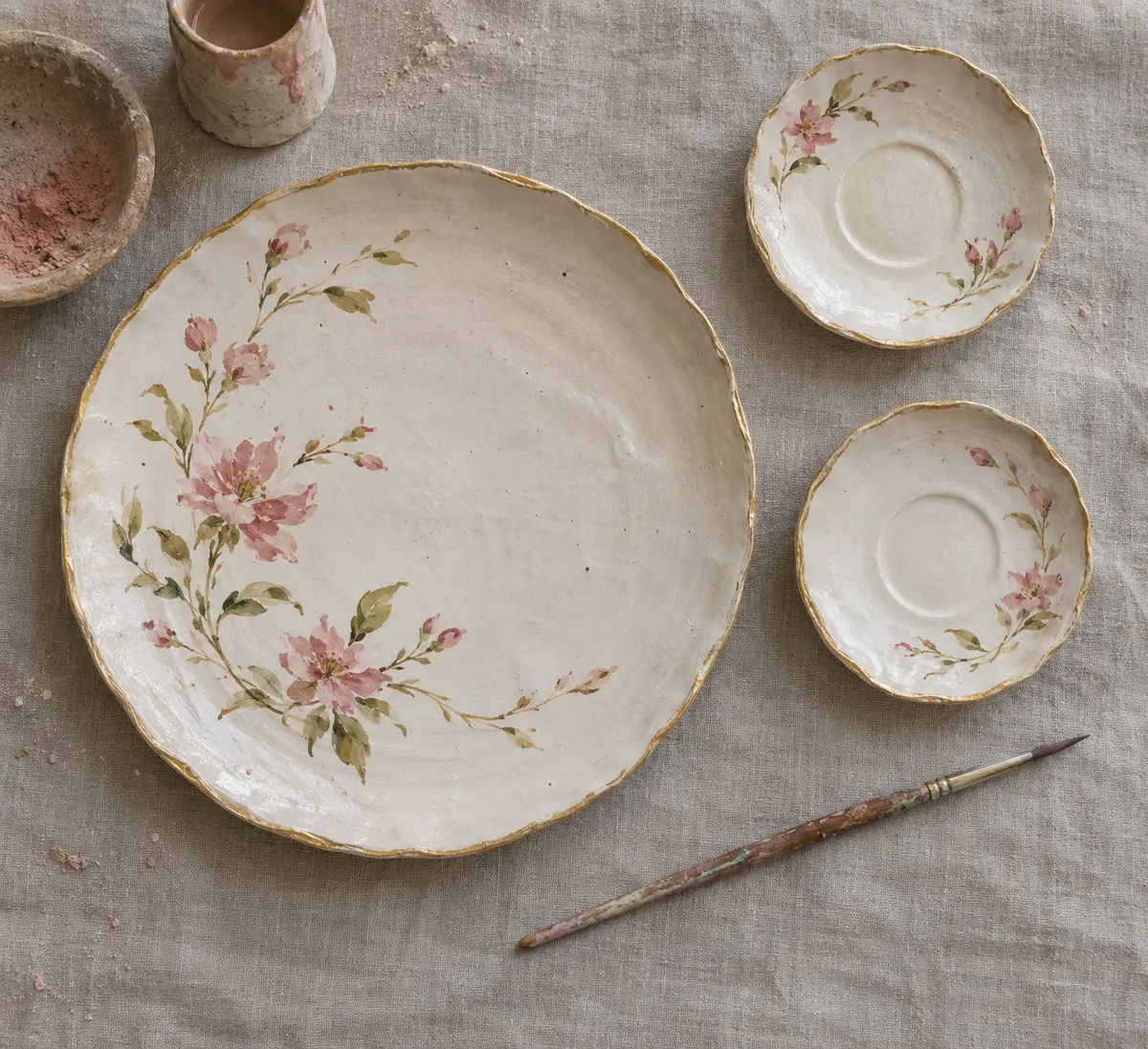
Porcelain can be decorated by hand or with transfers and is fired again to fix the decoration. This plate is shown in a general style.
Porcelain decoration falls into two families. Underglaze decoration uses pigments such as cobalt oxide and copper, put on before the glaze. Overglaze enamels allow a wider range of colour, and many porcelains were fired two or three times so that the less robust overglaze enamel pigments could be used. Some porcelain, by contrast, is once-fired, with the glaze applied to the unfired body and both fired together. Decoration is therefore a question of sequence as well as of brushwork: what is painted before the glaze firing, and what after it.
Vista Alegre's early glassware was decorated with relief, engraved patterns, ornate borders and delicately engraved medallions. Later 19th-century styles became simpler, with lyrical, romantic undertones, and new mechanical decoration techniques were introduced. In the 1920s and 1930s the company followed Art Deco and Functionalism. In 1985 it opened the Art and Development Centre (CADE) to encourage new pieces and decorations and to train in painting and sculpture, and it created a collectors' club limited at first to 2,500 members. The company museum opened in 1964.
This is a general description, not confirmed to a single source.
Source: en.wikipedia.org, vistaalegre.com
Read about it: Vista Alegre: a chapel, a licence and a porcelain works →
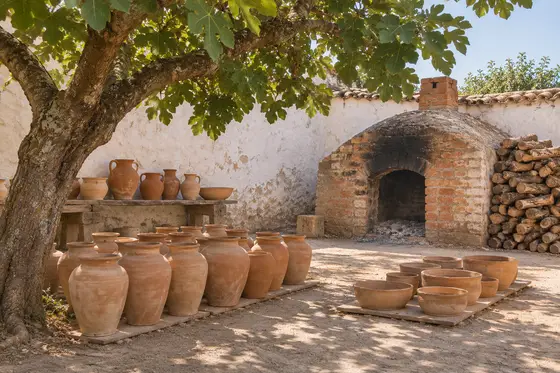
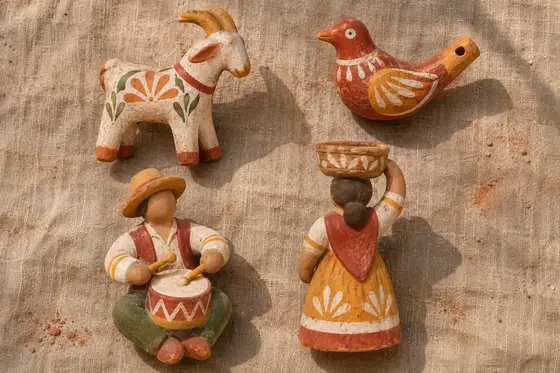
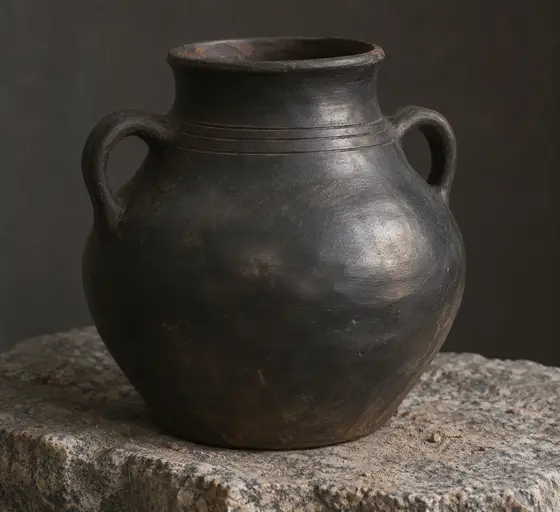
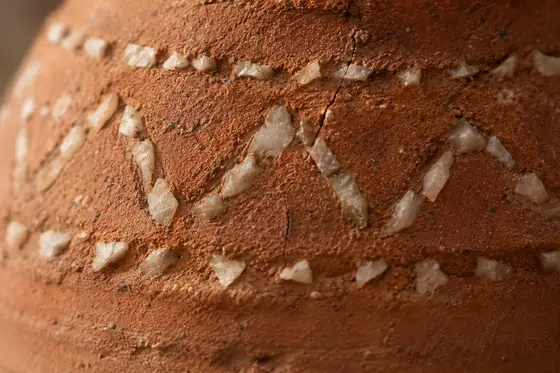
AI-generated illustration in the manner of the tradition, not a photograph of a specific object.