III Regional wares · Plate 038
Porcelain firing
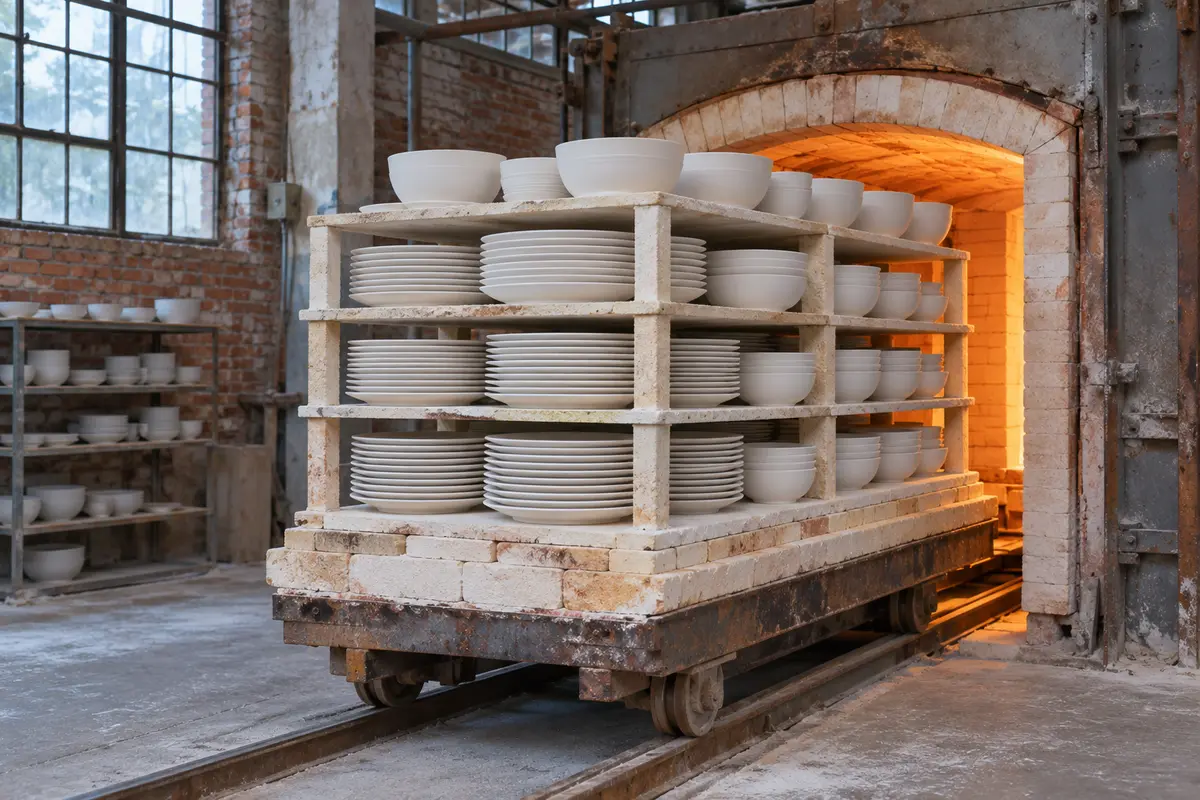
Porcelain is a white, hard, translucent ceramic made with kaolin and fired at high temperature. This scene is shown in a general style.
Porcelain is built on kaolin, the primary raw material, often with feldspar, quartz or ball clay. It is fired at about 1,200 to 1,400 °C, and strength and translucency come mainly from vitrification and from mullite forming in the body. Hard-paste, used for most fine porcelain, differs from soft-paste, made with clay and powdered glass and fired lower. Modern porcelain is typically biscuit-fired at about 1,000 °C, glazed, then fired at about 1,300 °C or more; some is once-fired, with glaze on the raw body.
In Europe, Portuguese traders brought kaolin samples home in the early 16th century. In Saxony, Tschirnhaus produced hard, white, translucent porcelain in 1708, and the Meissen factory was established in 1710. In Portugal, Vista Alegre began with glass because kaolin had not been found. The company says Augusto Ferreira Pinto Basto visited Sèvres to learn the composition and that deposits were found in 1832; the heritage record says kaolin was discovered at Outil in 1834. The sources disagree by two years.
This is a general description, not confirmed to a single source.
Source: en.wikipedia.org, vistaalegre.com, jardinshistoricos.pt
Read about it: Vista Alegre: a chapel, a licence and a porcelain works →
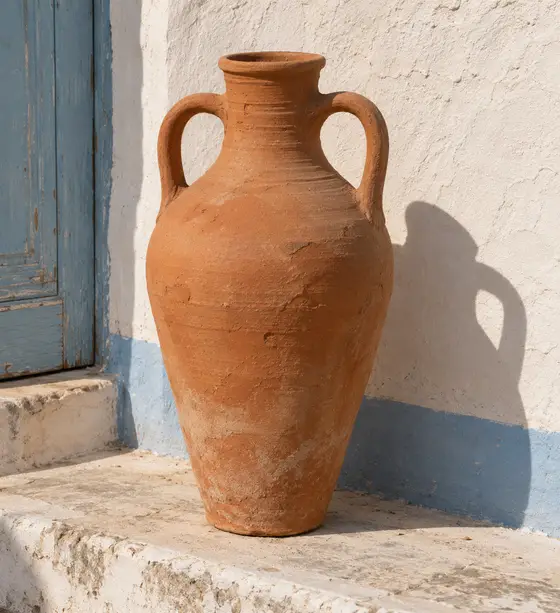
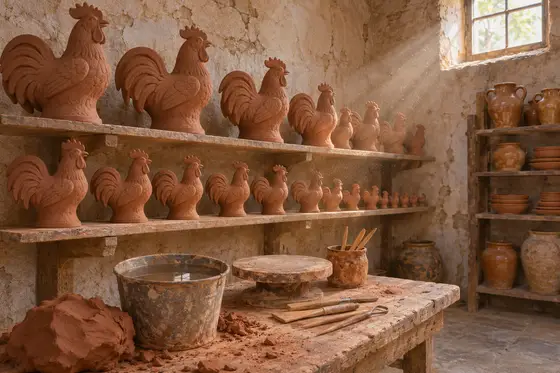
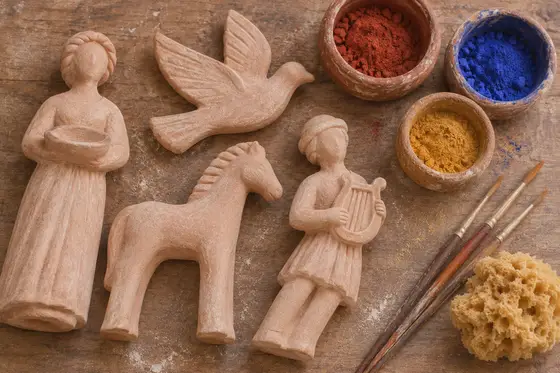
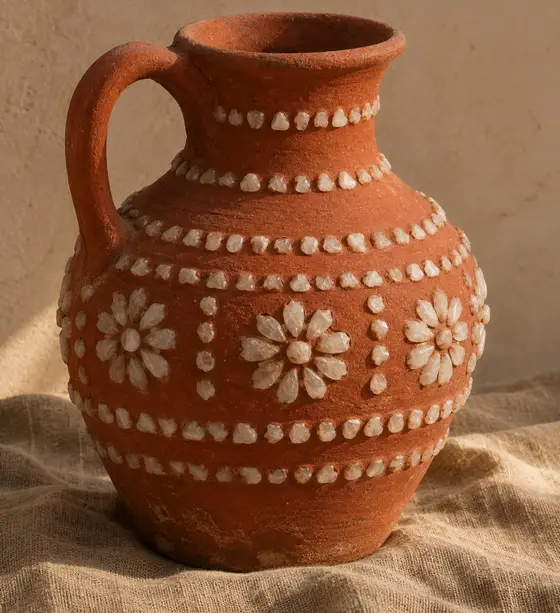
AI-generated illustration in the manner of the tradition, not a photograph of a specific object.