III Regional wares · Plate 024
Market stall
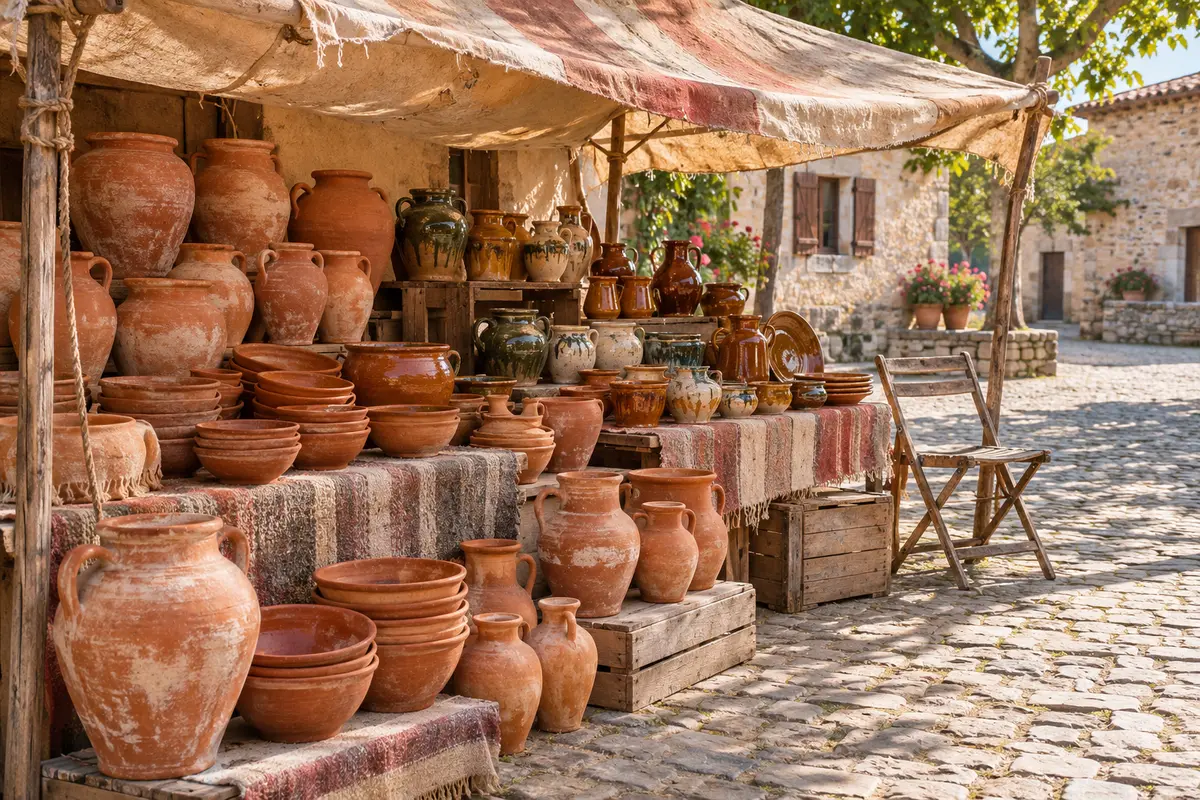
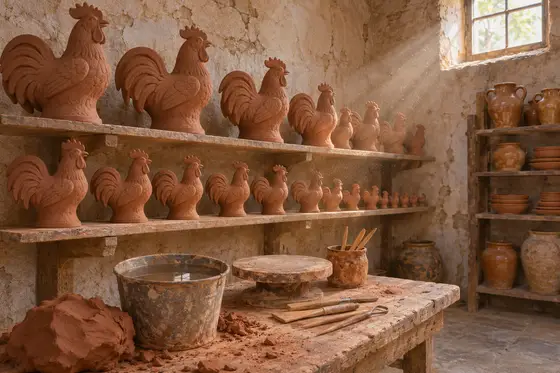
Pottery is traditionally sold at fairs and markets. This stall lays out earthenware in rows, shown in a general style.
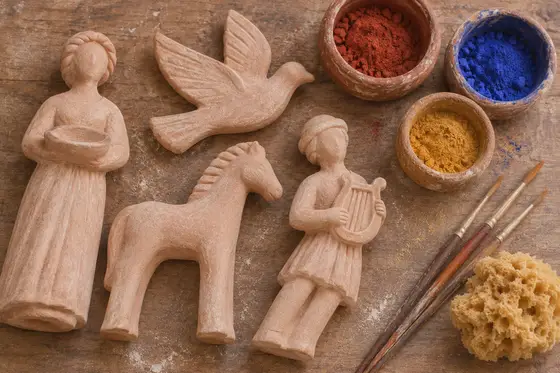
Before pottery was a keepsake it was something sold by the cartload. The Barcelos specification says that from the 13th century a legal document attests the economic weight of that pottery centre, and that its trade grew, first through fairs across the north of the country and later to the rest of Portugal and Galicia. Figurado makers sold at fairs too, and in the mid-20th century they saw which pieces from other regions sold best and copied them in moulds. In Nisa, potters sold in the railway stations of the Beira Baixa line, and coach passengers on the Lisbon route made it a compulsory stop.
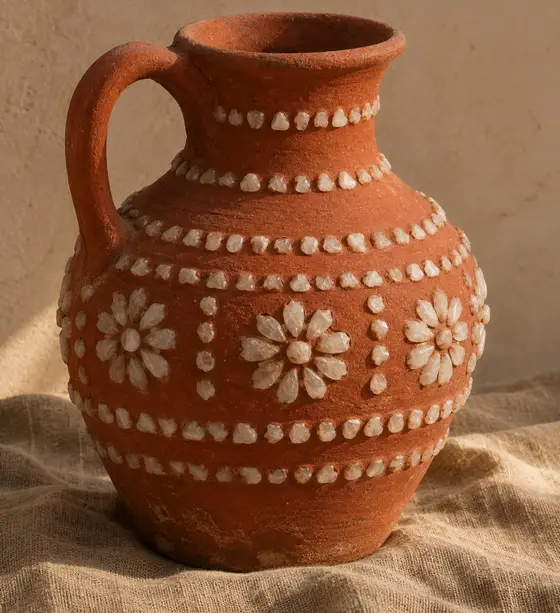
Trade left traces in the vocabulary of the craft. In São Pedro do Corval, pots and jugs doubled as measures: a cântaro de quarta held a quarter of an alqueire or almude, there were cântaros of terceira and quinta, and tarefas were named by the alqueires they held, from two down to a quarter. Panelas, asados and chocolateiras were named by the vinténs at which a dozen sold, from twelve to three. Estremoz makers made whistles for pilgrimages, and in the 1930s their figures were exhibited at national events. Tarefas, measures and dozens show that a market was part of every pot's design.
This is a general description, not confirmed to a single source.
Source: cearte.pt, cearte.pt, museubordadoebarro.cm-nisa.pt, dspace.uevora.pt, cearte.pt
Read about it: Clay towns of the Alentejo, and what each page can prove →
AI-generated illustration in the manner of the tradition, not a photograph of a specific object.