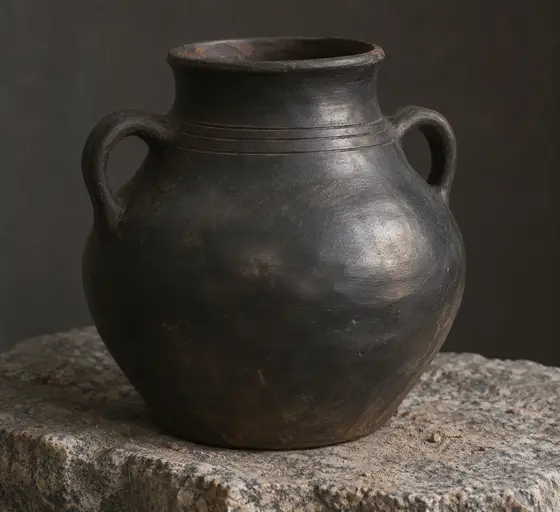
III Regional wares · Plate 025
Reguengos workshop
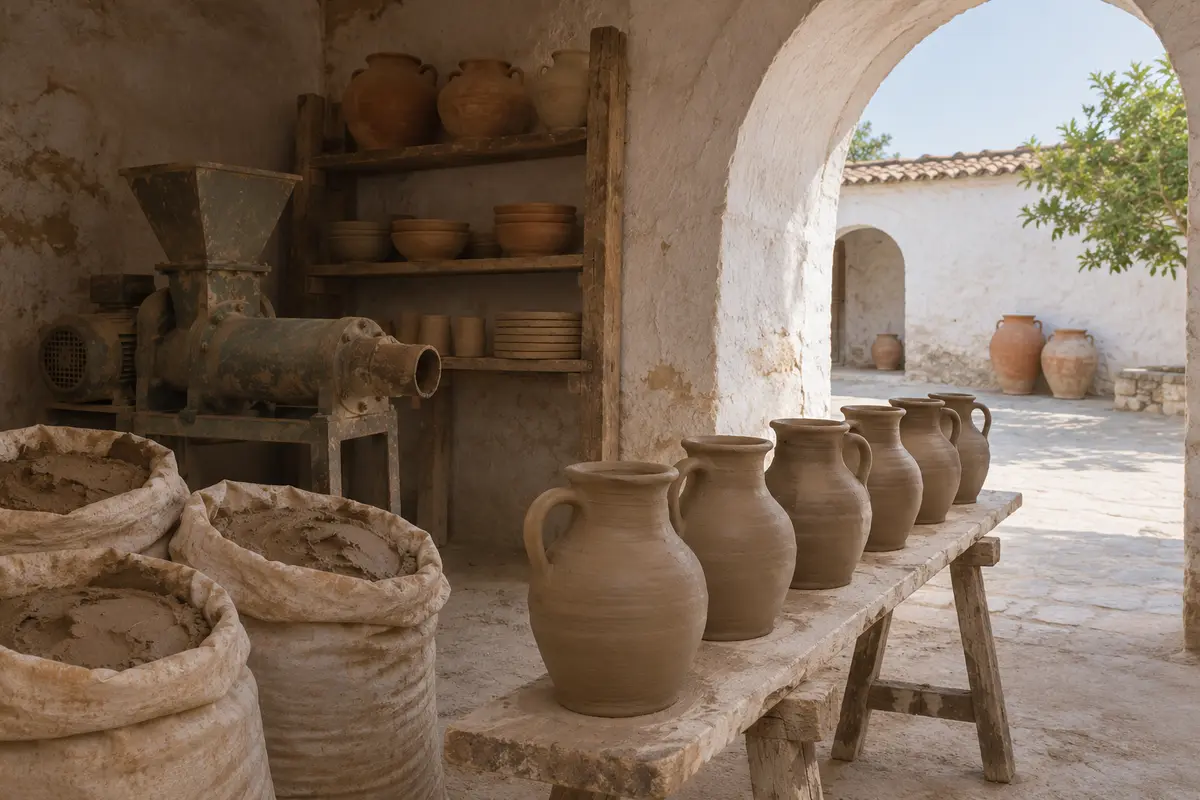
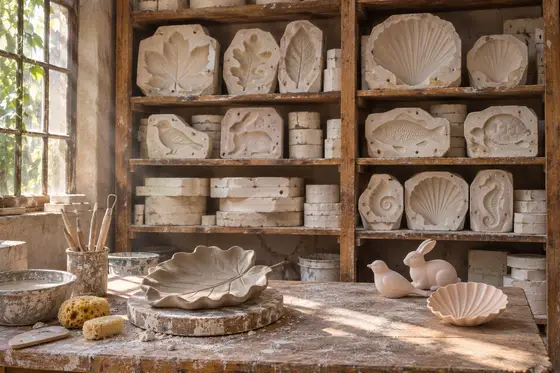
Reguengos de Monsaraz is the municipality of São Pedro do Corval, where the council's directory lists some twenty potteries. This workshop is shown in a general style.
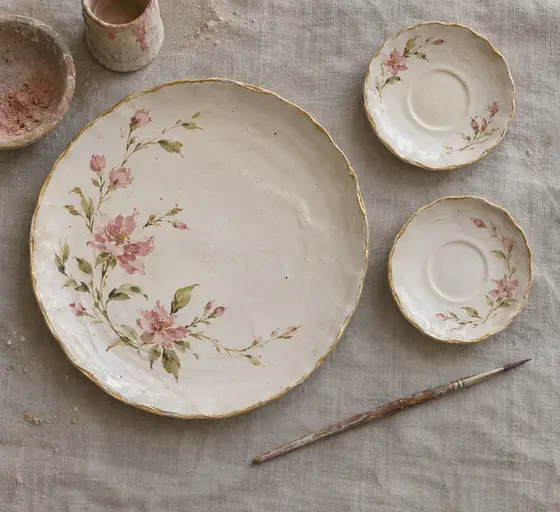
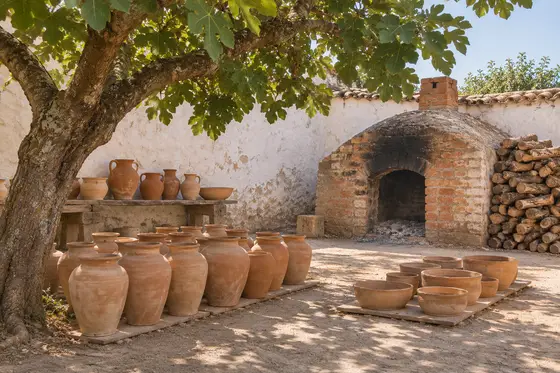
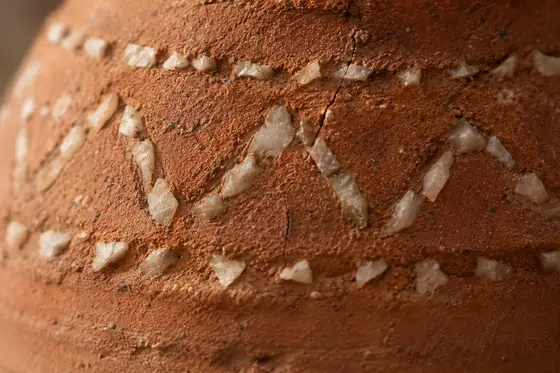
A Corval workshop traditionally made two broad kinds of ware, rough and glazed, each with its own slips. Water vessels such as cântaros and barris were coated with almagre, a deep red clay rich in iron oxide, and then fired. Other rough pieces had no slip and, after firing, were sealed with pitch for olives and wine (pesgar) or with wax for brandy, olive oil and cured sausages. Glazed pieces got a white slip of kaolin, extracted near marble areas, or a red one, were decorated with white dots and circular lines, given a chacota firing, dusted off and fired a second time with a lead-based glaze.
The same workshops also served building. Around the village there were kilns on farms where, seasonally, men dug and kneaded the clay and made large blocks, adobes or bricks and stacked them to dry, while women carried them to the kilns, scraped them and loaded them. Wood-fired kilns reached 750 to 800 degrees. Roof tiles of the canudo type are still made, in small numbers, and the repair of old buildings with traditional products keeps this side of the trade alive. The study notes that lead in glazes has been progressively reduced and that current rules police it.
This is a general description, not confirmed to a single source.
Source: dspace.uevora.pt
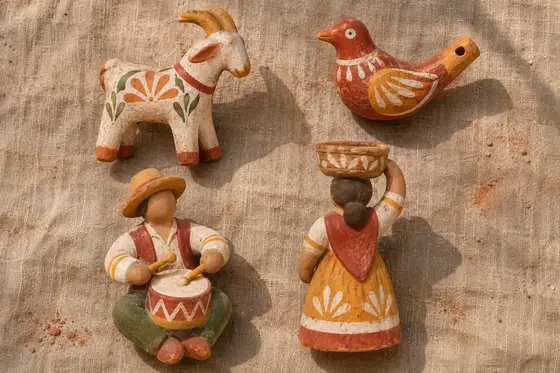
AI-generated illustration in the manner of the tradition, not a photograph of a specific object.