III Regional wares · Plate 003
Figurado of Barcelos
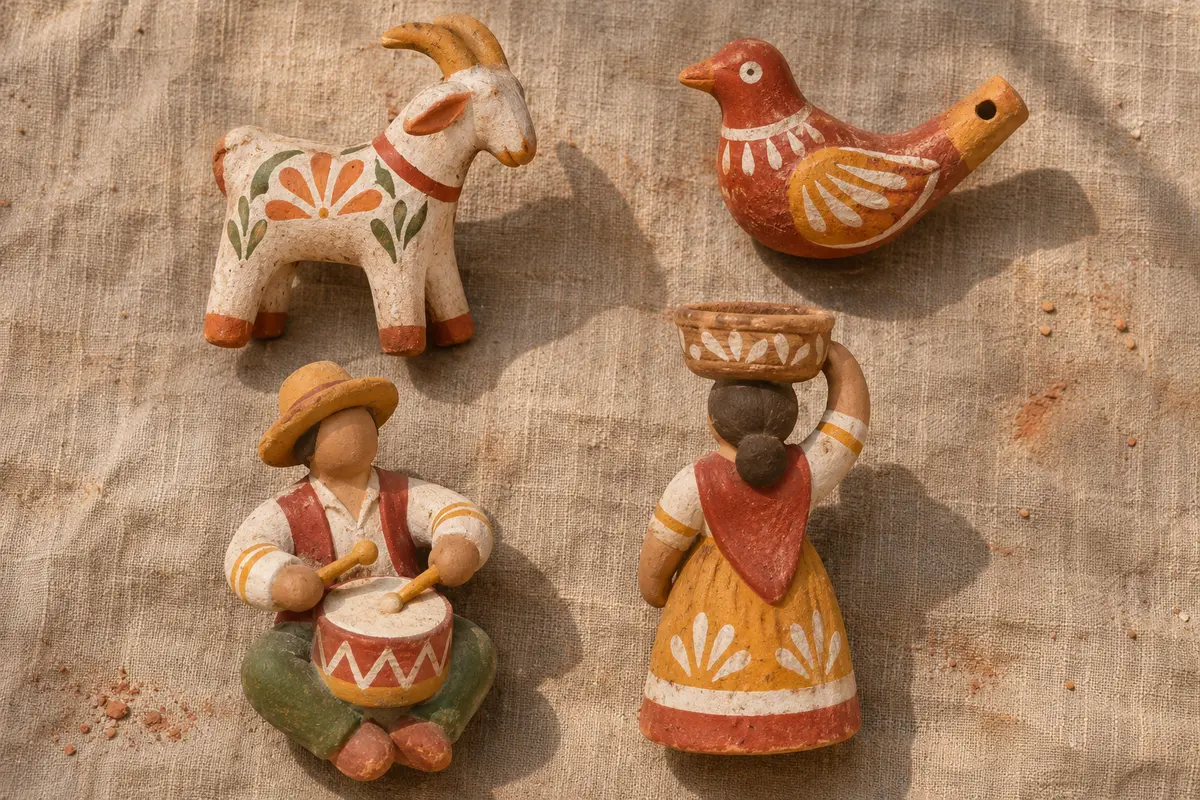
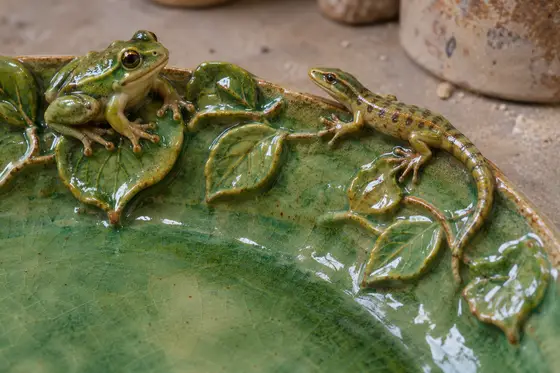
The figurado is the small clay figures of Barcelos: people, animals and scenes, which began as a sideline of pottery. Some carried a whistle or instrument in the base, and their function was play.
The first known reference to Barcelos figurado may be a remark by Frei Bartolomeu dos Mártires, in the mid-16th century, about figurinhas de barro tosco de Prado, rough little clay figures from Prado. Before that nothing can be dated, since no archaeological finds fix the first small clay sculptures. The modern idea of figurado comes from the 1950s, when the painter António Quadros brought the work of Rosa Ramalho to the cultured public of Porto. Pieces began to be signed, and words such as figurado and barristas became standard, a sign of an urban eye starting to value rural work.
The certification specification sorts the repertoire into four families: religion and festivity (souls in purgatory, Christs, processions, weddings), the bestiary of monsters, devils and hybrid creatures, everyday life (rural scenes, trades and professions), and loose figures and miniatures. To tell hand work from moulded work it also defines three categories: figurado de autor, where modelling makes up more than 75% of the work; mixed technique, where modelling must be at least 30%; and figurado de molde, made entirely in moulds, which includes nativity and procession pieces. Figures that reproduce the features of an identifiable person cannot be certified.
Source: cearte.pt
Read about it: The rooster that crowed, and the potters who made Barcelos famous →
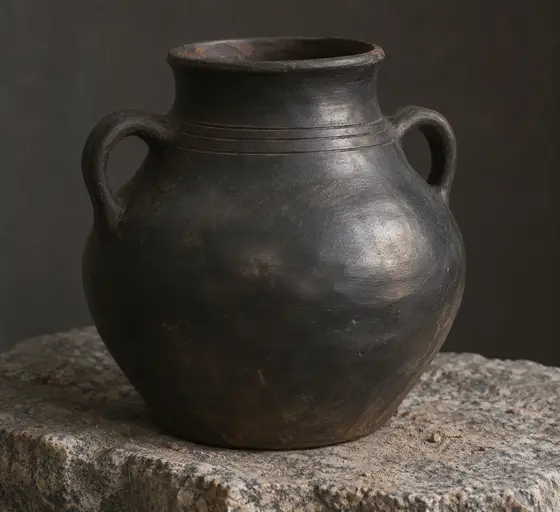
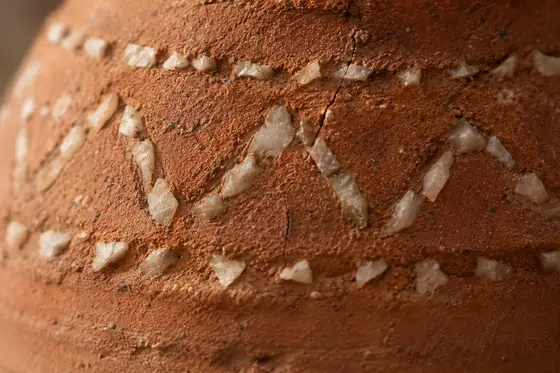
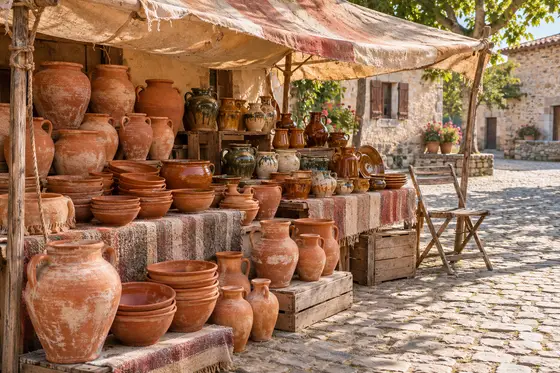
AI-generated illustration in the manner of the tradition, not a photograph of a specific object.