III Regional wares · Plate 004
Clay whistle, close up
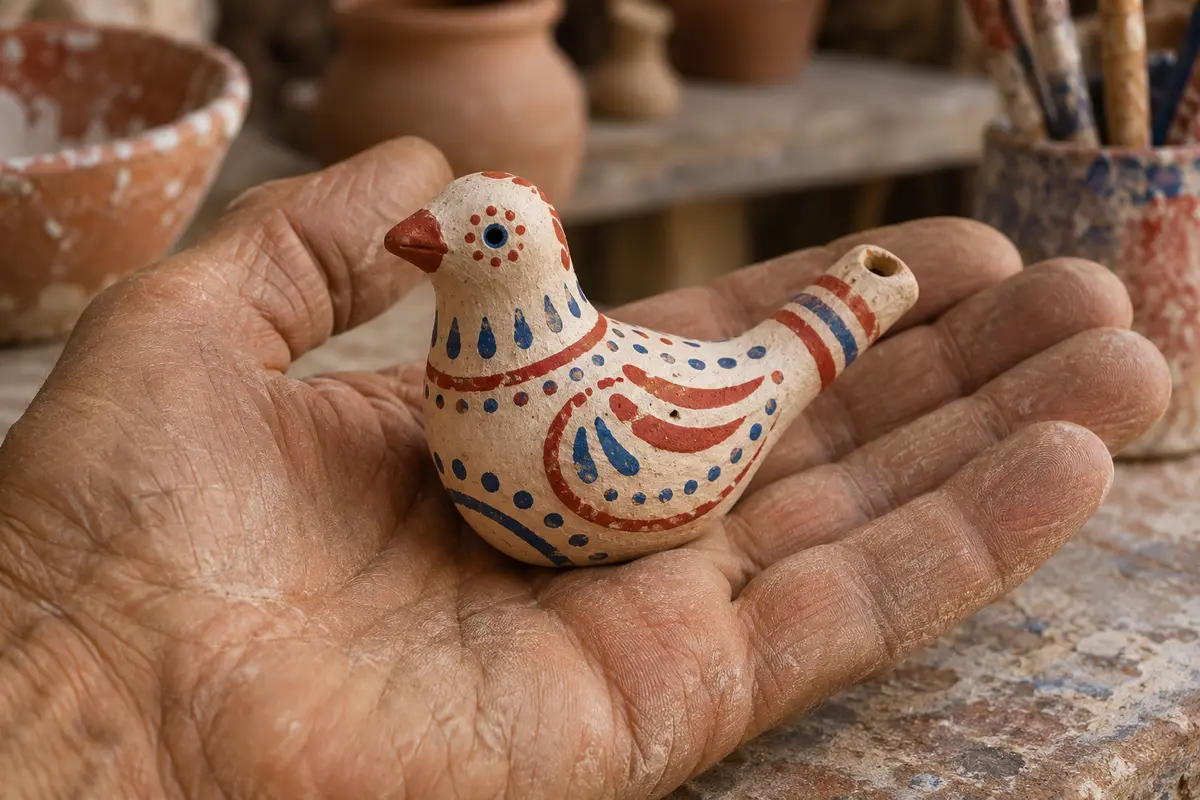
Some figurado pieces carry a whistle or small instrument in the base, and their function was play. The figurado began as a sideline of pottery, using small portions of clay and gaps left in the kiln.
Whistle figures have names of their own. The certification document lists gaitas (pipes), ocarinas, rouxinóis (nightingales) and cucos (cuckoos), and its table of themes adds flutes, assobios and various apitos. Small whistling pieces include a child on a throne, a dove and a child in a cradle. All of these fall in the moulded category, where hand-painted decoration weighs most. The same document says figurado began as small figures of people and animals with a whistle or musical instrument fixed in the base, a production that started as a sideline of pottery and whose function was purely play.
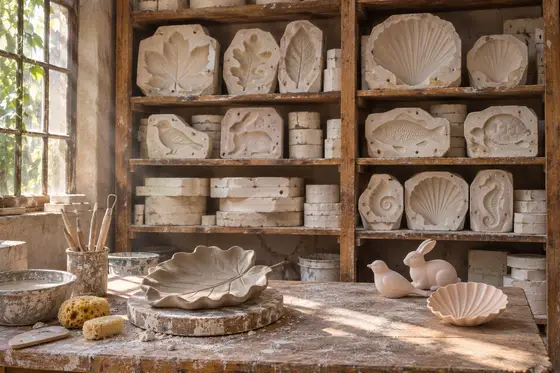
The tools show how a whistle is made. The maker uses a boxwood stick, the pauzinho, in several lengths, to make whistles and to decorate cuckoos, and a wooden awl, the furador, to prick the closed piece so it does not burst in the kiln. Many moulded pieces come from plaster moulds, usually made by a specialist mould-maker from the figure maker's model. Moulds were filled either by pressing paste in with the fingers or by pouring liquid slip and emptying the excess once the wall had formed. In Estremoz, an account quoted in the local specification recalls roosters, doves and egg baskets whose whistles filled the pilgrimage fairs.
Read about it: The rooster that crowed, and the potters who made Barcelos famous →
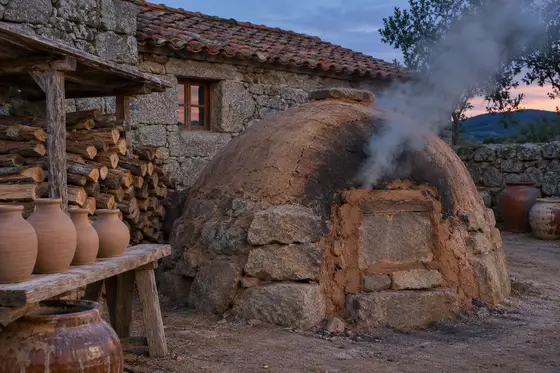
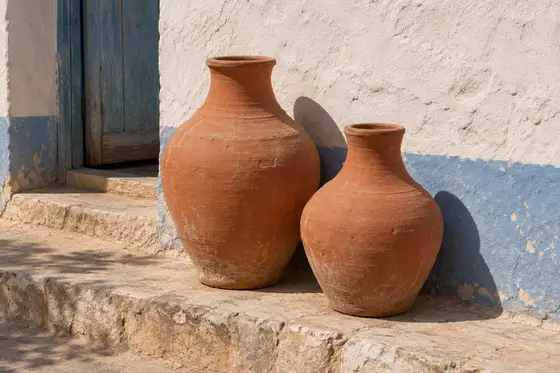
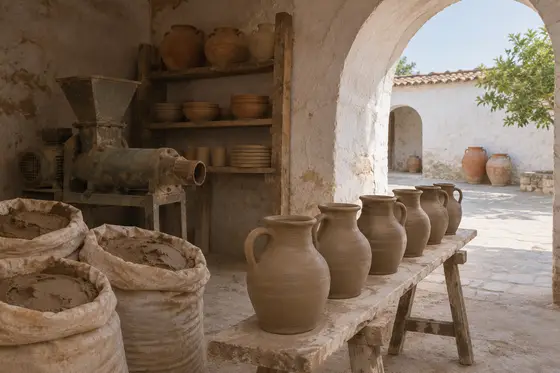
AI-generated illustration in the manner of the tradition, not a photograph of a specific object.