III Regional wares · Plate 005
Foot-driven wheel
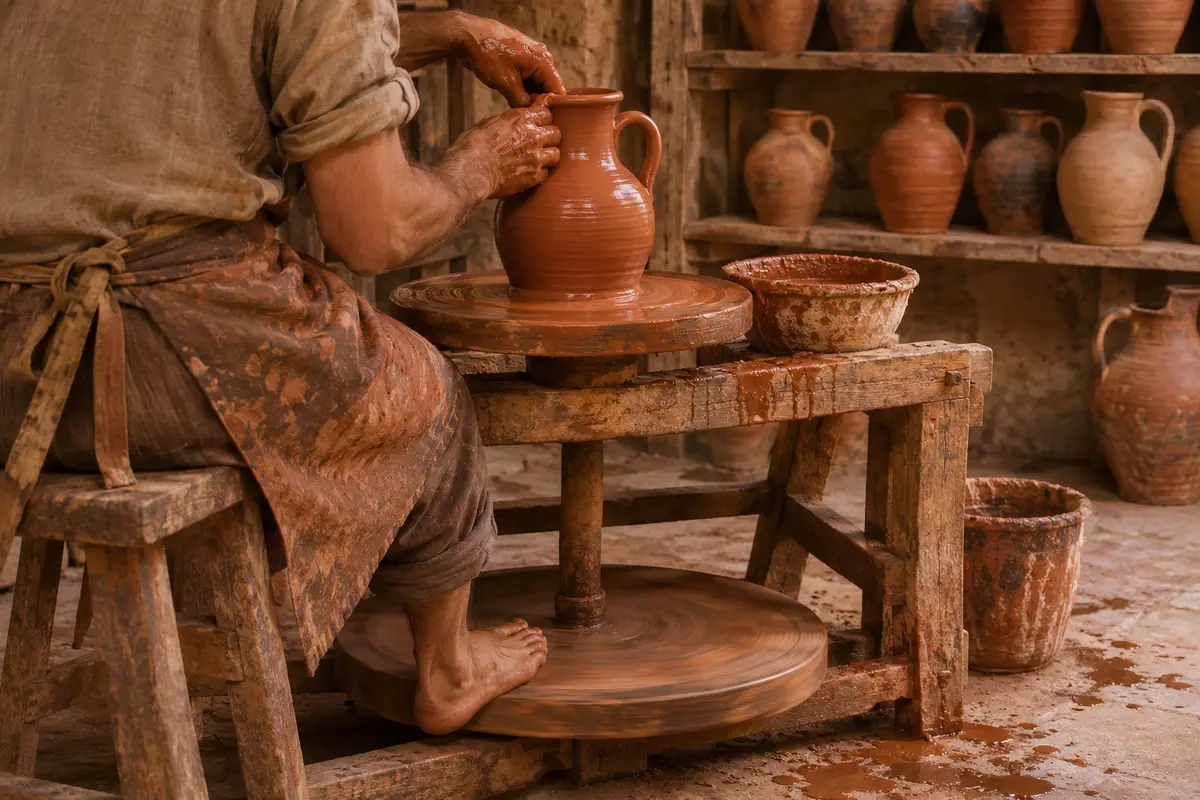
The traditional Barcelos wheel has a lower wheel about a metre across, joined by an axle to the upper wheel where the clay sits; the potter sets it moving with the foot. Electric wheels are now common too.
The traditional Barcelos wheel is mostly wood. A large wheel about a metre across sits near the floor and is joined by an axle to the smaller upper wheel, the rodalho, where the potter places the clay. A side section serves as the seat, and another holds the basin of water for wetting hands, the clay and the finished pieces. To start, the potter kicks the lower wheel until the rodalho reaches working speed, turning anticlockwise, and only then sets down the clay and wets the hands.
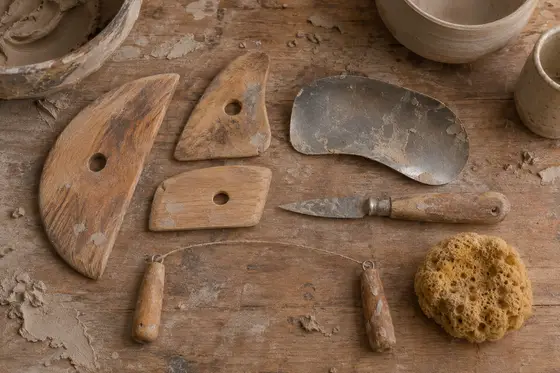
Throwing has three stages: centring the clay, opening it and shaping the piece. A small kit helps: the agueiro, a water pot; the canivete, a metal rectangle to smooth and pull the clay; a cloth for rims; the mosca, a pointed stick marking the bases; the espicha, a spike for bursting air bubbles and trimming; and the cortador, a thread with cloth at each end to cut the piece off the wheel. The paste is about three quarters common clay to one quarter of another, homogenised in a pug mill, and the clays are left outdoors to age, which builds plasticity.
Source: cearte.pt
Read about it: The rooster that crowed, and the potters who made Barcelos famous →
AI-generated illustration in the manner of the tradition, not a photograph of a specific object.