III Regional wares · Plate 006
Bonecos de Estremoz
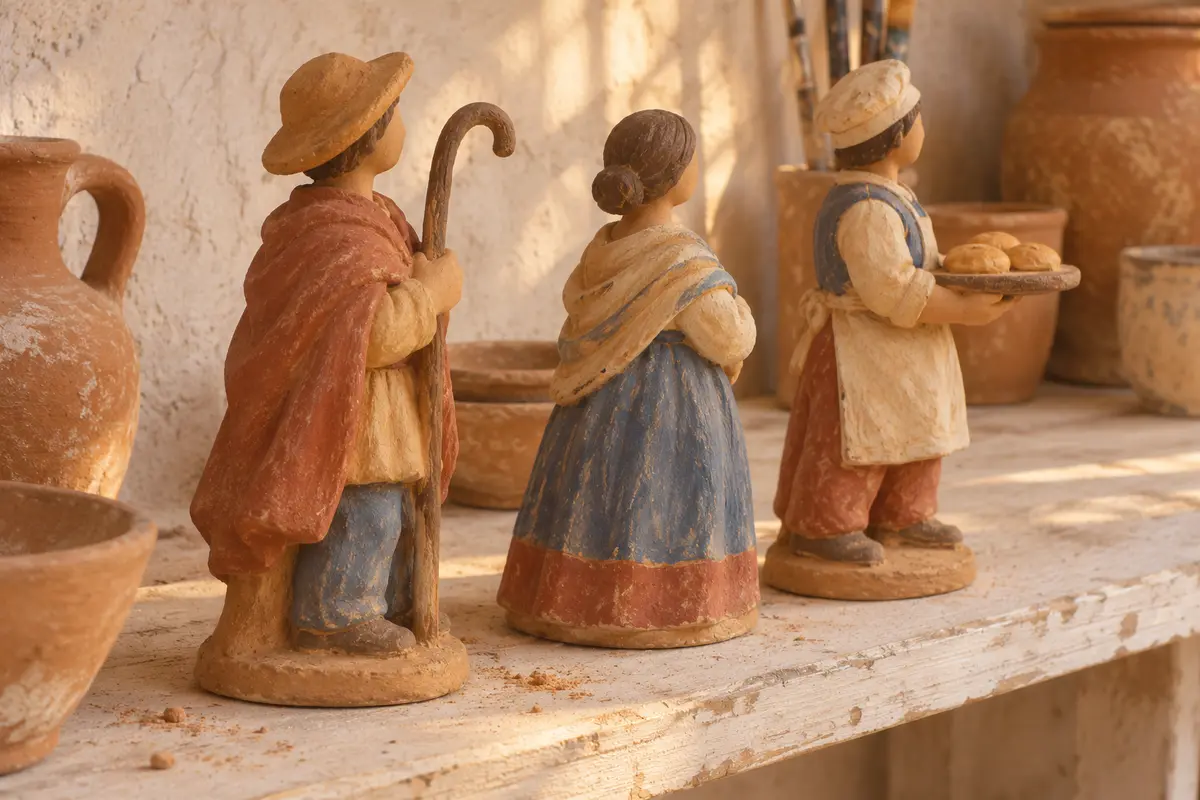
The painted clay figures of Estremoz show Alentejo regional dress and religious clothing, as well as natural elements, local trades, popular traditions and devotions. The craft was inscribed on UNESCO's Representative List in 2017.
The town's small industries suffered, among them a faience factory that ran from 1773 to 1810, and workshops that relied on kilns faced a lasting shortage of firewood: council minutes of 1773 record that plots reserved for fuel had been ploughed up. In 1800 a steep rise in clay prices brought complaints to the Royal Board of Trade. A source from 1837 counts 26 figure workshops, all described as in decline. By the early twentieth century the tradition was dying, and after the death of Gertrudes Rosa Marques no figures were made at all between 1921 and 1934.
Its director, the sculptor José Maria Sá Lemos, borrowed surviving figures and persuaded an old potter known as Ti Ana das Peles (1870-1945) to work again and train pupils. The potter Mariano da Conceição (1902-1959) also helped, and with Sá Lemos's aesthetic support he renewed the themes in the 1940s. The figures were shown at national exhibitions promoted by the propaganda secretariat, in Lisbon in 1936 and 1940 and in Paris in 1937. In 2017 UNESCO inscribed the craftsmanship of Estremoz clay figures on its Representative List, noting that production goes back to the 17th century.
Source: cearte.pt, ich.unesco.org
Read about it: The figures that nearly stopped being made →
AI-generated illustration in the manner of the tradition, not a photograph of a specific object.