III Regional wares · Plate 033
Coimbra faience
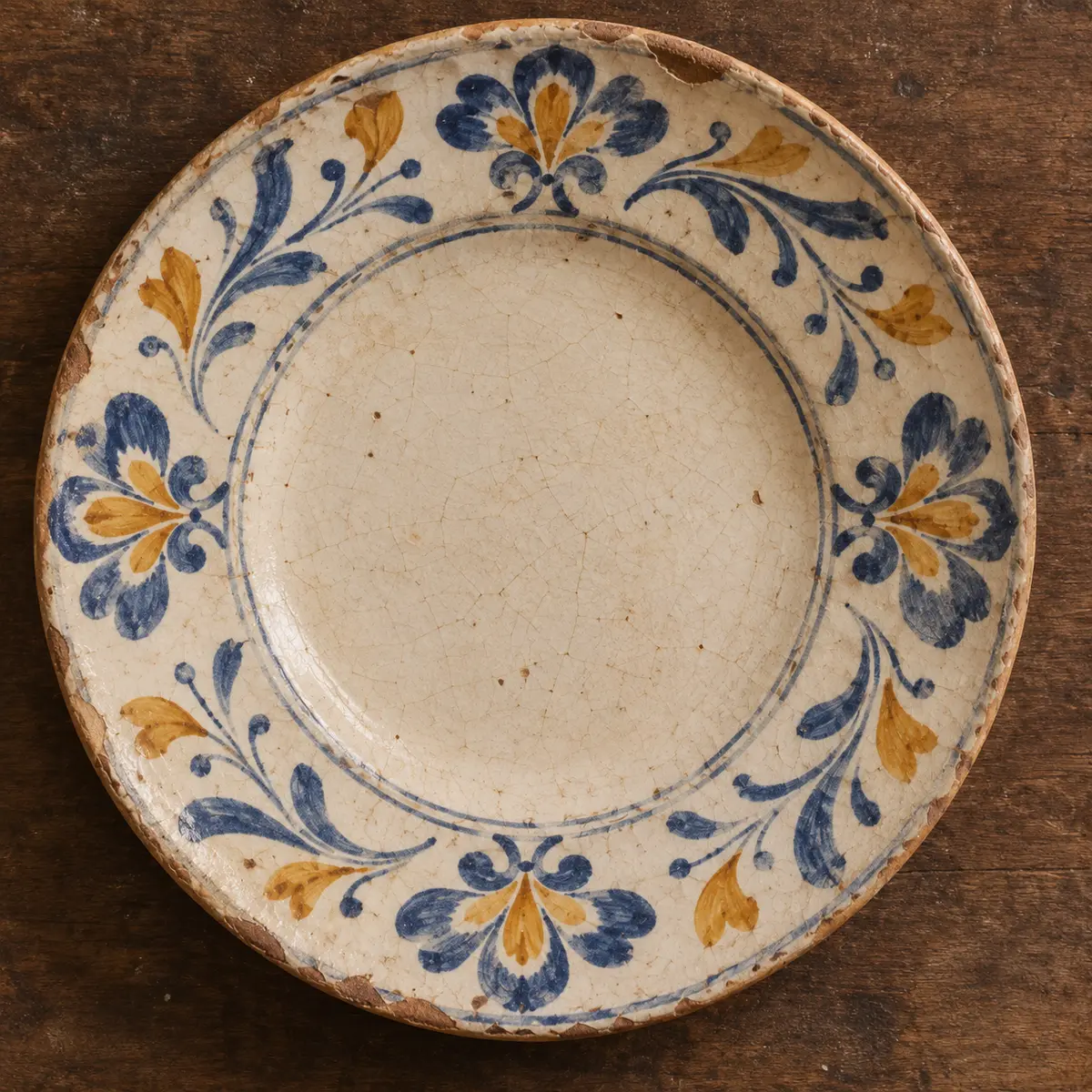
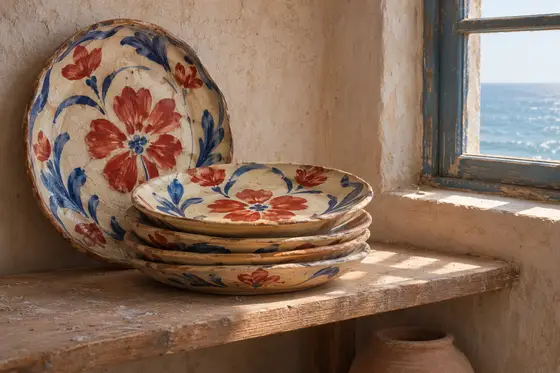
Coimbra is associated with a tradition of faience and tiles, with potteries active from at least the 17th century. This plate is shown in a general style.
A thesis on Coimbra tile production (Diana Gonçalves dos Santos, covering 1699 to 1801) gives a close view of the city's potters. It calls the Paiva family the most prolific dynasty of potters in Coimbra in the whole 18th century. João de Paiva, documented from 1678, and Margarida Simões had six children, all later active in the trade, among them a master potter, a master of potteries, a potter's assistant and a woman who married a painter of pottery (pintor de louça). One son, Agostinho de Paiva, passed his examination in Coimbra, recorded in the town registry on 27 August 1695.
The oldest dated piece the thesis ties to Agostinho is a heraldic basin of faience in the Museu Nacional Soares dos Reis, painted in blue on tin-glaze white with a manganese outline, bearing the arms of the Silva family. Its mark reads "AGOSTINHO DE PAIVA 169_", signed and dated, though the last digit of the year is missing. By 1706 he lived in the Terreiro das Olarias, the Potters' Square, and in 1709 he appears as a master of white-ware shops (mestre de tendas de louça branca). In 1701 he was paid for tiles painted for the University of Coimbra.
This is a general description, not confirmed to a single source.
Source: belard.pt
AI-generated illustration in the manner of the tradition, not a photograph of a specific object.