III Regional wares · Plate 018
Water pot
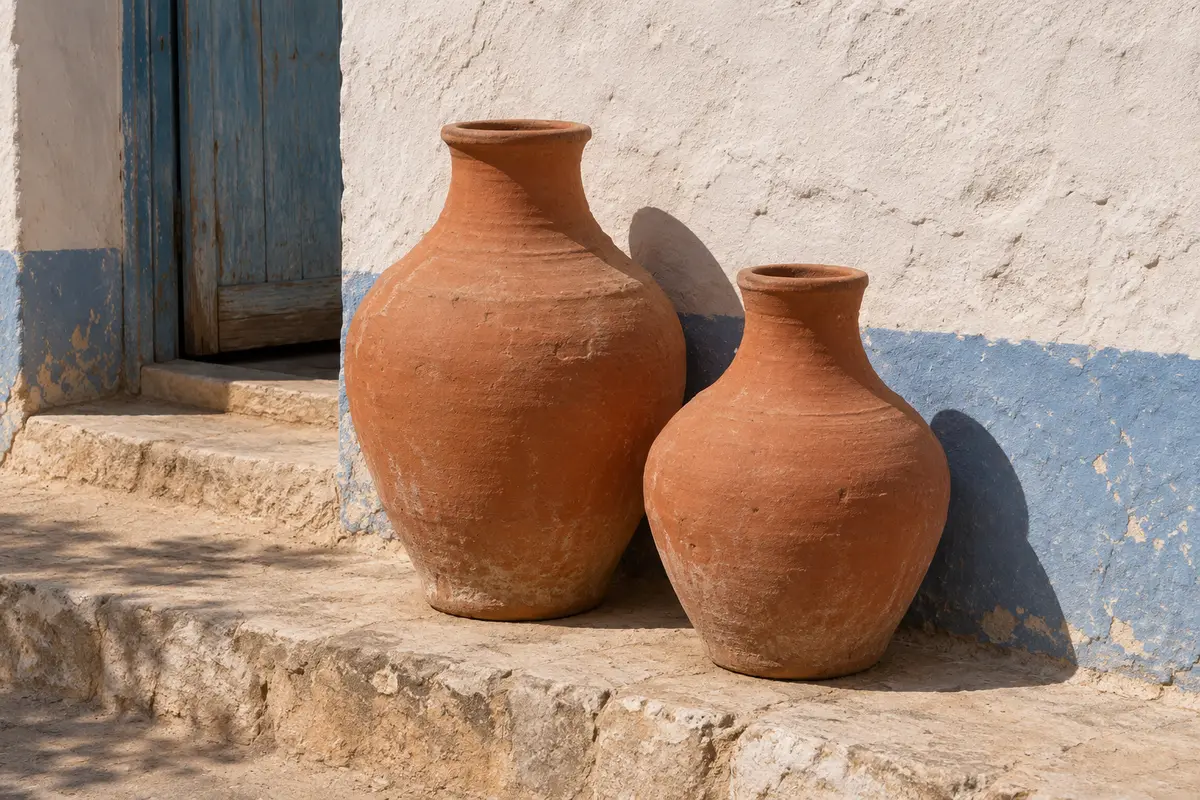
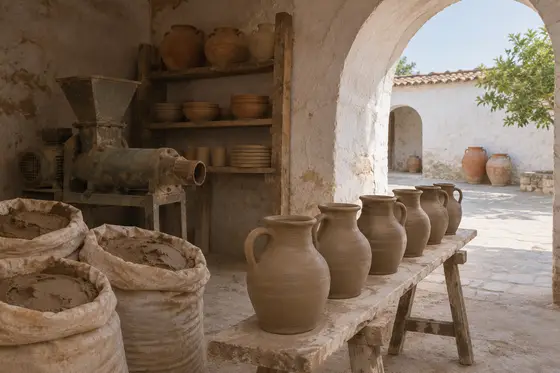
According to the Nisa museum, the town's stone-set pottery is an old tradition closely tied to preserving water. This water pot is shown in a general style.
The pot's job explains its form. Nisa ware's main function was to keep fresh water for the household, which mattered before piped water and electricity, and to carry water for travellers and farm workers. The museum shows a pote with its lid, the testo, and a small cup, the pucarinho, that sat on top. The clay is a recipe: two parts of a very sandy white clay to one of black silty clay, which is more workable on the wheel, the paste coloured with a bath of red clay. The red clay is rare in thick layers and comes from the foothills of Serra de São Miguel or from Arronches.
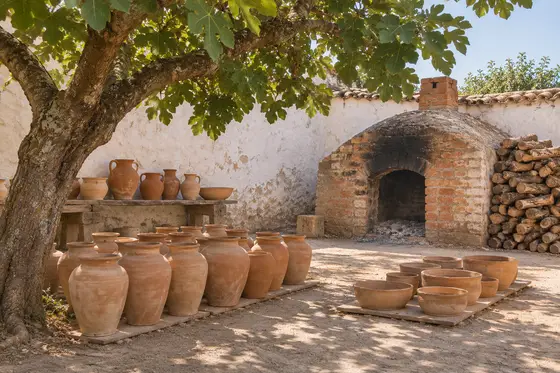
Firing was the delicate step, because the clay is schist-derived and cracks easily at high temperatures. In the desquento, thick logs gave a low flame for about an hour, producing dense smoke and blackening the ware. In lavar a loiça, started when the smoke vanished and the flame turned orange at about 800 to 900 degrees, small brushwood gave a high flame that ate the black and left the pieces reddish. The pieces then cooled inside the kiln for two or three days. Today electric kilns make control easier, but the museum says firing is still very delicate.
Source: museubordadoebarro.cm-nisa.pt, museubordadoebarro.cm-nisa.pt
Read about it: Clay towns of the Alentejo, and what each page can prove →
AI-generated illustration in the manner of the tradition, not a photograph of a specific object.