III Regional wares · Plate 032
Mould room
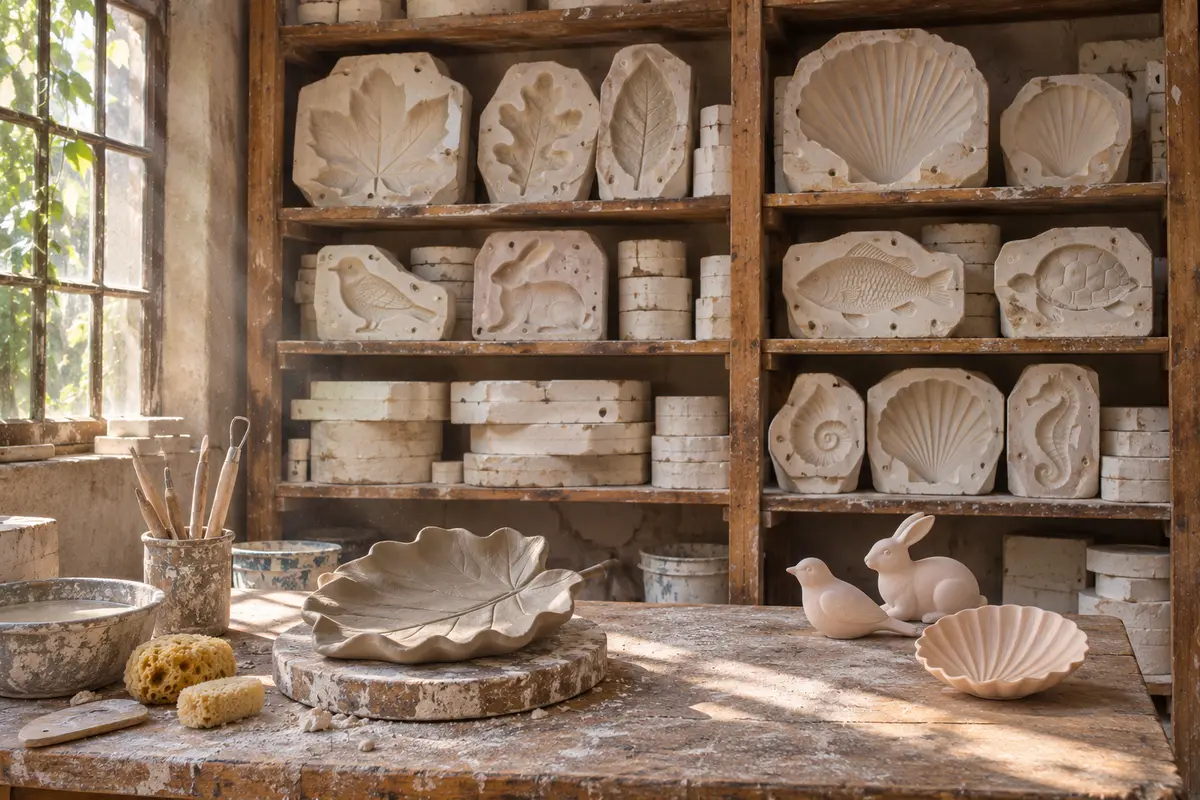
Factories commonly use plaster moulds to repeat the same forms. This mould room is shown in a general style.
Plaster moulds repeat a form through slip casting. Liquid clay, the slip, is poured into a porous plaster mould, which draws water out of it by capillary pressure. Solid particles settle on the mould wall and build a layer called the cast. Earthenware tableware typically takes 35 to 60 minutes, and thinner sections form faster. In hollow casting, as for teapots, only the walls form; solid casting uses a mould with a slip reservoir, as for cup handles. Once firm, the cast is removed, its mould seam is trimmed away and the piece is dried, ready for glazing and firing.
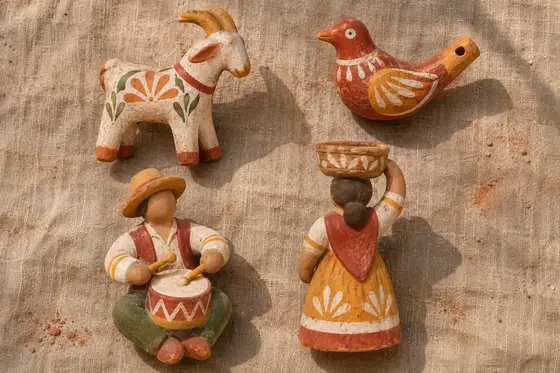
In Portuguese potteries, moulds serve several uses. The Barcelos technical file describes pressing plastic clay between a positive and a negative mould for baking dishes, frying pans, plates and caldo verde bowls. It also notes that applied relief elements, such as animals, plants, coats of arms and faces, are modelled by hand or in plaster moulds and then attached to the piece. At Bordallo's Caldas factory, prototypes were modelled in clay from nature, by Rafael or by specialist moulding workers, and the museum mentions moulded ornaments and rosettes. It does not describe how the moulds were made.
This is a general description, not confirmed to a single source.
Source: en.wikipedia.org, cearte.pt, museubordalopinheiro.pt
Read about it: The cartoonist who built a pottery →
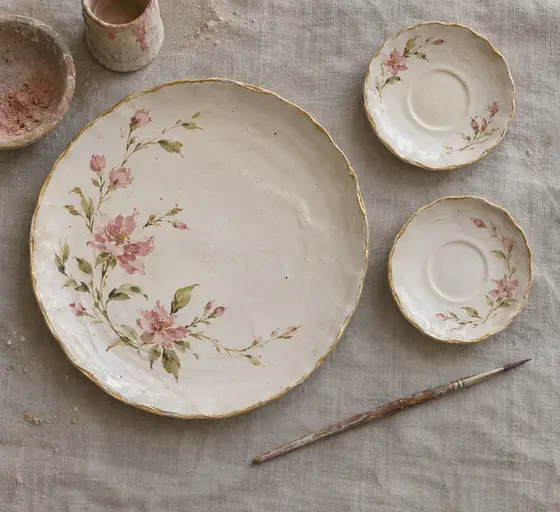
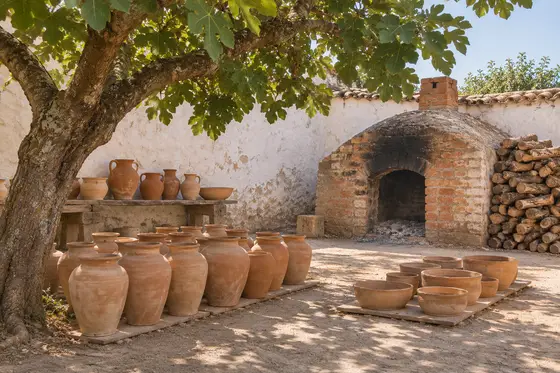
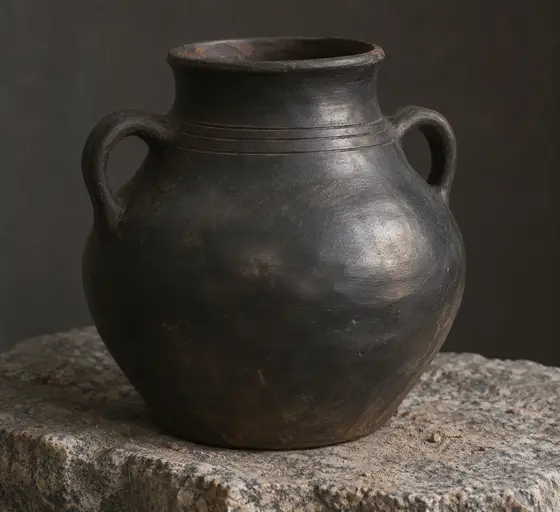
AI-generated illustration in the manner of the tradition, not a photograph of a specific object.