02 Clay · Black pottery
Black pottery, and the question of the colour
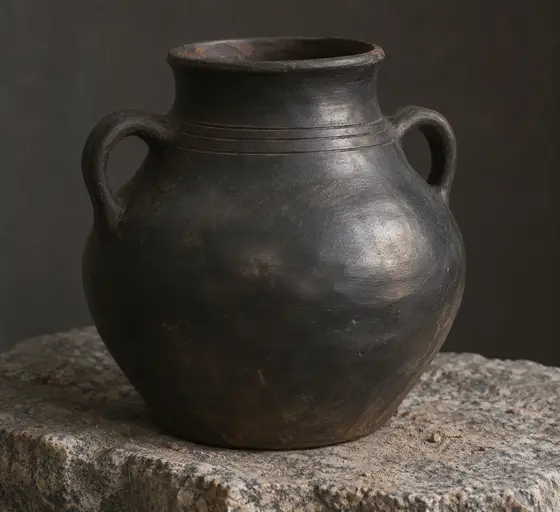
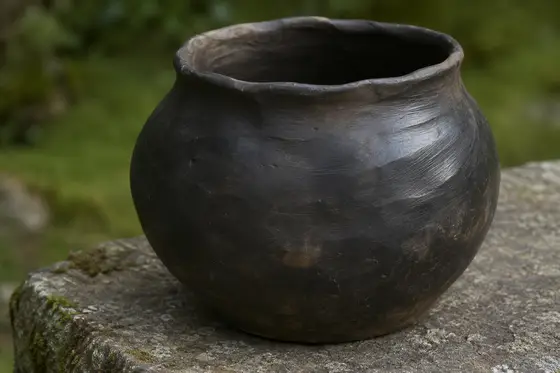
Bisalhães and Molelos both make black pottery and both are heritage-listed. The sources agree the colour comes from the firing, and differ on what exactly does it.
A village with its pots on the coat of arms
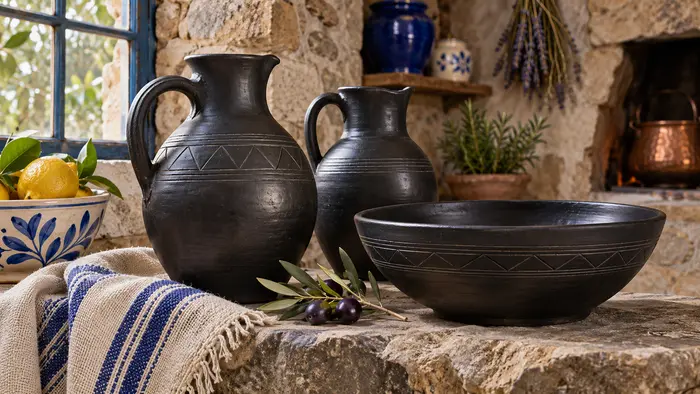
UNESCO’s page on Bisalhães begins with a nickname: “the land of pot and pan producers”. The pottery is made for decoration and for cooking, and it appears on the village’s coat of arms. In 2016 the manufacturing process was inscribed on UNESCO’s List of Intangible Cultural Heritage in Need of Urgent Safeguarding. That is the list for practices at risk. It is a different list from the one that holds the Estremoz clay figures.
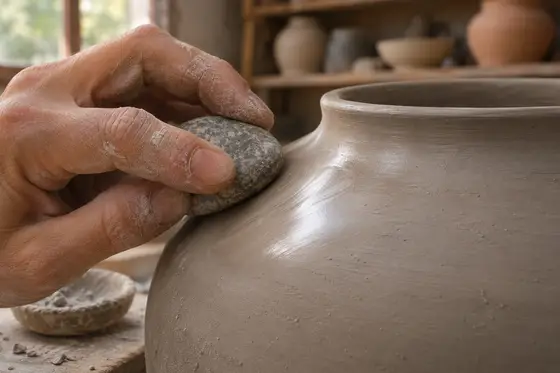
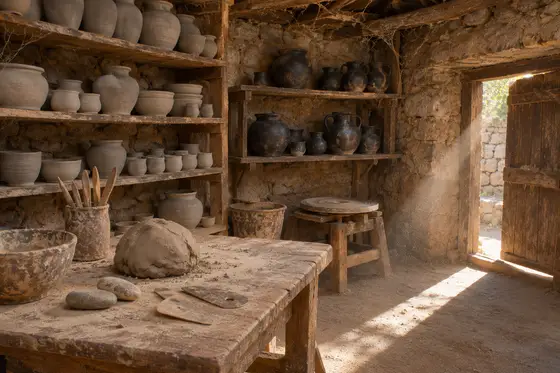
The UNESCO text does not say which municipality the village belongs to. The Museu do Douro and the national Saber Fazer programme place it in Mondrões, Vila Real. UNESCO describes the steps: clay crushed with a wooden hammer in a stone tank, sifted, mixed with water and kneaded, shaped with laths, smoothed with pebbles, decorated with a stick, then fired in a kiln. Men now do the heavy clay preparation, and women mainly decorate. The clay itself now comes from local tile factories instead of pits. Knowledge passes down almost entirely within families.
Five potters, six potters, and the dozens before
Counts of the people who still do this are small and not quite consistent. When the listing was decided in November 2016, Diário de Notícias reported that five potters made it their main occupation and most were over 75. The Vila Real council had put forward the application. The same article said the methods go back to at least the 16th century.
A later source, an exhibition page from the Museu do Douro (undated, filed under past exhibitions), speaks of six potters with documented activity, most of them over 80, and only one of the younger ones working full time. It sets that against “dozens” recorded in the middle of the 20th century. The two counts use different definitions and come from different moments, so they do not make a precise trend. They do describe the same thing: a few elderly households.
Molelos, where the paper trail is easier to follow
Molelos is in the municipality of Tondela. On its own news page, Património Cultural, I.P. says it approved the entry of the production process of barro negro de Molelos into the Inventário Nacional do Património Cultural Imaterial by an order dated 20 March 2025, published in the Diário da República on 2 April 2025 (Anúncio n.º 89/2025). We read that on the institute’s page; we could not open the Diário da República record itself. The application came from the Tondela council in June 2023, according to Lusa.
The age of the tradition is given two ways. The institute, citing the historian Helder Abraços, says documents show an art going back to the early 16th century. The Lusa report says there is testimony “at least since the late 19th century”. These are different claims and we do not reconcile them. Today, the institute says, black pottery is made only in the parish of Molelos, by seven potters, with clay from the Carvalheira and Casal do Rei deposits. The national Saber Fazer programme adds that in the early 20th century Molelos had records of hundreds of people working in potteries.
The institute describes two kinds of piece: heavy ware that goes on the fire or in the oven, with little or no decoration, and decorative ware. All of it is burnished now, which, it notes, was not so with earlier generations. Lusa also reports that the product has been a certified traditional craft product since March 2024. We have not checked that registry.
What the sources say about the colour
The national Saber Fazer programme says what defines black pottery is the firing, which takes place in a reduction atmosphere. In its words the raw material and the process are otherwise much like other pottery. Elsewhere it describes the cause as combustion with an oxygen deficit, leaving pieces somewhere between black and grey. It says the finished colour ranges from a light metallic grey to black, and that the reduction technique is kept whether the kiln burns wood (Molelos) or gas (Olho Marinho, Carapinhal).
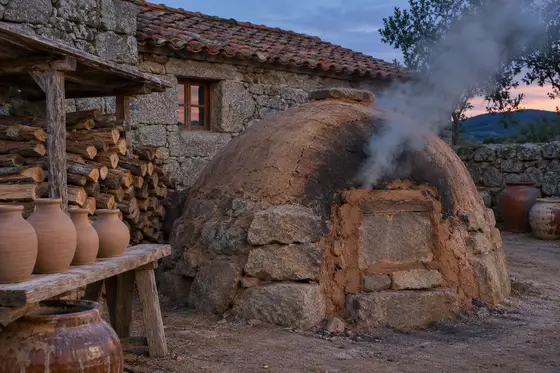
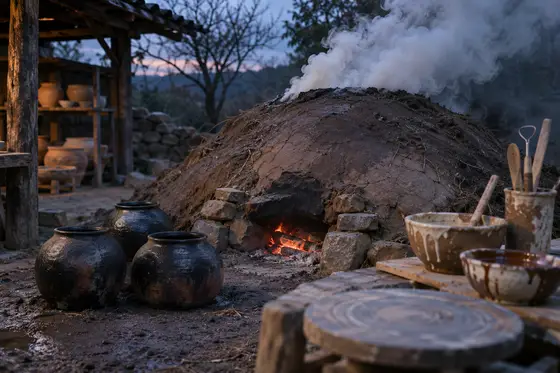
For Molelos, Património Cultural describes the soenga: clay fired in the open, set in a pit dug in the ground, with sods of earth and wood from the surrounding woods, in an atmosphere without oxygen that makes the pieces black after firing. For Bisalhães, the 2016 Diário de Notícias piece describes old kilns opened in the ground, where gorse, pine needles and carqueja were burned and the whole was then smothered with dark earth, “the same that will give it the black colour”. UNESCO’s page says only that the pieces are fired in a kiln, and nothing about colour.
What no page explains
None of the pages we opened says what the black actually is, or whether it sits only on the surface or runs through the clay. They name a cause, the lack of oxygen, and one of them names a different agent, the dark earth. Those may describe the same event from two sides, but no source says so, and we will not supply a chemical explanation from memory.
Nor is it clear who fires how today. Saber Fazer names the soenga at Bisalhães and Património Cultural names it at Molelos, where a design studio’s 2020 journal also says it is still practised and describes it as an annual event. UNESCO says kiln. A certification specification for the Molelos ware exists on the CEARTE site, but the file would not open as text for us, so we cannot say what it records.
A craft down to a few places
Saber Fazer counts 53 places where black pottery was made between the 17th and 20th centuries. By 2003, citing a 2019 IEFP study, only eight centres north of the Tagus were still working: Vilar de Nantes, Bisalhães, Santa Maria de Galegos, Gondar, Fazamões, Molelos, Miranda do Corvo and Olho Marinho. It now counts nine active nuclei, some with a new generation of potters changing how they work while keeping what the programme calls the essentials of the tradition.
Not confirmed: The Diário da República record of the Molelos entry (Anúncio n.º 89/2025) was not opened; the date and number come from Património Cultural’s own news page. The March 2024 certification is reported by Lusa and was not checked in the registry. The CEARTE specification for Molelos could not be read. The Saber Fazer programme page is undated.
Sources
- UNESCO: Bisalhães black pottery manufacturing process
- Diário de Notícias: Barro preto de Bisalhães é património da Unesco (29 Nov 2016)
- Museu do Douro: Mãos que fazem Bisalhães (past exhibition)
- Património Cultural, I.P.: Barro Negro de Molelos inscrito no Inventário Nacional do Património Cultural Imaterial
- RTP (Lusa): Barro Negro de Molelos classificado como património cultural imaterial
- Programa Nacional Saber Fazer: Barro Negro
- MADEINSITU journal: Barro Negro and the Soenga (September 2020)
Related plates