III Regional wares · Plate 028
Brick kiln
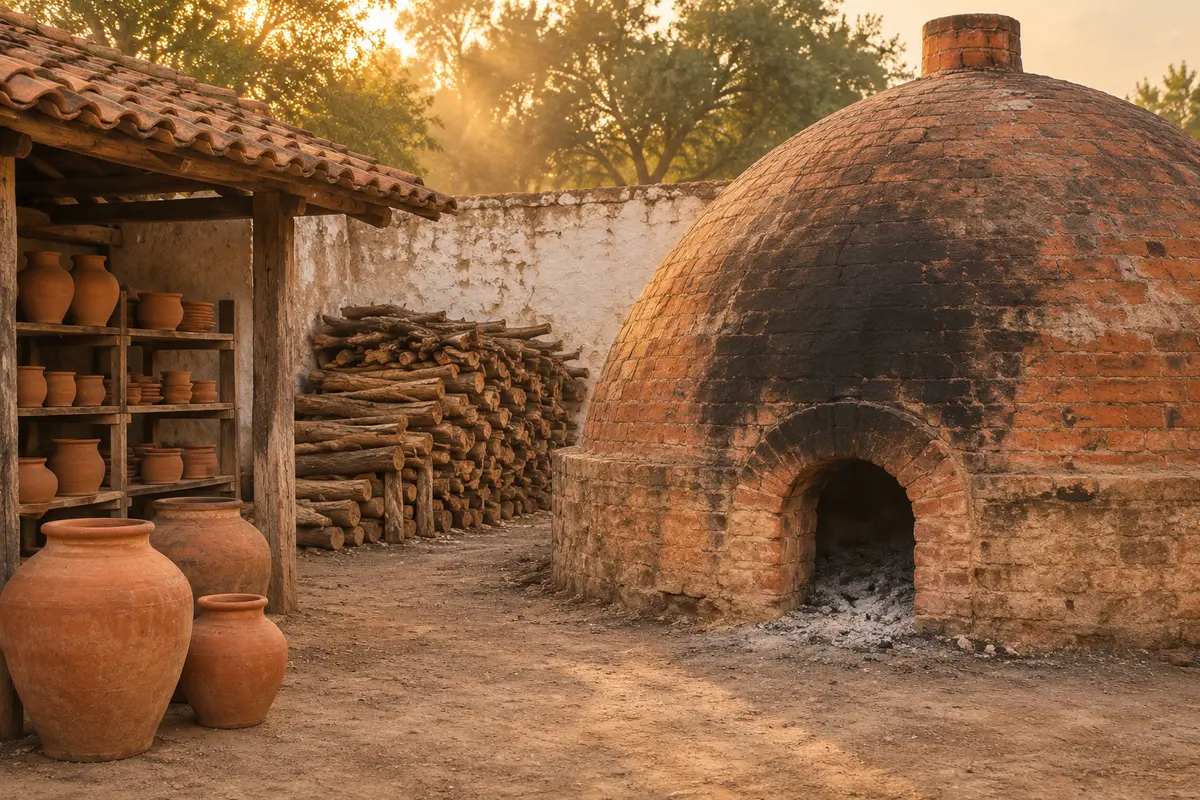
In Barcelos, wood kilns stood in every pottery until gas kilns arrived in the 1980s. Loading a wood kiln was slow and difficult. This kiln is shown in a general style.
In Barcelos, every pottery once had a wood-fired kiln. From the 1980s some potters changed to gas, mainly to produce more, though a few still keep wood kilns working. Loading (enforna) a wood kiln is slow and difficult, because raw pieces are very fragile. They are set in place with a small opening, a vigia, left so the potter can look inside during firing. There is no control equipment: experience, and constant watching of the colour of the pieces and of the kiln interior, tell the potter when the temperature is right.
The Museu do Barro de Nisa, in the Alto Alentejo, describes a traditional two-phase firing. In the desquento, thick firewood goes into the firebox for about an hour, keeping the flame low so pieces cook slowly without cracking, although the smoke blackens them. In the second phase, lavar a loiça, the black smoke disappears and the flame turns orange at roughly 800 to 900 °C. Fine wood such as esteva branches gives a high flame, and the quick burn clears the soot and reddens the ware. Pieces then cool inside the kiln for two or three days.
Source: cearte.pt, museubordadoebarro.cm-nisa.pt
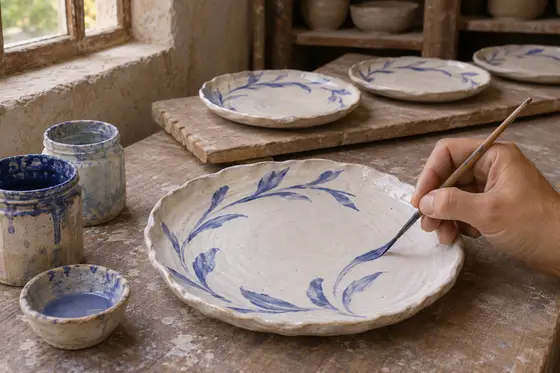
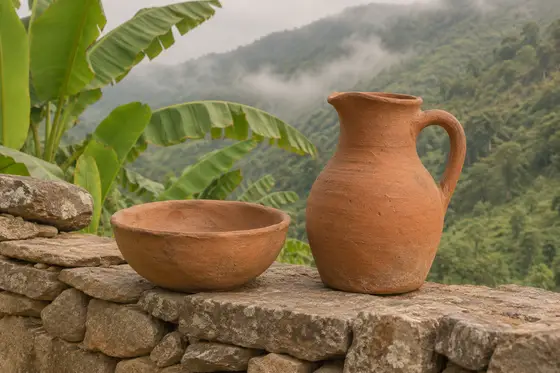
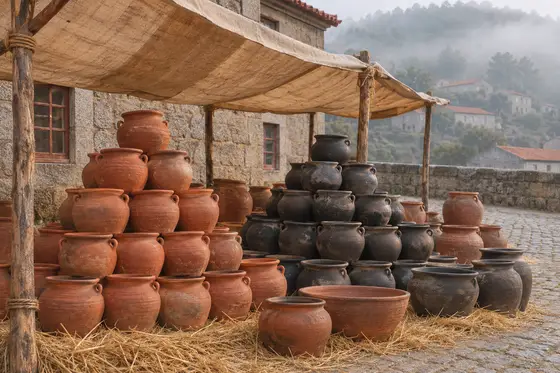
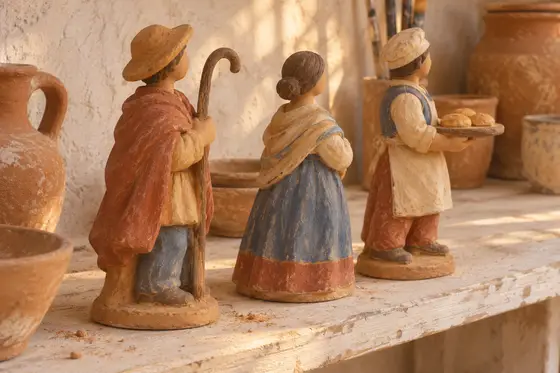
AI-generated illustration in the manner of the tradition, not a photograph of a specific object.