III Regional wares · Plate 029
Cabbage-leaf faience
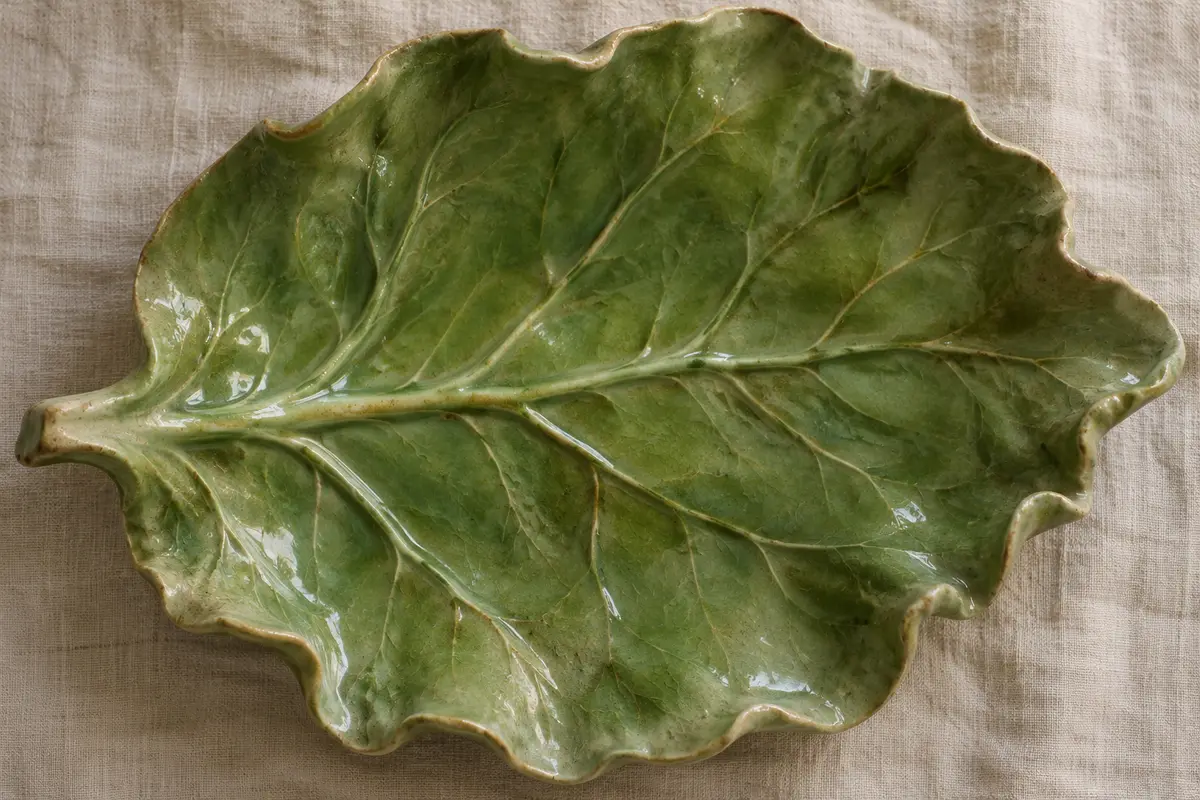
Caldas da Rainha is known for naturalistic faience, with leaves, fruit and animals modelled in relief. Bordallo Pinheiro's factory, founded there in 1884, is the best-known name.
The museum dedicated to Rafael Bordallo Pinheiro dates the factory's first decorative faience to mid-1885 and says it is generally described as following the Palissy style. Its defining feature is modelled relief ornament with naturalistic finishes. Motifs include plants, such as vegetables, cereals, flowers, fruits and algae, and animals, both living and dead as food. Bernard Palissy (about 1510 to 1590) gave the style its name. His models were revived in France by Charles-Jean Avisseau and Joseph Landais and shown at the Great Exhibition in London in 1851. The museum also links Bordallo's approach to Arcimboldo-like fantasy and to Japanese influence after 1854.
Rafael kept the type of each object clear, whether plate, jug, pot, terrine or pitcher, and gave it visual unity with a consistent finish. Pieces were covered in a uniform coloured enamel, given a dripping effect, or finished with moss and sand textures. The museum's text lists vegetables among the motifs without singling out cabbage. The cabbage collection sold today under his name presents the stalky, wrinkled leaf as a metaphor for the rural Portugal he satirised, and comes in green, white and pink.
Source: museubordalopinheiro.pt, us.bordallopinheiro.com
Read about it: The cartoonist who built a pottery →
AI-generated illustration in the manner of the tradition, not a photograph of a specific object.