III Regional wares · Plate 036
Porcelain of Vista Alegre
Vista Alegre, at Ílhavo near Aveiro, was founded under a royal licence of 1 July 1824. The company calls it the first industrial unit dedicated to porcelain in Portugal.
The company's own history says José Ferreira Pinto Basto bought the Vista Alegre chapel and grounds at public auction in 1816. In 1824 he asked King João VI for permission to build a large factory for earthenware, porcelain, glassware and chemical processes, with all his sons as stakeholders on equal terms. The royal licence is dated 1 July 1824. Around 1829, five years after the licence, the works gained the title of Royal Factory. At first it made glassware and soapstone pottery, because the composition of porcelain clay was not yet known.
Augusto Ferreira Pinto Basto, the founder's son, visited the Sèvres porcelain factory in France to study the clay, and large kaolin deposits were found north of Ílhavo in 1832, according to the company; the heritage-gardens record gives 1834 for kaolin at Outil. The factory showed at the Crystal Palace exhibition in London in 1851, made a full dinner service for the Royal House in 1852 after King Fernando II visited, and gained recognition at the Paris exhibition of 1867. Glassware production ended in 1880, so the works could concentrate on porcelain, and a recovery began in 1924.
Source: vistaalegre.com, jardinshistoricos.pt
Read about it: Vista Alegre: a chapel, a licence and a porcelain works →
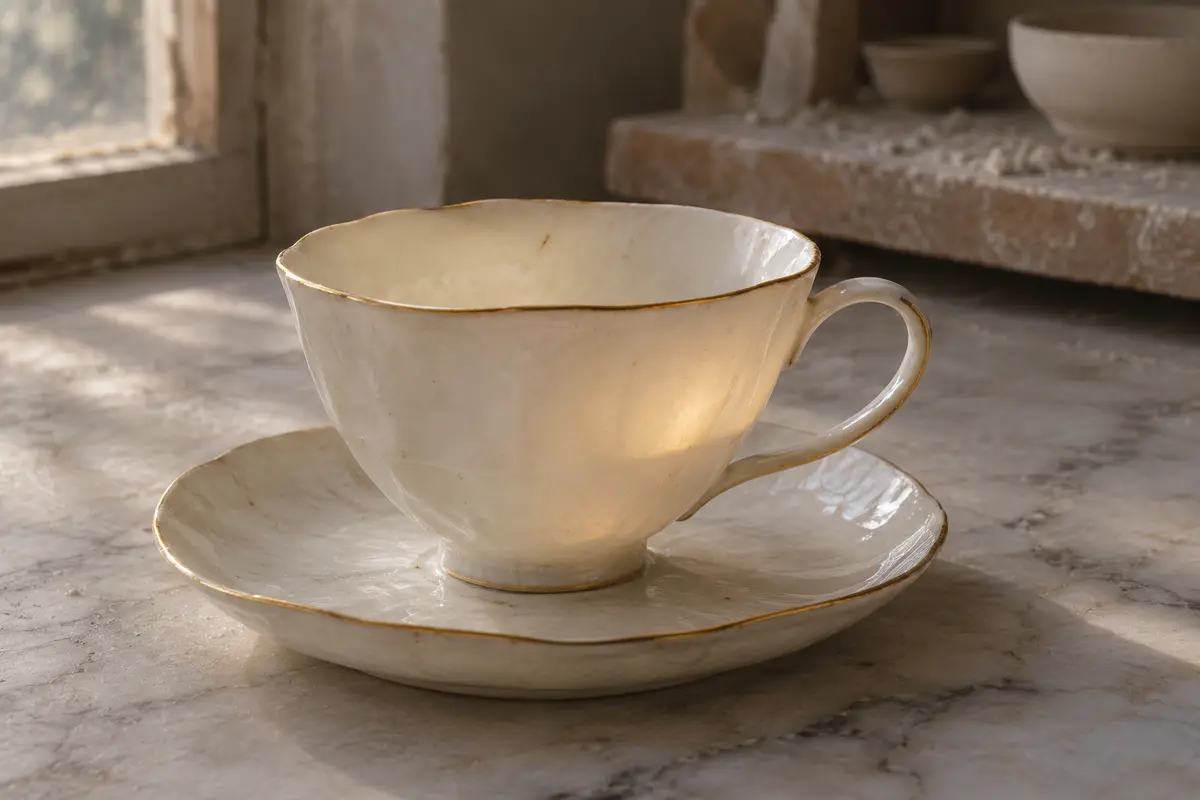
AI-generated illustration in the manner of the tradition, not a photograph of a specific object.